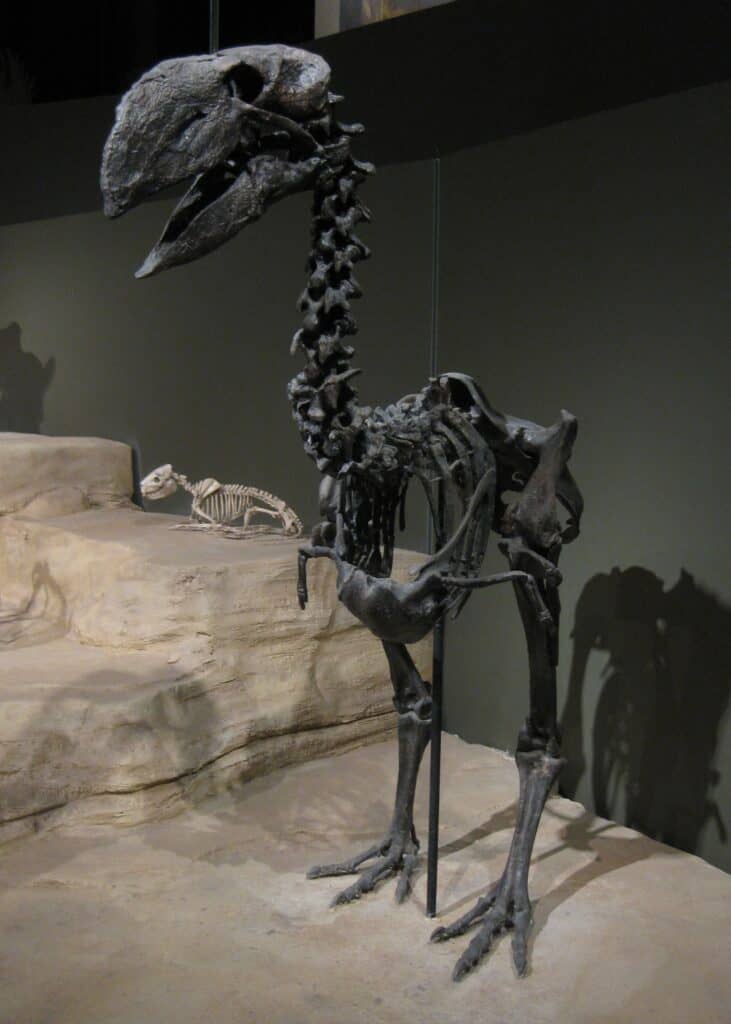
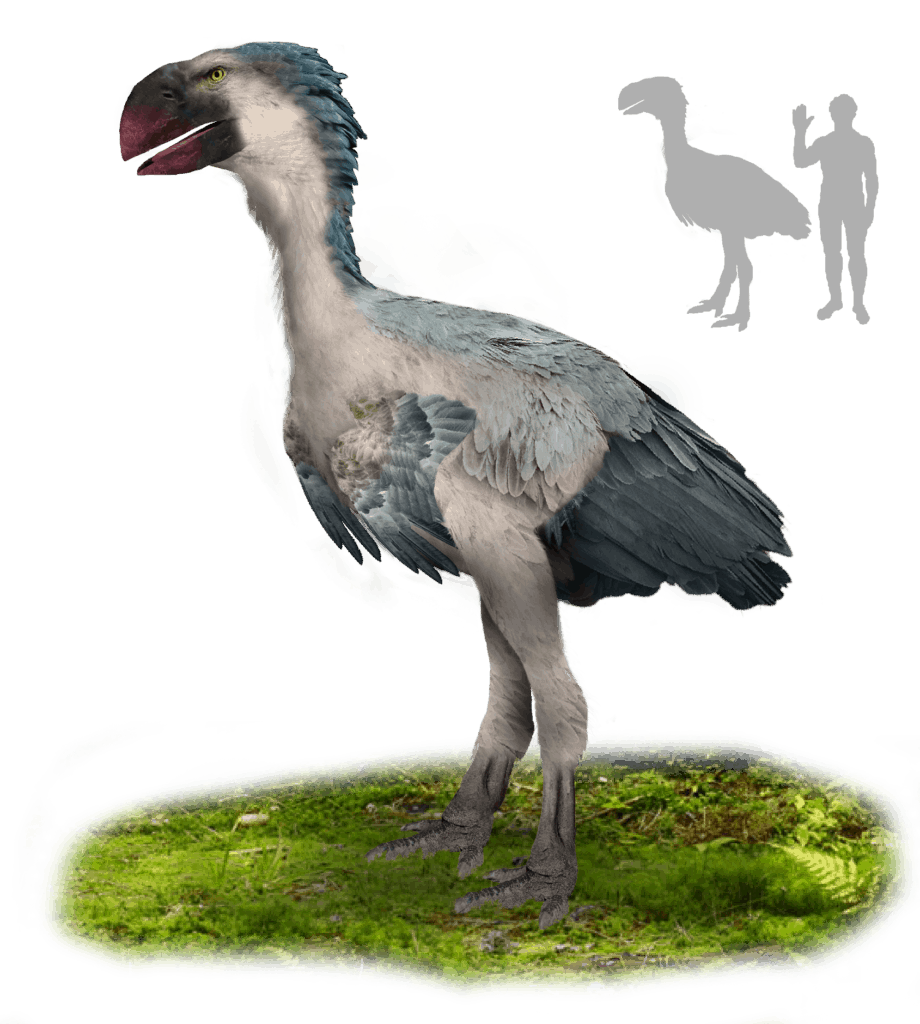
Gastornis is an extinct genus of large, flightless birds that lived during the Paleocene and Eocene epochs of the Cenozoic Era (56–45 million years ago). Currently, the genus is believed to comprise three or four distinct species, known from incomplete fossilized remains found in central western Europe (England, Belgium, France, and Germany).
Birds of the Gastornis species were very large and were traditionally considered predators of small mammals. However, the lack of hooked claws in known Gastornis footprints, studies on their beak structure, as well as other evidence have led scientists to classify these birds as herbivores, which likely fed on tough plant material and seeds.
These were generally very large birds, with giant beaks and massive skulls superficially resembling the carnivorous South American "terror birds" (phorusrhacids). The largest known species, G. gigantea, could grow up to approximately 2 meters in height.
The skull of G. gigantea was huge in comparison to its body and was robustly built. The beak was extremely tall and flattened from side to side. The "lip" of the beak was straight, without a raptorial hook as found in predatory phorusrhacids. The nostrils were small and positioned close to the front of the eyes halfway down the skull. The vertebrae were short and massive, even in the neck. The neck was relatively short, consisting of at least 13 massive vertebrae. The trunk was also relatively short. The wings were vestigial, with the upper wing bones small and very reduced, similar in proportion to the wings of the cassowary.