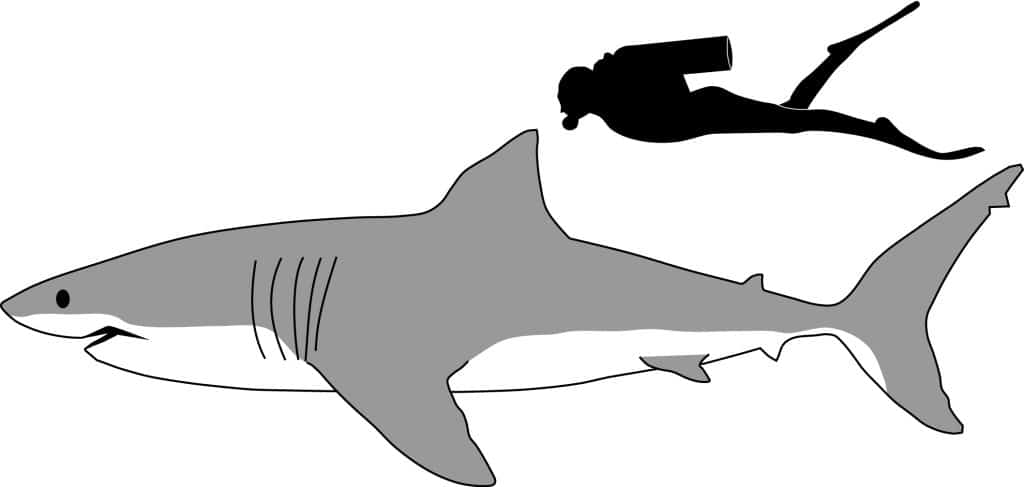
The Great White Shark (Carcharodon carcharias) is a species of large shark that can be found in the coastal surface waters of all major oceans. The species appeared 5–6 million years ago, near the boundary between the Miocene and Pliocene epochs. It is notable for its size, with the largest known female specimen measuring 5.83 m in length and approximately 2,000 kg in weight at maturity. However, most are smaller; males measure 3.4–4.0 m and females measure 4.6–4.9 m on average. According to a 2014 study, the lifespan of white sharks is estimated to be up to 70 years or more, far exceeding previous estimates, making it one of the longest-lived cartilaginous fish known today. Great white sharks can swim at speeds of 25 km/h for short periods and to depths of 1,200 m.
The great white shark is an apex predator whose only known natural predator is the orca, which attacks it only rarely. It is the world’s largest living macropredatory fish and one of the main predators of marine mammals, including whales. It also hunts a variety of other marine animals, including fish and birds. The great white shark is the only known surviving species of the genus Carcharodon and is responsible for more attacks on humans than any other shark species.