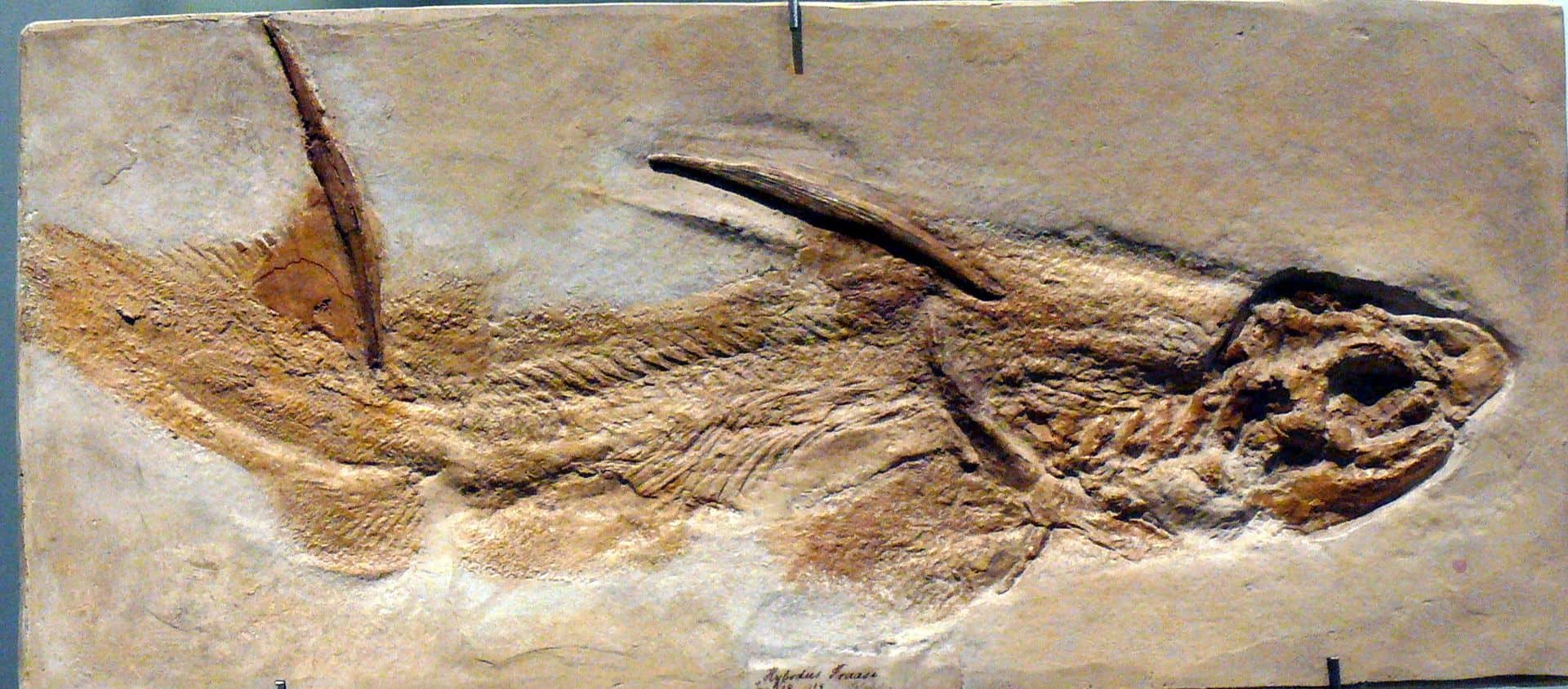
The Hybodus shark is an extinct genus of shark that first appeared toward the end of the Permian period, approximately 270 million years ago, and went extinct during the Late Cretaceous period, about 75 million years ago. This shark was extremely widespread and could be found in seas across nearly the entire world.
Hybodus shark species could reach up to approximately 2 meters in length and are believed to have been opportunistic predators. Although it did not reach very large sizes, Hybodus possessed the classic streamlined shark shape, complete with two dorsal fins that helped it maneuver with precision through the water.
However, it also had a number of distinct features that set it apart from other sharks. First, it had two different types of teeth, indicating a varied diet. The sharper teeth would have been used to catch slippery prey, while the flatter teeth probably helped it crush crustaceans.
Another distinct feature was the bony ridges on its dorsal fins that looked like spines, which likely served a defensive function.