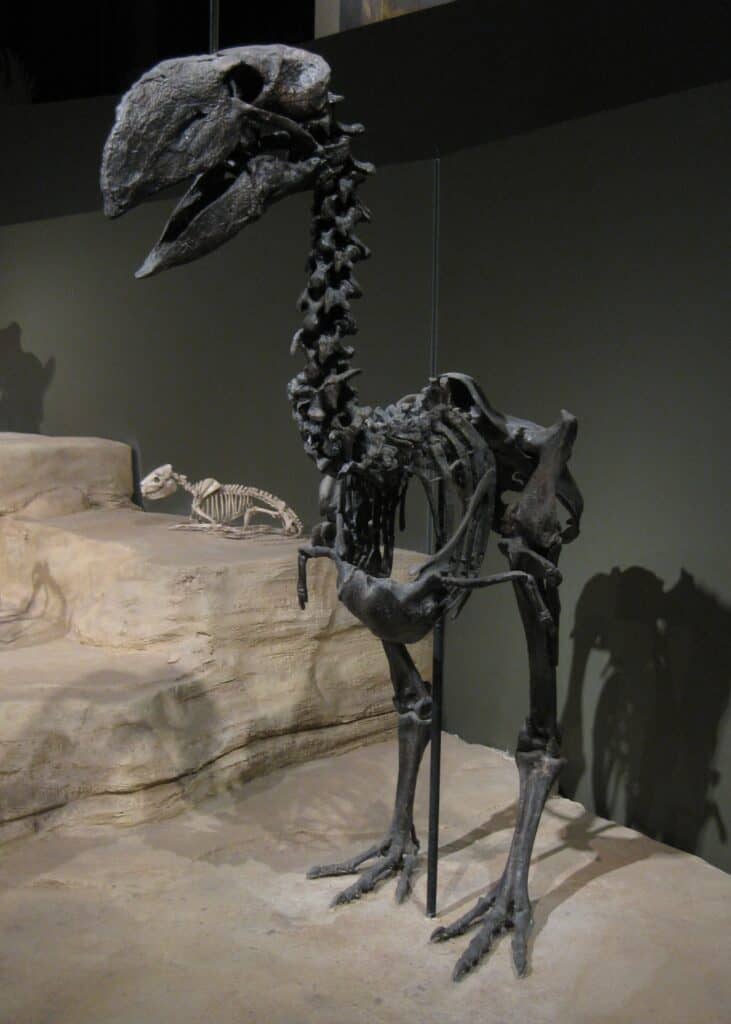
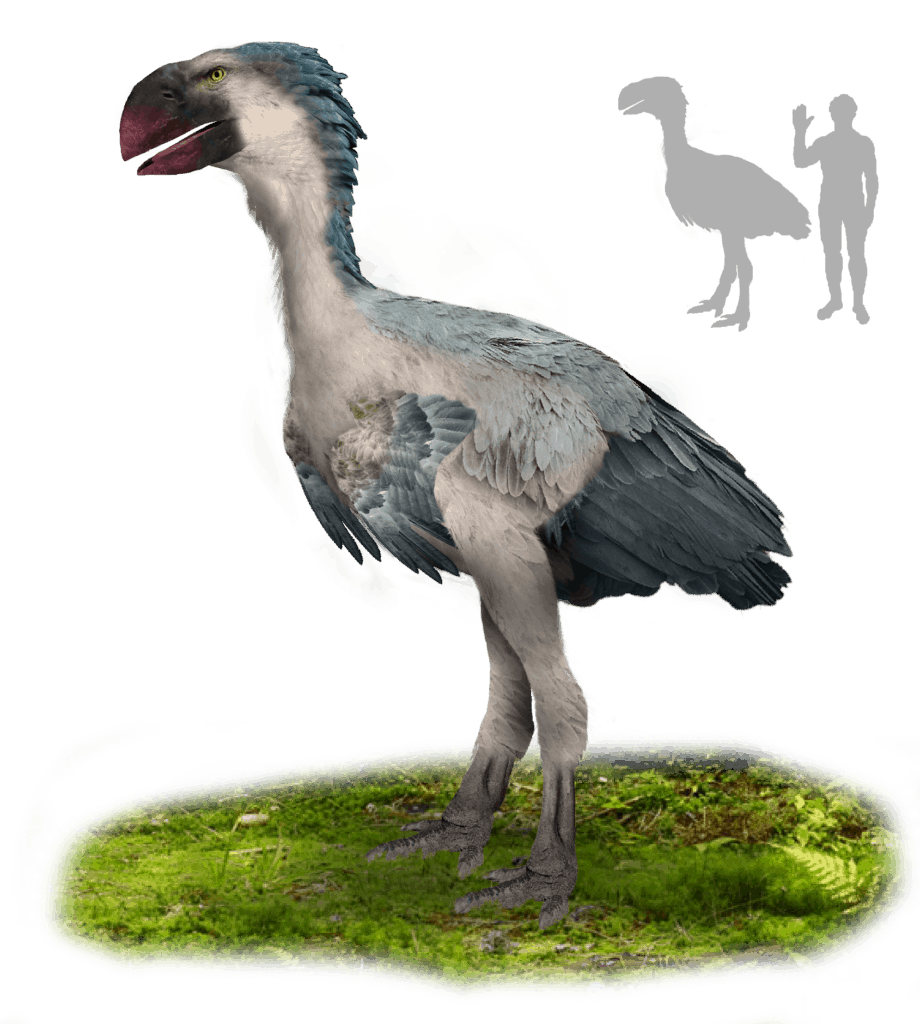
Gastornis is an extinct genus of large, flightless birds that lived from the Middle Paleocene to the Middle Eocene, approximately 60–42 million years ago. Gastornis is known from fossils found in Europe, North America and Asia. Several species of these large, flightless birds have been described.
Birds belonging to Gastornis were very large and were traditionally thought to prey on small mammals. However, the absence of curved claws in known Gastornis footprints, together with studies of their beak structure and other evidence, has led researchers to consider them herbivores that probably ate tough plant material and seeds.
These were generally very large birds, with huge beaks and massive skulls superficially resembling the carnivorous South American "terror birds" (phororusacids). The largest known species, G. gigantea could grow to about 2 m tall.
The skull of G. gigantea was enormous in relation to its body and robustly built. Its beak was extremely deep and flattened from side to side. The edge of the beak was straight, without the raptorial hook found in predatory phorusrhacids. The nostrils were small and positioned near the front of the eyes, about halfway along the skull. The vertebrae were short and massive, including those in the neck. The neck was relatively short and consisted of at least 13 massive vertebrae. The trunk was also relatively short. The wings were vestigial, with small, greatly reduced upper wing bones, similar in proportion to the wings of a cassowary.