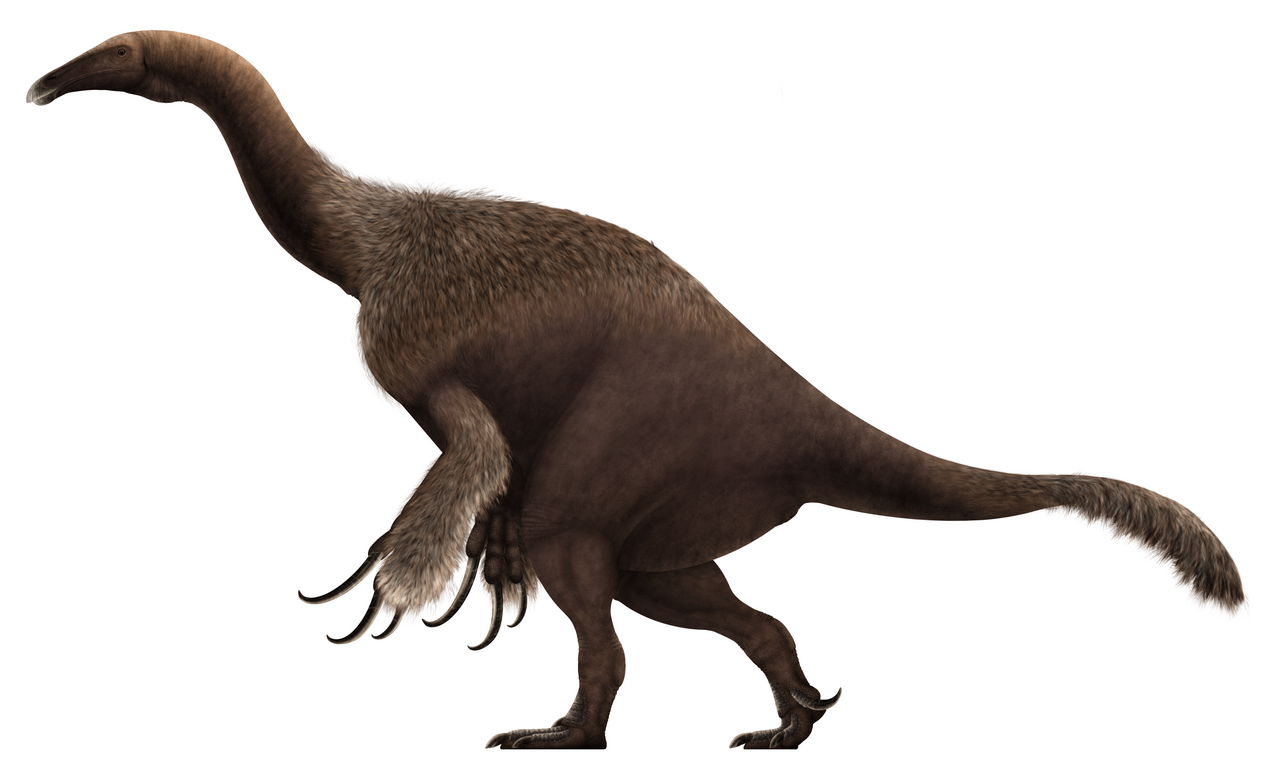
Therizinosaurs were an unusual group of theropod dinosaurs, comprising numerous forms adapted to a predominantly plant-eating diet. They are well documented throughout the Cretaceous period, from early forms that lived about 125 million years ago to representatives from the end of the period, about 66 million years ago. Their fossils are known mainly from Asia, but also from North America.
Many of these dinosaurs had a recognizable appearance: they walked on two legs, had a bulky body, a long neck, and a relatively small head. Their beaks and teeth were adapted for obtaining and processing plant food. Their arms ended in impressive claws, the shape and use of which varied between species. Although their appearance may be reminiscent of a predator, many therizinosaurs were primarily plant eaters.
Like other dinosaurs, they laid eggs. The discovery of embryos has allowed the association of certain eggs from the Dendroolithidae family with therizinosaurs. These fossils provide rare information about the development of chicks before hatching and about the reproduction of these animals.