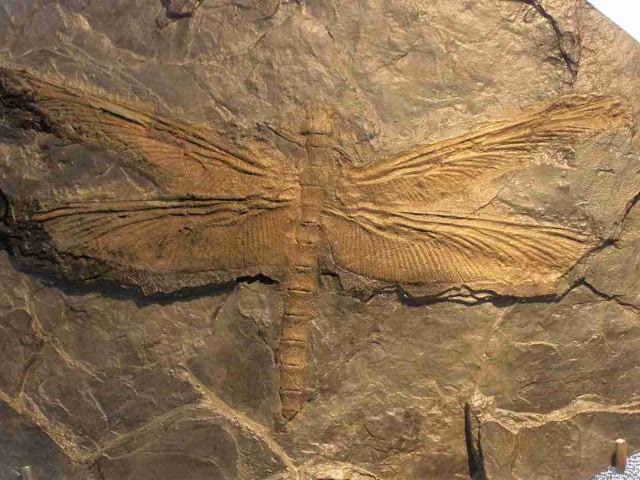
Meganeuropsis permiana was a giant dragonfly-like insect that lived before the dinosaurs and is considered the largest insect known to have existed. Around 300 million years ago, Earth differed considerably from the present day. During the Carboniferous and Permian periods, insects […]
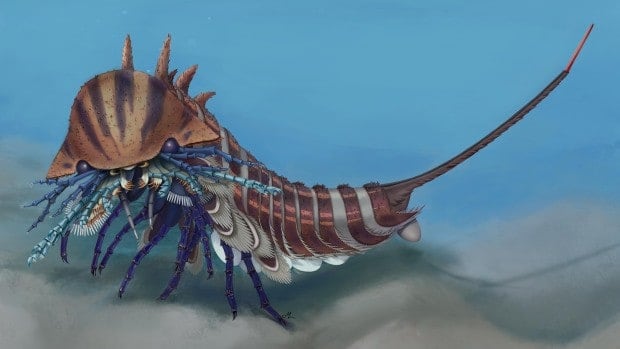
The Burgess Shale in British Columbia, Canada, preserves numerous fossils that document the evolution of life on Earth. Among them is Habelia optata, a 508-million-year-old relative of early chelicerates. This armoured predator had five pairs of […]
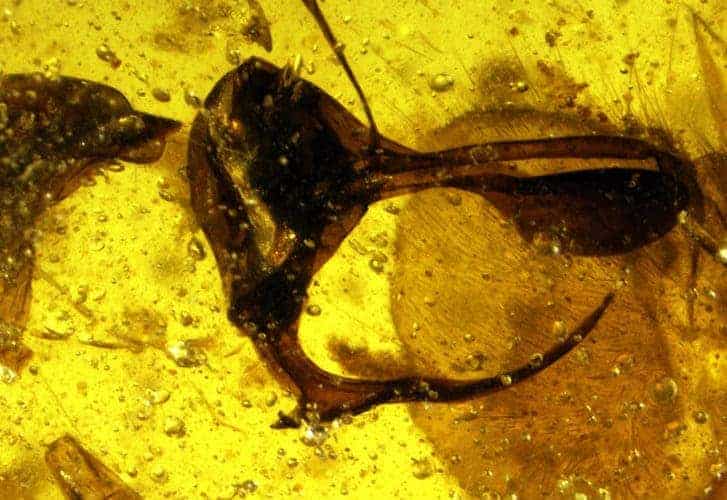
A new species of “hell ant” was discovered in 98-million-year-old amber from Myanmar, formerly Burma. Linguamyrmex vladi possessed powerful jaws and a sharp, metal-reinforced horn, which it may have used to pierce prey and feed on haemolymph. The amber deposits […]
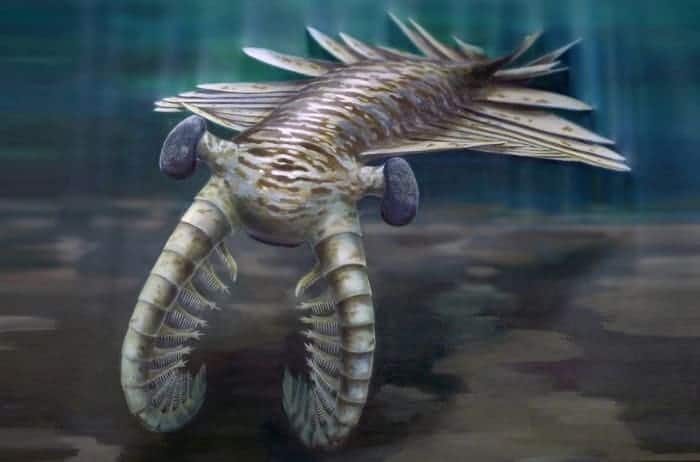
Approximately 515 million years ago, during the Cambrian, Anomalocaris was a major marine predator. This early relative of modern arthropods could reach one metre in length and is considered one of the earliest known apex predators. The Cambrian saw the emergence of diverse and unusual […]
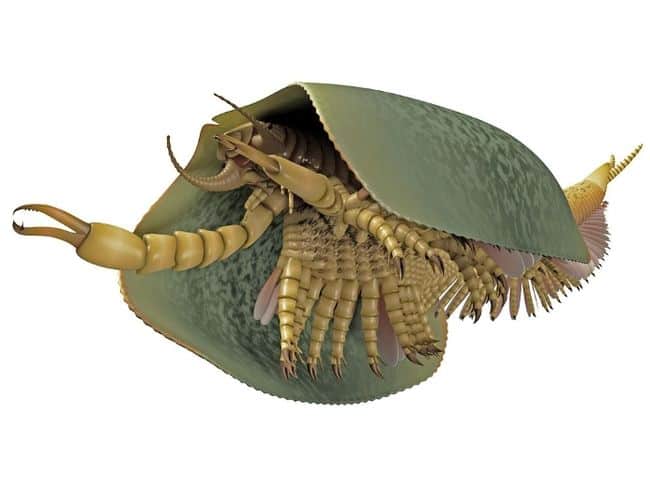
A significant palaeontological discovery was made in Canada in 2012. Researchers identified one of the earliest known predators in Kootenay National Park, British Columbia, in deposits approximately 508 million years old. Tokummia katalepsis resembled a […]
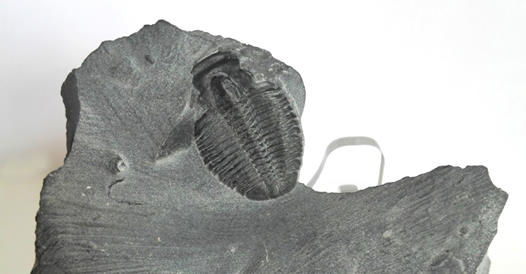
Elrathia kingii is a trilobite species commonly found in the Wheeler Formation of Utah, USA. It is a medium-sized trilobite, with large specimens measuring approximately 4–5 cm in length, and lived during the Cambrian, around 500 million years ago. Like all trilobites, it was a marine arthropod that inhabited […]
