A new species of hell ant has been discovered in a piece of 98-million-year-old amber from Myanmar, formerly Burma. Linguamyrmex vladi had powerful jaws and a sharp, metal-reinforced horn, probably used to pierce prey and feed on haemolymph.
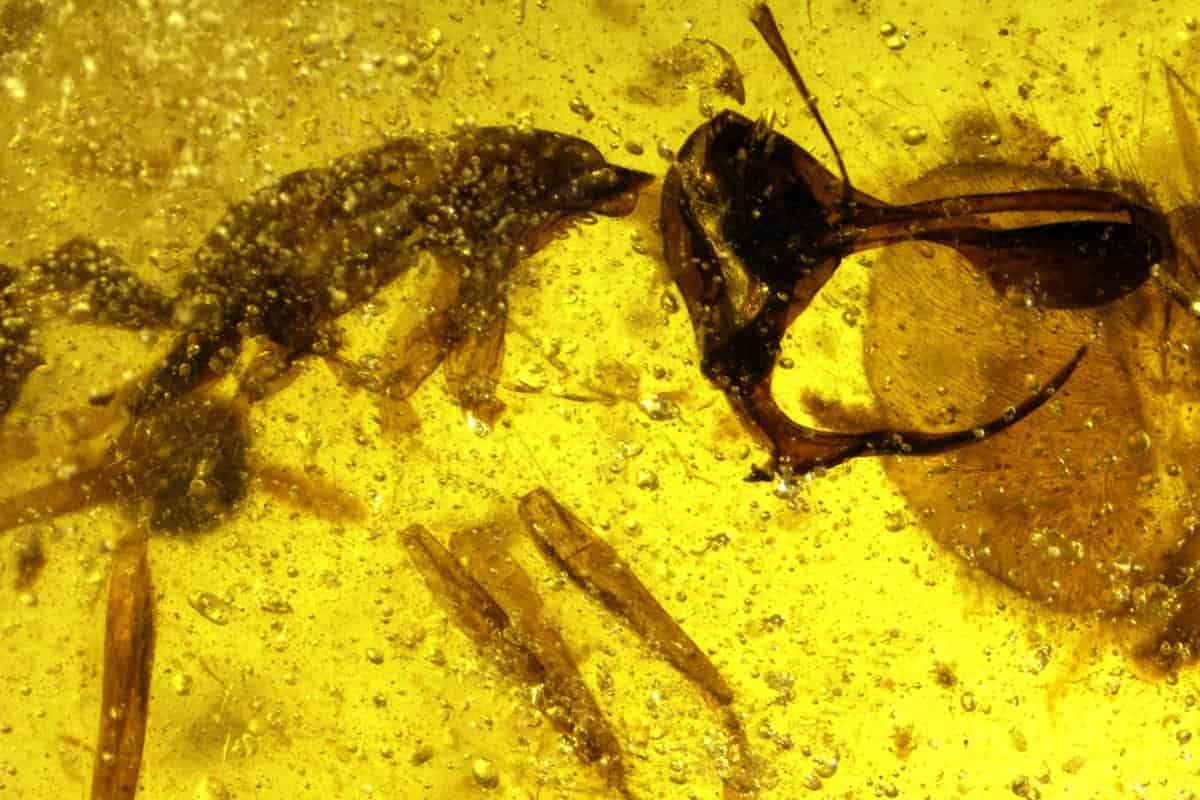
Amber deposits in Myanmar, formerly Burma, have yielded a new species belonging to the extinct group known as hell ants. The name reflects the unusual anatomy of these prehistoric insects.
Linguamyrmex vladi, as the species was named, lived 98 million years ago during the Cretaceous. It was discovered by Dr Phillip Barden and colleagues at the New Jersey Institute of Technology in Newark. Hell ants had specialised mouthparts: instead of conventional mandibles, they bore two sharp, upward-pointing blades. This arrangement occurs in no living ant species. Hairs around the mandibles, however, also occur in some modern ants. Contact with these hairs triggers rapid jaw closure and captures prey. Their presence in the fossil suggests that hell ant mandibles operated in a similar way.
Some members of this extinct group also bore a sharp, horn-like projection above the mandibles, used to pierce prey. This species had such a structure. Researchers suggest that contact with sensory hairs around the mouth caused the mandibles to rise, seize the prey and press it against the horn.
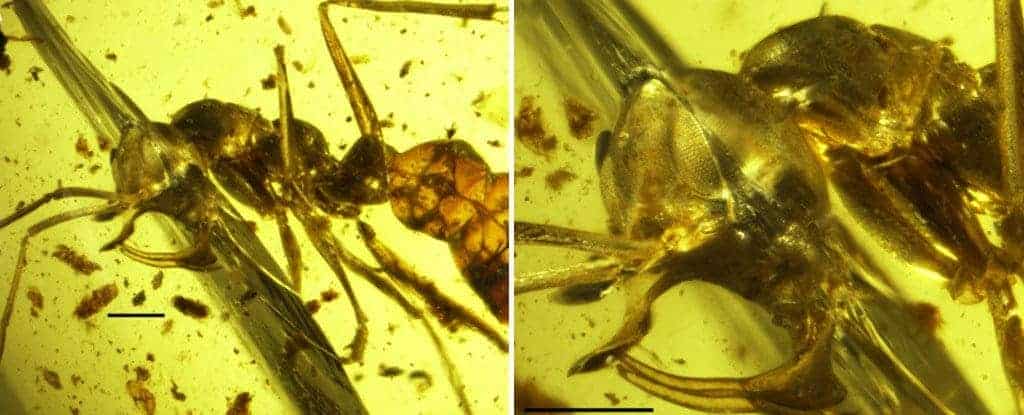
CT examination revealed that the horn of Linguamyrmex vladi, was reinforced with metal. Dr Vincent Perrichot, an entomologist at the University of Rennes 1 in France, suggests that the metal helped protect the horn. Dr Barden noted that this interpretation is plausible because the structure would have endured repeated impacts. Some living insects similarly reduce wear on their mandibles by incorporating metals such as zinc and iron.
In addition to its large mandibles and sharp, metal-reinforced horn, the prehistoric ant may have fed in a vampire-like manner. Anatomical study suggested that raising the mandibles would form a channel through which haemolymph, the circulatory fluid of insects, could flow into the mouth. Hell ants may therefore have captured prey with their mandibles, pierced it with the horn and then consumed its haemolymph. This hypothesis also inspired the name “vladi”, given to the species in reference to Vlad Țepeș, the ruler of Wallachia.
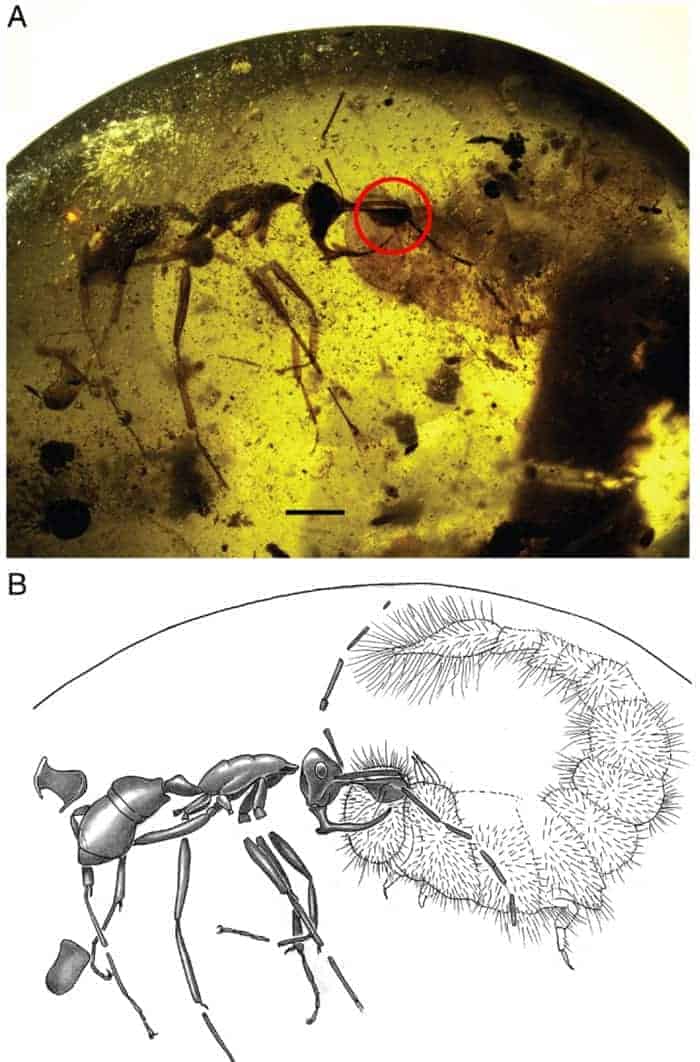
Beside the specimen of Linguamyrmex vladi, Barden’s team found a well-preserved beetle larva, the kind of haemolymph-rich prey suitable for such a feeding strategy. The ant may therefore have been preparing to feed when it became trapped in resin.
“Until we find a specimen with captured prey, we can only speculate, but it is surely a matter of time,” Dr Barden said. Myanmar’s amber deposits are exceptionally rich and may yield specimens that clarify how these hell ants fed.
Source: New Scientist, ScienceAlert
