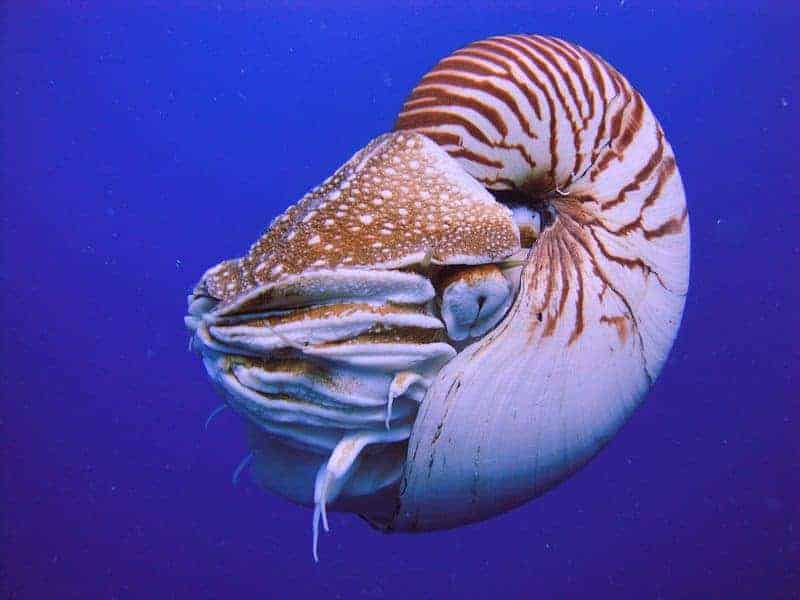
Ammonites are an extinct group of cephalopods related to octopuses, cuttlefish, and nautiluses, which appeared 400 million years ago, during the Devonian period, and went extinct 65 million years ago, during the Cretaceous period, at the same time as the dinosaurs.
Members of this group had coiled shells of various sizes made of aragonite—a mineral that pearls are also composed of—which were divided into multiple internal chambers. To float in the ocean, they filled the inner chambers of their shells with gas and expelled water to propel themselves forward. Alongside fish, they were prey for marine reptiles such as plesiosaurs and mosasaurs. The size of an ammonite could vary depending on the species, ranging from a few millimeters up to 1.4 meters in diameter.
Ammonites are found fossilized in many locations around the globe, with those from Madagascar being particularly famous.