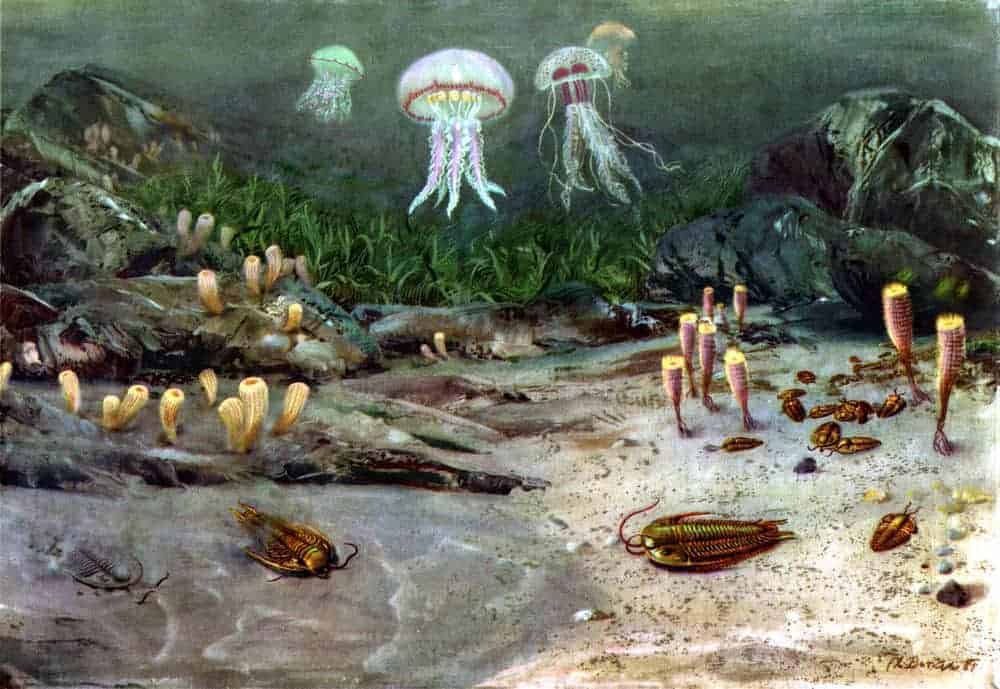
Trilobites are a group of extinct marine arthropods, similar to modern-day crabs. They lived from the Cambrian period, 521 million years ago, to the Permian period, 250 million years ago. They were some of the first animals on Earth and also among the most successful, living continuously for 270 million years until their extinction in the Permian. They ranged in size from 1 to 72 cm in length, depending on the species.
Trilobites were covered by a protective chitinous exoskeleton divided into three lobes: right, left and axial. This arrangement gave them their name (tri-lobite). The body consisted of a head (cephalon), a segmented thorax and a pygidium, the terminal section of the exoskeleton. The exoskeleton was periodically replaced through moulting: as the animal grew, it shed its old exoskeleton and formed a new one. Most trilobite fossils consist of the mineralised exoskeleton shed during moulting and preserved in sedimentary rocks. Soft parts, such as antennae and legs, are rarely found.
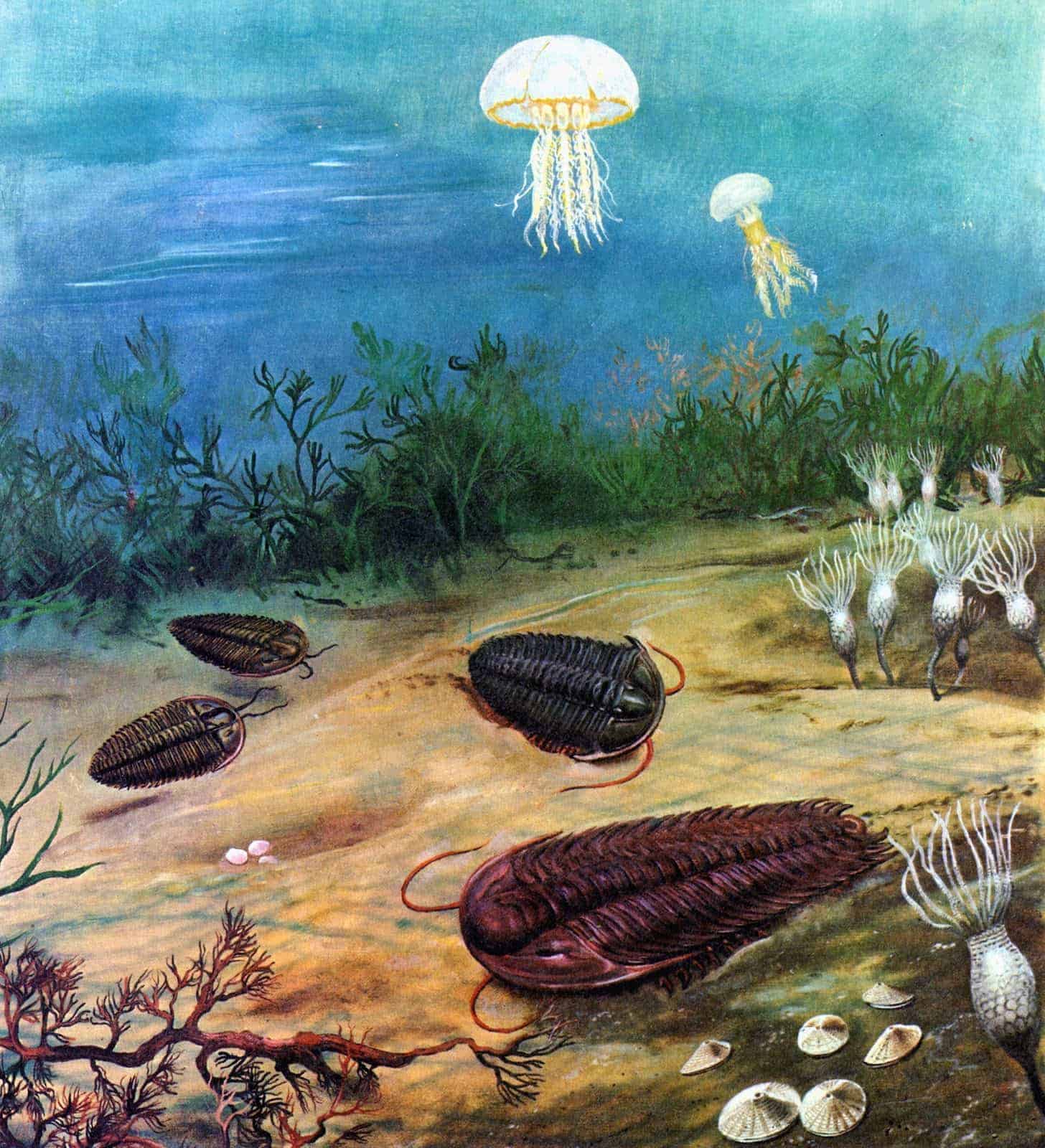
Trilobites had diverse lifestyles: some species walked along the floor of prehistoric oceans, while others swam or remained hidden beneath the mud. Their diet consisted of plankton, dead animals and even other trilobites. When threatened, they could roll into a ball to protect their vulnerable parts.
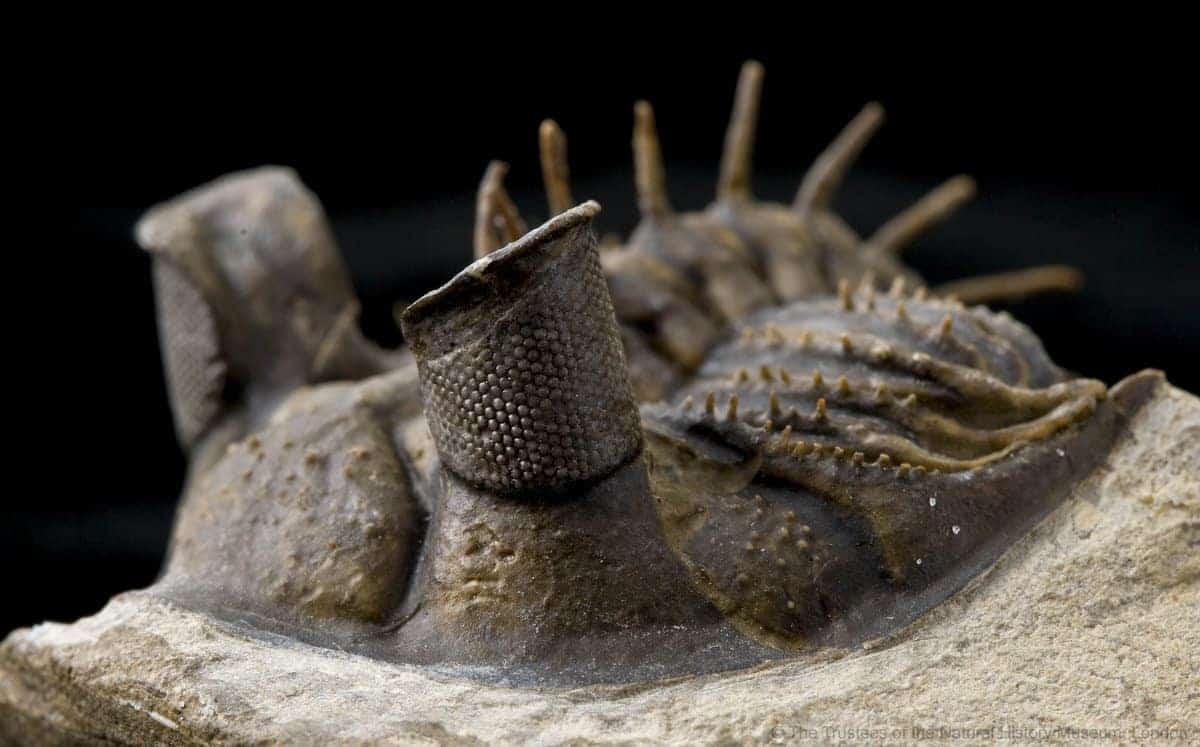
Trilobites were among the first animals to have eyes. Their compound eyes, similar to those of insects, contained numerous lenses formed from their own exoskeleton. These lenses have been preserved in fossils and are highly prized by collectors. Some deep-water trilobites, however, were blind.
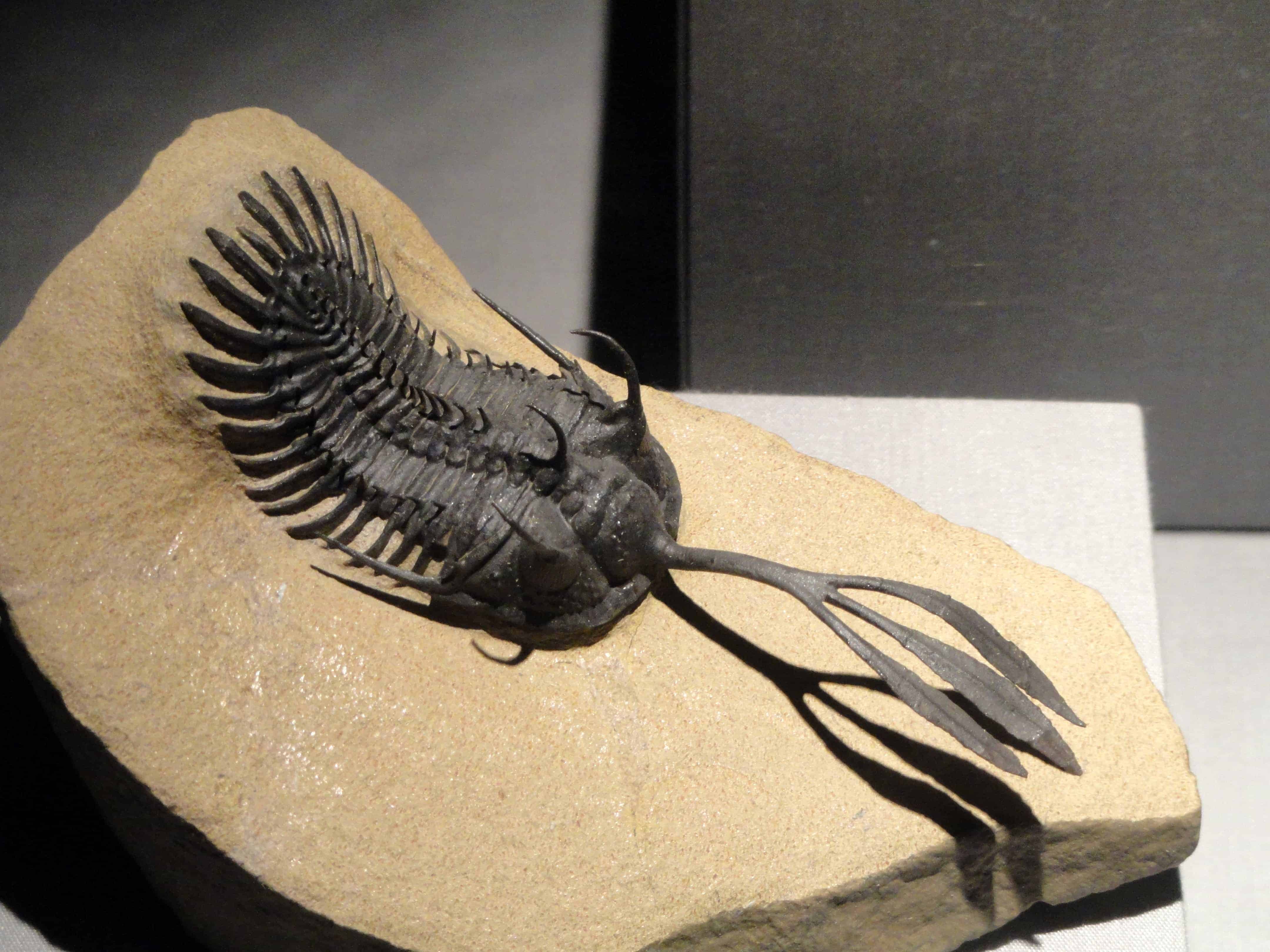
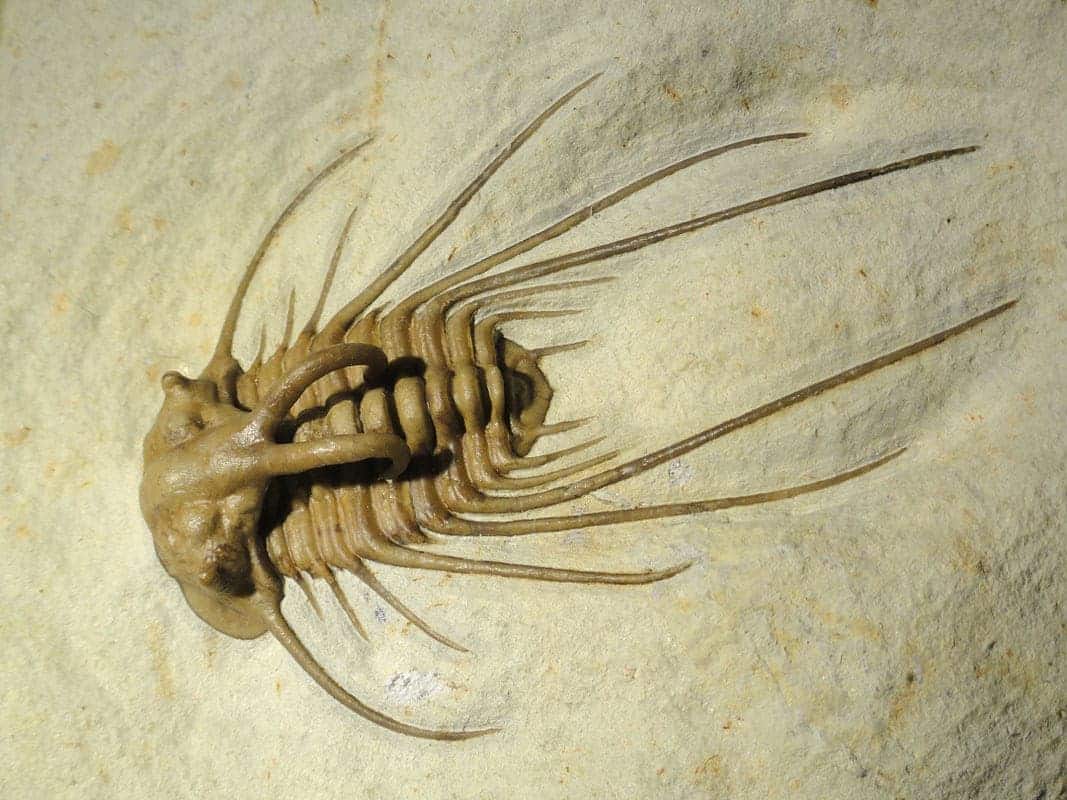
During the Devonian period, trilobites entered a prolonged evolutionary arms race, developing spines to protect themselves from predators. This produced elaborate exoskeletons that have been preserved as fossils in rocks in Morocco, Russia, America and elsewhere.