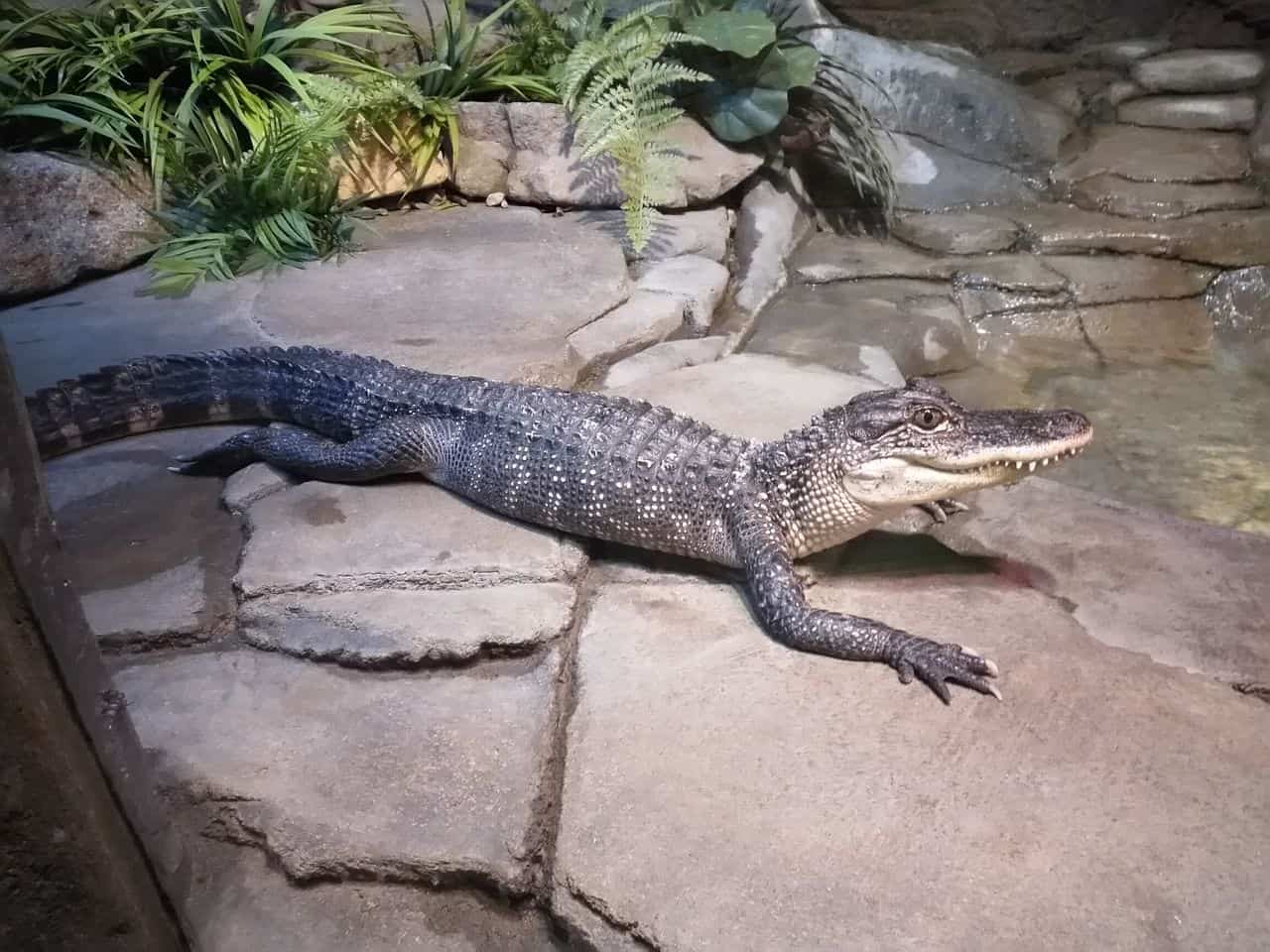
Alligators are semi-aquatic reptiles of the order Crocodilia, closely related to crocodiles and caimans. They appeared in the Eocene period, about 37 million years ago. There are currently two species of alligators: the American alligator (Alligator mississippiensis), widespread in the southeastern United States, and the Chinese alligator (Alligator sinensis), much rarer, found in China. Unlike most crocodiles, alligators generally have a broader, more rounded snout and prefer freshwater habitats such as slow-moving rivers, lakes, and swamps.
Alligators are opportunistic predators, feeding on fish, turtles, birds, and mammals. Their bodies are well adapted to life in the water: the powerful tail is used for swimming, and the eyes and nostrils are positioned on the top of the head, allowing the animal to remain almost completely submerged while observing its surroundings.
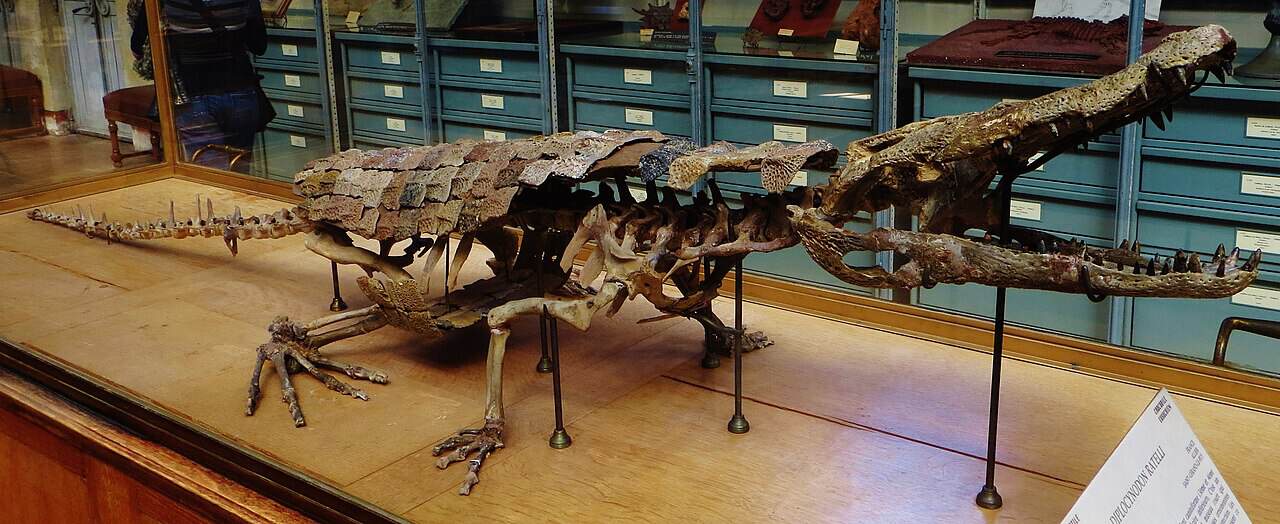
In the past, relatives of alligators were also widespread in Europe. One of the best-known fossil genera is Diplocynodon, present on the continent from the Paleocene to the Miocene. The species Diplocynodon ungeri lived approximately 15–16 million years ago in what is now Austria and France. Its snout was longer and narrower than that of modern alligators, and its body was protected by bony plates. Its fossils were also formerly described under the name Diplocynodon styriacus, but subsequent research has shown that they belong to the same species, Diplocynodon ungeri.