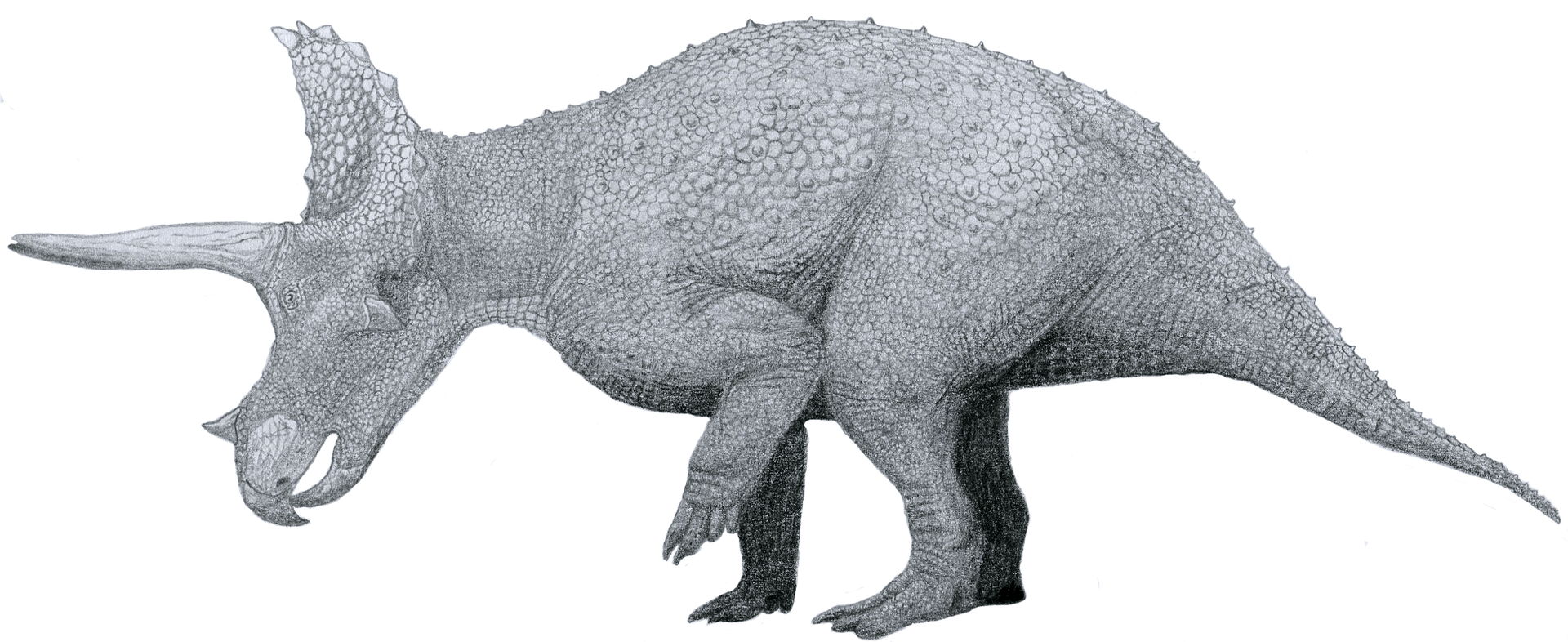
Triceratops is a genus of herbivorous ceratopsian dinosaur that lived during the Late Cretaceous, approximately 68 million years ago, in what is now North America. Its name is derived from the Greek words tri – three, kéras – horn and ōps – face and means "face with three horns".
The first specimen was discovered in 1887 in Denver, Colorado, by paleontologist George Lyman Cannon. The genus was first described in 1889, and numerous remains have been found since then. Between 2000 and 2010, 47 complete or partial skulls were discovered in the Hell Creek Formation of Montana. Paleontologists have found specimens of Triceratops from all life stages, from juveniles to adults.
Triceratops is one of the most well-known dinosaurs, thanks to its distinctive skull, with a "shield" at the back of the head and three horns in front. The skull was very large in relation to the rest of the body, reaching up to 2.5 meters. One horn was placed above the nostrils, and the other two, which reached about 1 meter each, were placed above the eyes. Early theories claim that these horns were used in combat, but according to more recent theories, they may have been used as distinctive marks of recognition, intimidation or in the mating ritual.
Triceratops had a robust and heavy body, reaching about 7.9–9 meters in length, up to 2.9–3 meters in height, and weighing up to 6.1–12 tonnes. This was a herbivorous dinosaur and had a mouth in the shape of a narrow and deep "beak", which was probably specialized for grabbing and pulling rather than biting. The teeth of Triceratops were arranged in groups called "batteries", with between 36–40 columns of teeth on each side of the jaw. Each column had between 3–5 teeth, resulting in a total of 432–800 teeth. Only a quarter of these teeth were actively used, the rest being spare, as they replaced their teeth throughout their lives.
Triceratops is among the last ceratopsian dinosaurs to appear before the Cretaceous-Paleogene extinction event.