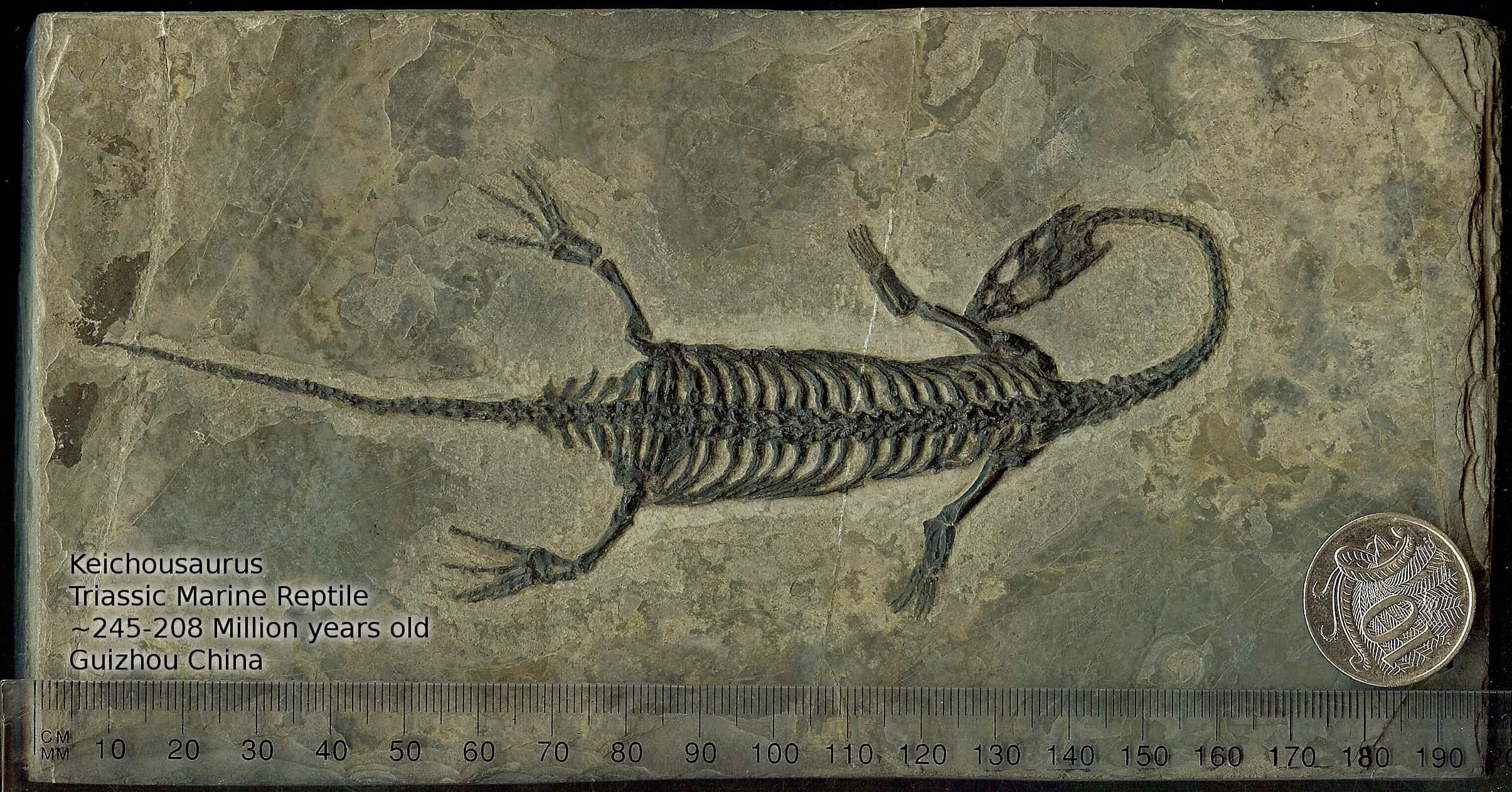
Keichosaurus is a genus of marine reptile in the pachypleurosaur family that lived during the Triassic period, approximately 245 to 208 million years ago, in what is now China. The name is derived from Kweichow, now known as Guizhou Province, China, where the first fossilized specimen was discovered. Today, they are among the most common sauropterygian fossils and are frequently found nearly complete, making them highly coveted by collectors.
Keichosaurus was well adapted to aquatic life. Adults were small, with males measuring approximately 16.1 cm and females approximately 14.9 cm. Members of this genus exhibited many characteristics of the family Pachypleurosauridae, including a short snout and elongated temporal openings. They had a long neck, a relatively small head and a long tail. Each elongated limb had five digits. The pointed head and sharp teeth suggest a diet of fish. Some specimens had a well-developed ulna, which may indicate that they spent part of their time on land or in marshy environments. Fossilised pregnant specimens of Keichosaurus hui indicate that they had a mobile pelvis, allowing them to give birth to live young rather than lay eggs.