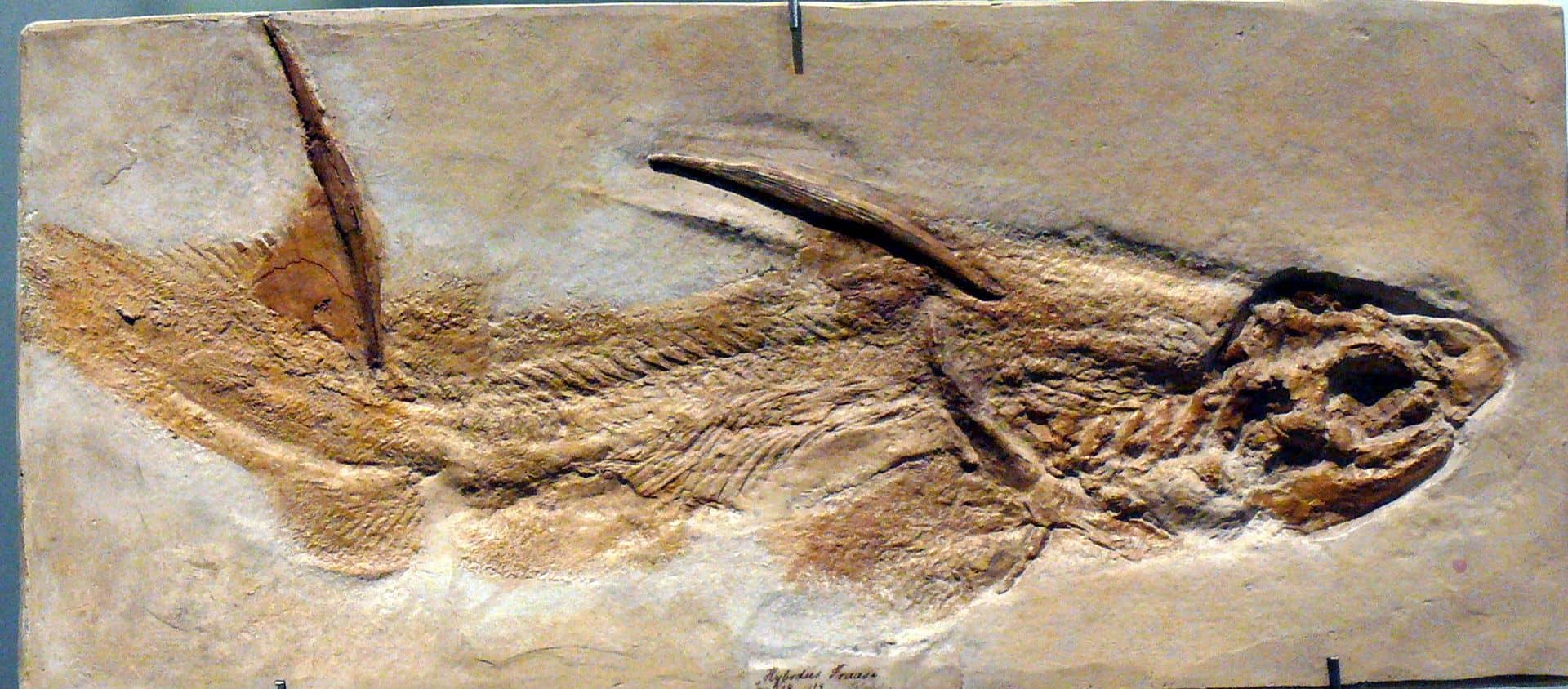
Hybodus is an extinct genus of cartilaginous fishes belonging to the hybodonts, animals with an appearance similar to modern Sharks. Hybodonts inhabited the planet’s waters from the Late Devonian, approximately 360 million years ago, until the end of the Cretaceous, approximately 66 million years ago.
Species of Hybodus could reach approximately 2 metres in length and are thought to have been opportunistic predators. Although it was not especially large, Hybodus had the classic streamlined Shark shape, with two dorsal fins that helped it move precisely through the water.
However, it also had a number of distinct features that set it apart from other sharks. First, it had two different types of teeth, indicating a varied diet. The sharper teeth would have been used to catch slippery prey, while the flatter teeth probably helped it crush crustaceans.
A characteristic feature was the presence of strong spines supporting the two dorsal fins. Their surfaces could bear ridges and small protuberances, while the posterior edge could carry denticles pointing towards the base of the spine. These details can be preserved in fossils even when the rest of the cartilaginous skeleton has not survived.