What are fossils and how are they formed?
Fossils (from the Latin word pit, which means unearthed) are the remains or traces of living things (plants, animals, etc.) from Earth's distant past. The oldest fossils date back 3.5 billion years, but fossils of complex multicellular organisms only began to appear 600 million years ago. Although there is no very clear rule, in general, for a fossil to be considered a fossil, it must be older than 10,000 years.
There are 2 main types of fossils – fossils of traces left by an organism during its life (footprints, coprolites, burrows, eggs, etc.) and fossils of the body of an organism (shells, teeth, bones, etc.)
Trace fossils left by an organism during its lifetime
Traces left by organisms during their lifetime can undergo a process of fossilization and be preserved for millions or even billions of years. These traces reflect the biological activity of the organism and can include: movement traces imprinted in rock, feeding traces (bite marks, coprolites – petrified excrement), resting traces (burrows), and reproductive traces (mineralized eggshells).

Body fossils of an organism
The body of an organism requires special conditions to successfully undergo the fossilization process and be preserved for millions of years. These conditions include:
- A rapid and permanent burial in sediments;
- An oxygen-free environment to prevent decomposition and protect against necrophagy attempts;
- A constant accumulation of sediment to protect the specimen;
- Lack of other factors that would damage the fossil over time (compression or excessive heat, etc.);
Fossilization methods
- Mineralization – involves the penetration of various minerals brought by water and the replacement of organic matter with those minerals through various chemical processes. Through the mineralization process, bone tissue is replaced with minerals, shells with pyrite or opal, and wood with silica.
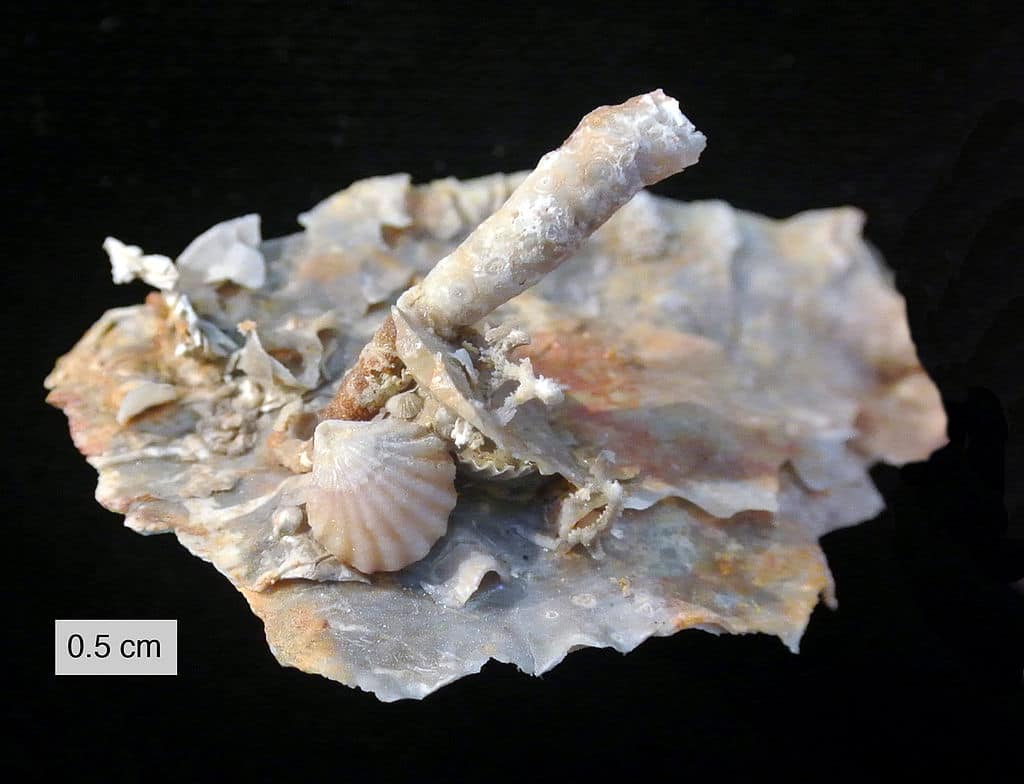
Mineralized fossils from the Permian period, Road Canyon, USA – in this case, the organic material has been replaced by silica – photo source: Wikipedia - Carbonization – involves the disappearance of volatile substances from the organism (nitrogen, oxygen, hydrogen, etc.) and the leaving behind of carbon. A process found especially in plants, their remains appear as a thin, black and detailed print on the rock.
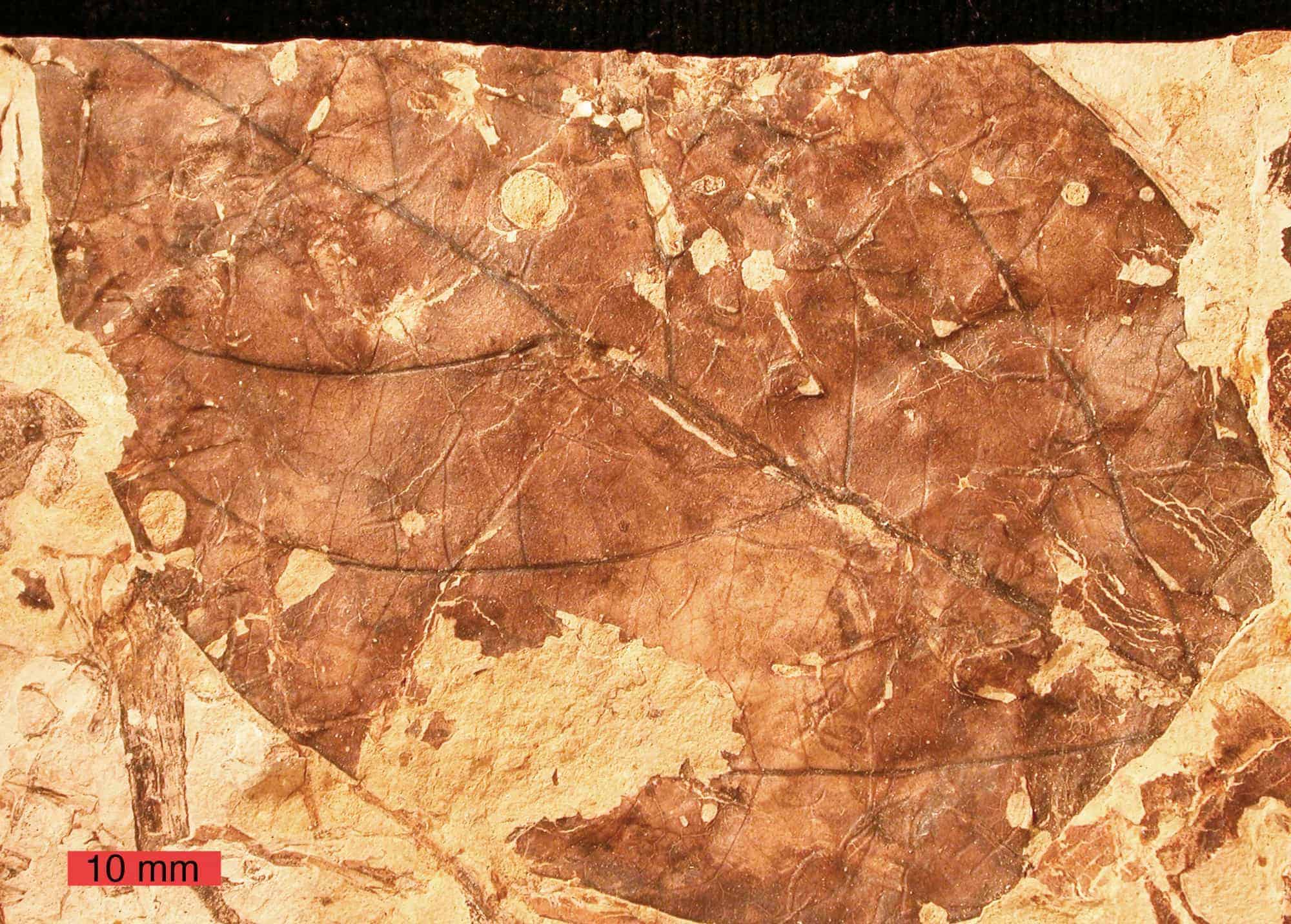
Leaf of Viburnum lesquereuxii carbonized from the Cretaceous period, Kansas, USA – photo source: Wikipedia - moldings şand impressions – external or internal, involve the imprinting of the exterior or interior of the organism in soft rock (usually sedimentary in nature) or other materials. The cast hardens and is thus preserved even after the total decomposition of the organism.

Shell cast from the Carboniferous period, Ohio, USA – photo source: Wikipedia - curing – is rare and involves preserving intact organic material. It is achieved under very special conditions – insects in amber, mummification in peat and other environments where bacteria do not survive, permanent freezing (mammoths in Siberia), etc.
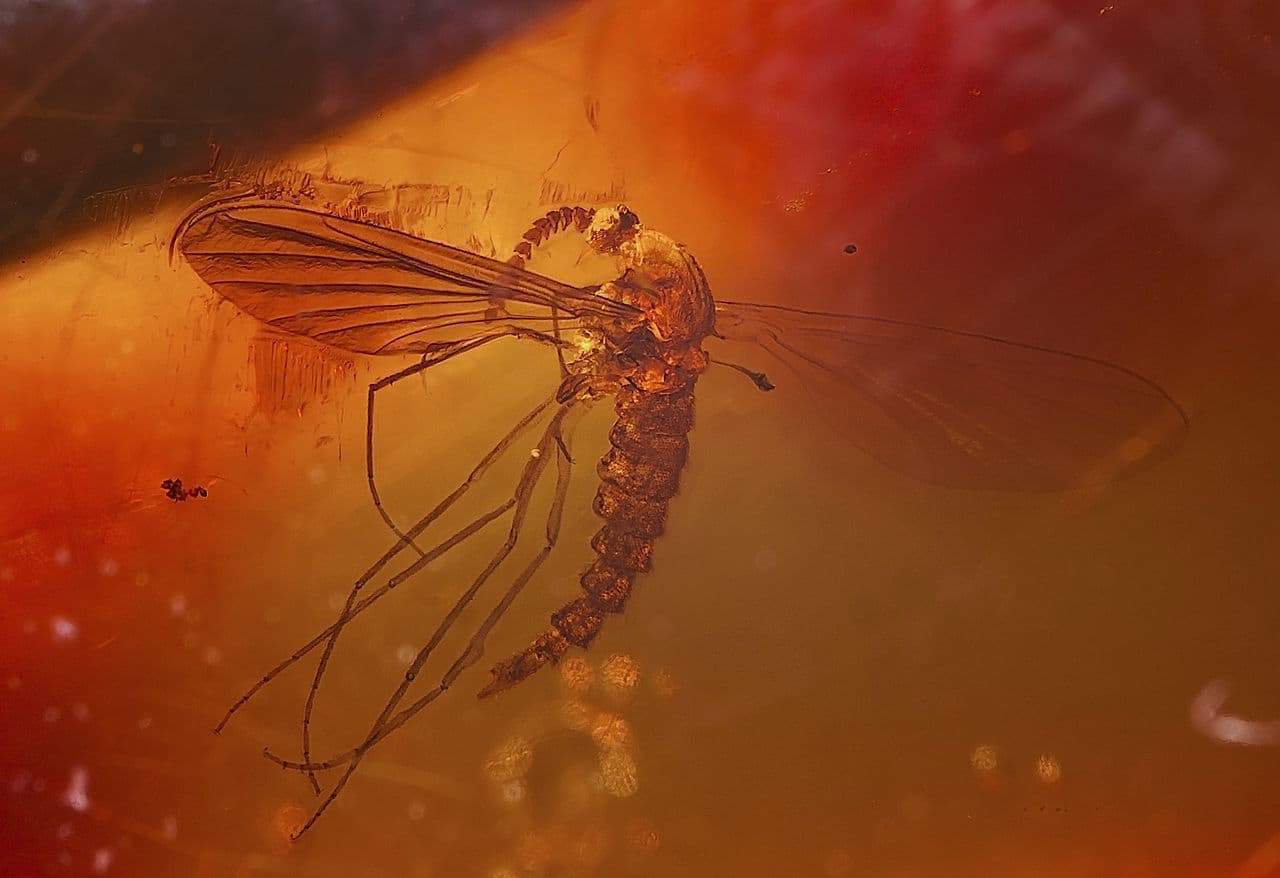
A mosquito in amber – author Didier Desouens, Wikipedia
Living fossils
Some organisms have remained almost unchanged for millions or even billions of years because they have not needed to evolve; these are known as living fossils. Modern organisms considered living fossils include various species of bacteria, the plant Ginkgo biloba, the Coelacanth fish, the Echidna, the Platypus, the Nautilus, etc.

Sources: Australian Museum, BBC, Britannica
