Out of Stock

Authentic unprocessed fossilized Dactylioceras sp. ammonite · 2.9 cm diameter

180 million years old · Jurassic · France

RON 34,99

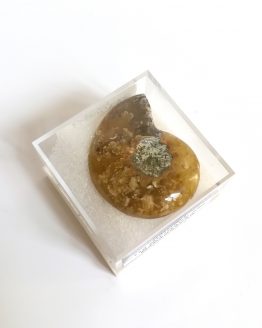
Authentic unprocessed fossilized Dactylioceras sp. ammonite specimen from France, approximately 180 million years old, supplied in a plastic box. A superb fossil with impressive natural geometry, dating from the time of the dinosaurs!

Due to its age, the specimen may have imperfections and repaired areas (glued sections) which are perfectly normal and often unavoidable for a fossil this old, but it is in good overall condition. Please study the product photographs carefully to assess the specimen’s natural imperfections and any repairs.

Click here for more general information about fossils

Specimen: authentic unprocessed fossilized Dactylioceras sp. ammonite

Age: approximately 180 million years old, Jurassic period

Dimensions: approximately 2.9 cm maximum diameter (please see the photo showing the specimen next to a ruler or held in a hand to get an idea of its size)

Country of origin: France

The product consists of a single authentic unprocessed fossilized Dactylioceras sp. ammonite in a plastic box, the specimen shown in the photos above. It comes with a brochure containing specific geological and paleontological information.

Out of stock

Description

Ammonites are known from the Jurassic, around 200 million years ago, and became extinct at the end of the Cretaceous, around 66 million years ago. They belong to the ammonoid group, whose history began earlier, in the Devonian, more than 400 million years ago.

Ammonites were marine molluscs belonging to the cephalopod group, related to today's squid and octopuses. In many species, the shell formed a spiral, with a geometry that still catches the eye in their fossils. Behind this appearance was a structure that helped the animal control its position in the water.

Inside, the shell was divided into several chambers. The animal's body occupied the last and largest of them, while the others, which contained liquid and gas in regulated proportions, helped it control its buoyancy. When a fossilized shell is sectioned, these compartments become visible and show us how the shell was organized during the animal's life.

Ammonites varied greatly in size: some species had shells only a few centimetres across, while giant forms could reach approximately two metres in diameter. Their fossilised shells can preserve ribs, ornamentation and details of the internal chambers, providing information about these animals and the seas in which they lived.

Ammonite Illustration
Ammonite Illustration – © artist Cristiana-Oana Băleanu for dinoshop.ro – the image is for illustrative purposes only and is not included with the product

Reviews

There are no reviews yet.

Be the first to review “Amonit fosilizat autentic neprelucrat Dactylioceras sp., 2,9 cm diametru, 180 mil ani, Jurasic, Franța”

Your email address will not be published. Required fields are marked *


Fossil jewelry

0
0
Your Cart
Your basket is empty