


Description
Sharks are among the ocean's most fascinating and feared creatures. These cartilaginous fish (class Chondrichthyes) have an impressive evolutionary history, existing for over 400 million years, long before the appearance of the dinosaurs. This makes them true living fossils. They are known as apex predators, playing a crucial role in maintaining marine ecological balance. They have an extremely well-developed sense of smell and can detect even the weakest electrical fields produced by their prey, thanks to specialized sensory organs.
There are currently over 500 species of sharks, from the giant and gentle whale shark (the world's largest fish), which feeds on plankton, to the tiny pygmy shark. The most famous species, the great white shark (Carcharodon carcharias), is renowned for its strength and speed.
Despite their reputation, most shark species are harmless to humans, and attacks are extremely rare.

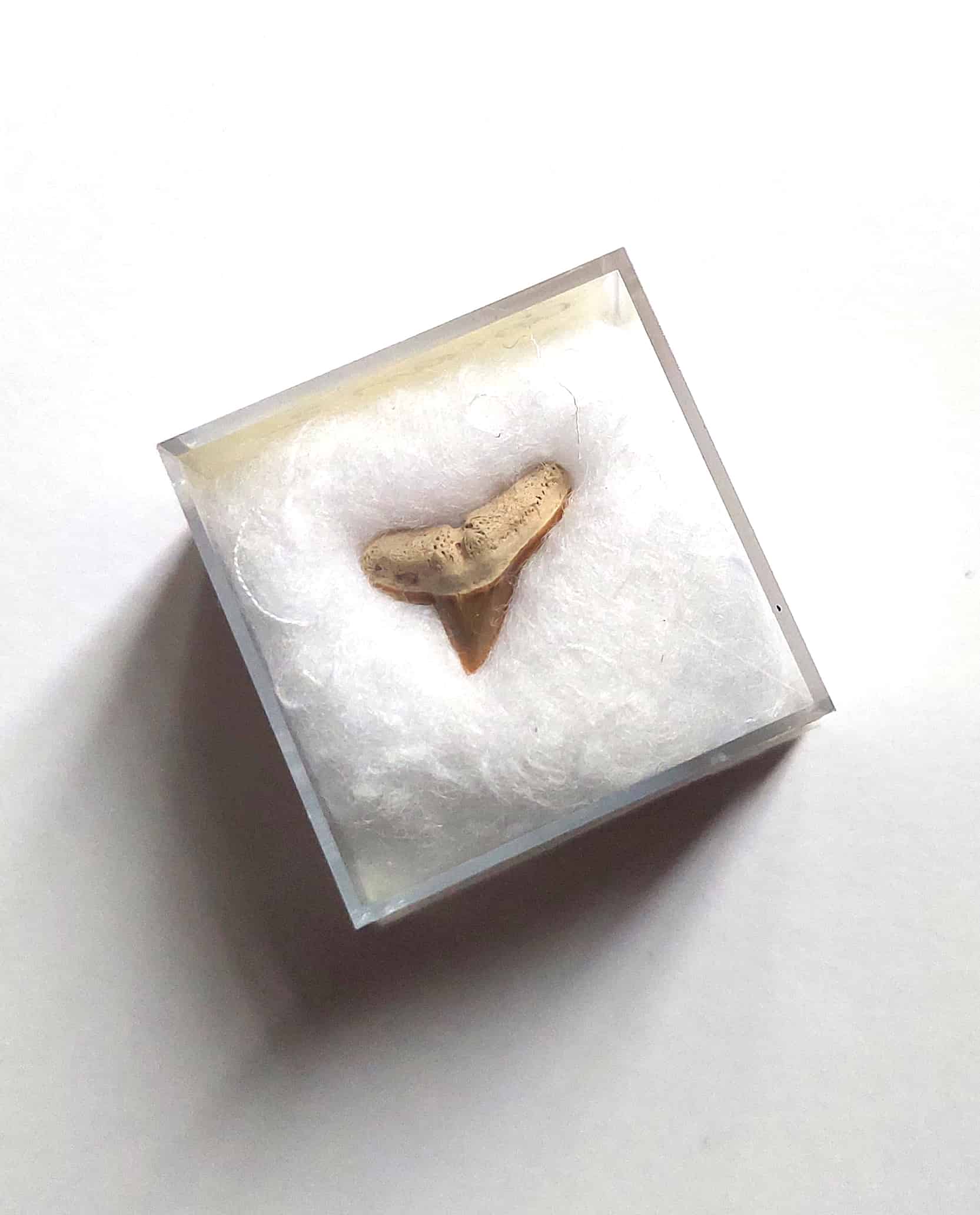
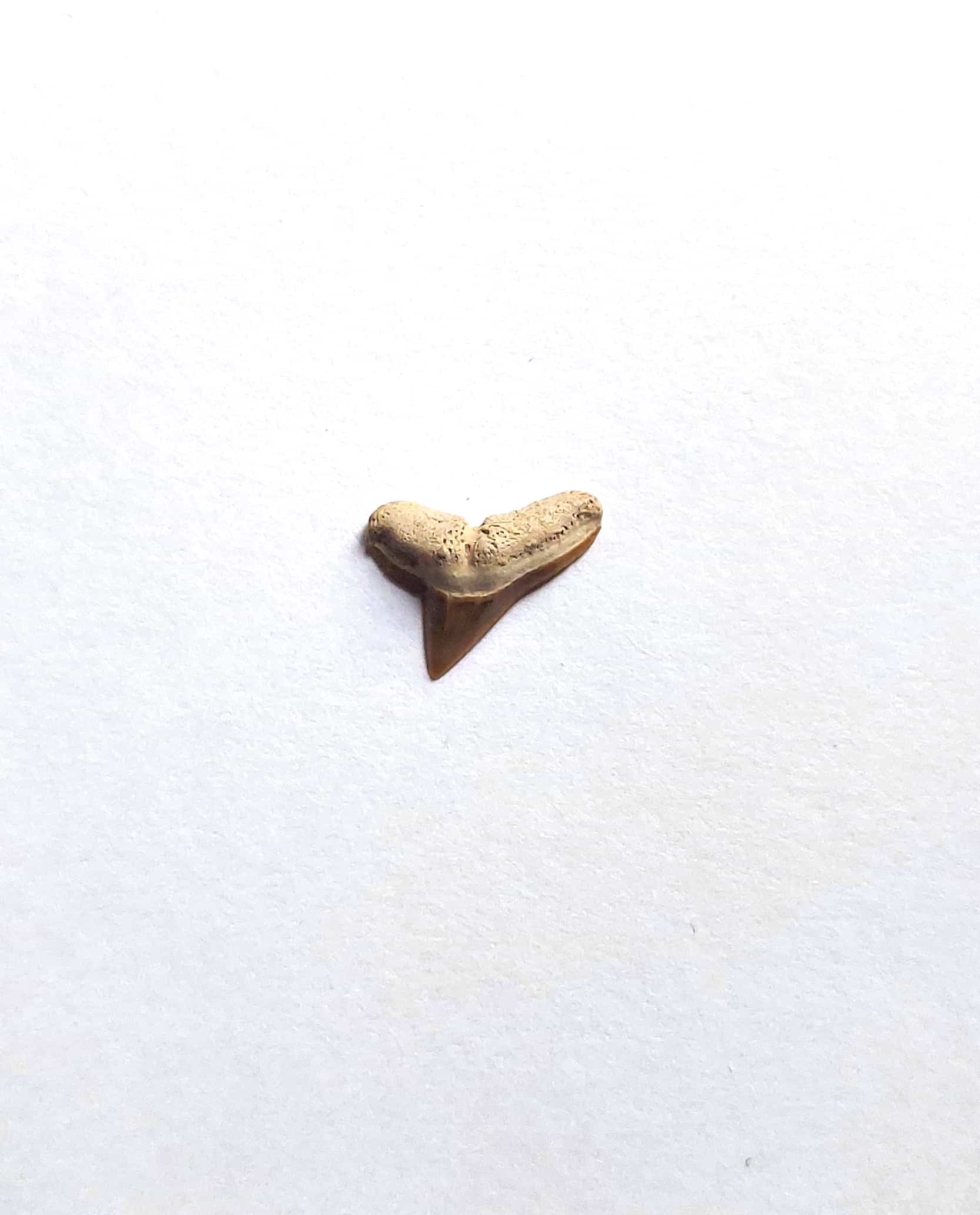
Squalicorax is an extinct genus of shark that roamed the seas of the Cretaceous period, in a world where dinosaurs dominated land and marine reptiles roamed the oceans. Its teeth, with serrated edges, were adapted for cutting flesh and give us clues today about the meals of this predator in the past.
Paleontological evidence suggests that its diet included fish and other marine animals, such as turtles, marine reptiles, and even other sharks. Like many modern sharks, Squalicorax also fed on the carcasses of animals it encountered. In the Cretaceous seas, such an animal could find food both among aquatic creatures and among remains carried in from land.
One of the most interesting discoveries is a tooth of Squalicorax stuck in the leg bone of a hadrosaur. The fossil preserves the trace of an unusual meal: the shark had fed on the body of a dinosaur that had fallen into the water after death. Thus, a single tooth can tell a story about the meeting of two worlds — that of land dinosaurs and that of marine predators.
Fossilized teeth of Squalicorax are small reminders of these vanished ecosystems. After tens of millions of years, their serrated edges still preserve the shape of a natural tool that helped the shark obtain its food.
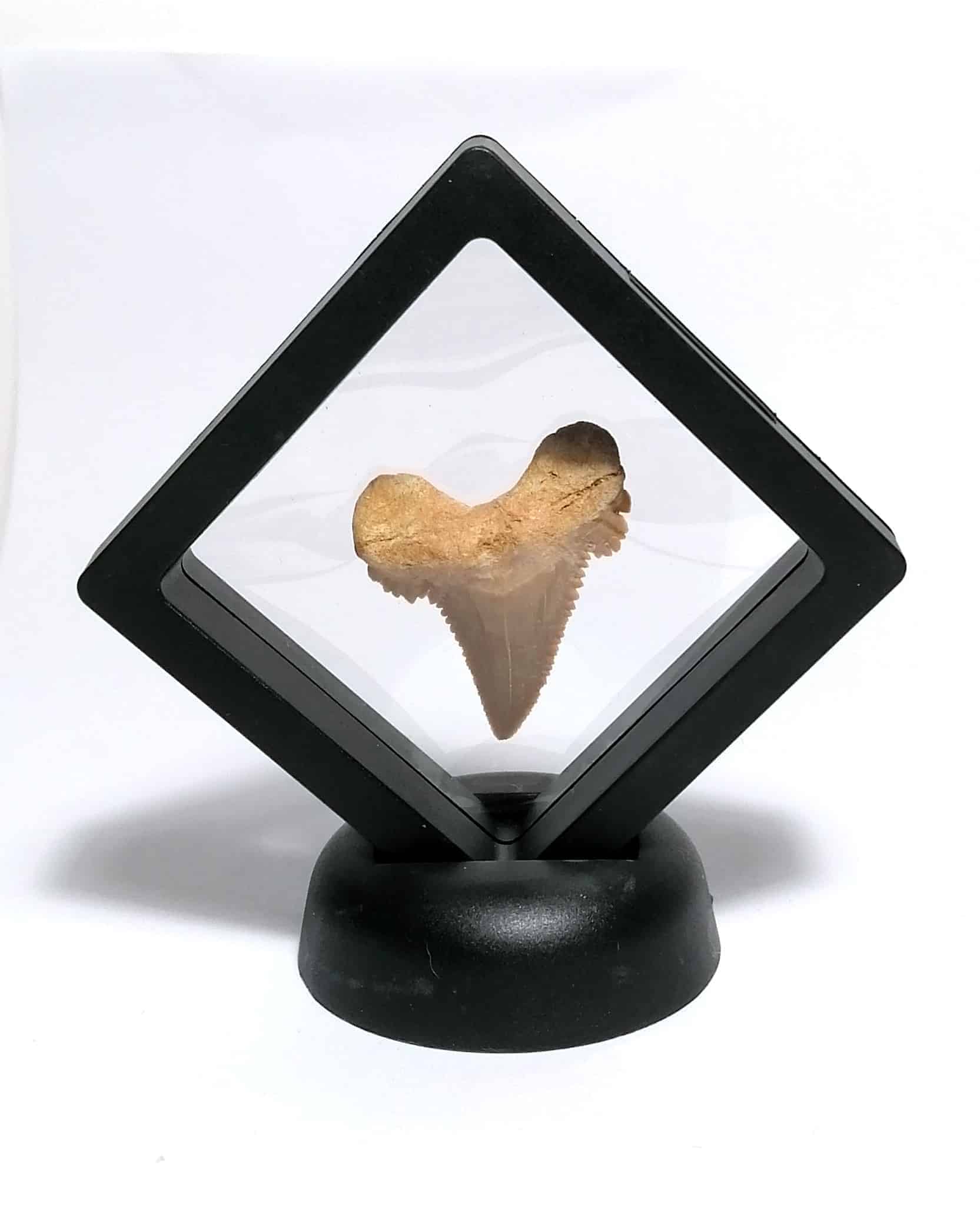
The Sand Tiger Shark of today, Carcharias taurus, is one of the most spectacular-looking sharks. Its long, narrow, dagger-like teeth remain visible even when its mouth is closed. The small spikes at their base help it catch and hold slippery food.
This shark roams coastal waters, near reefs, bays and wrecks, where it finds a wide variety of food. It mainly eats fish, but also squid, crustaceans, rays and sometimes smaller sharks. Large specimens can reach about 3.2 meters in length. Despite its impressive appearance, it is not usually considered aggressive towards humans.
It also has an unusual adaptation: it can rise to the surface to swallow air, which it stores in its stomach. This helps it control its buoyancy and remain almost motionless in the water, like a predator suspended above the seabed.
The Sand Tiger Shark also has extinct relatives, known from their fossilized teeth. These retain the characteristic shape, with a long, narrow tip and small lateral spikes, suitable for catching fish and other marine animals. The modern shark provides us with a good reference for what these animals looked like and how they used their teeth.
Lemon Shark is recognised by its yellowish-brown colouring, which gives it its name. In the living species, Negaprion brevirostris, this colouring helps it blend into coastal waters over sandy seabeds, where it searches for food.
Adults frequently reach approximately 2.5–3 metres in length and feed mainly on fish and crustaceans. Sand and water can make the silhouette of this predator difficult to notice, despite its size. The appearance of the modern shark helps us better understand the animals whose remains we discover today in the form of fossils.
Lemon Sharks belong to the genus Negaprion, also known from numerous fossilized teeth found in various regions of the world, including the U.S. The teeth preserve evidence of the presence of these sharks in the seas of the past and allow us to compare them with their relatives living today.















Reviews
There are no reviews yet.