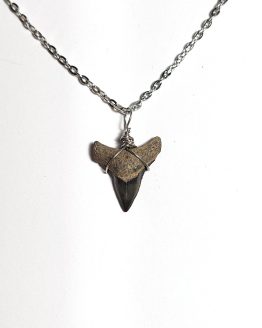
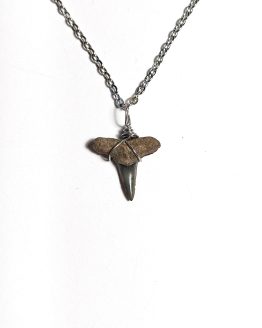
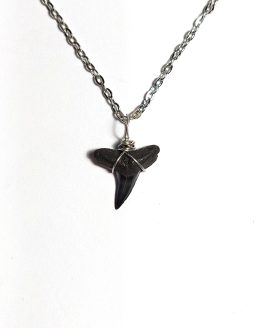
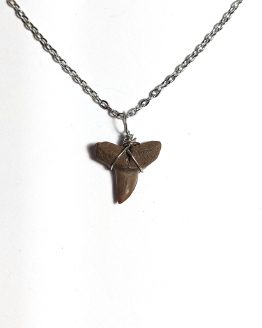
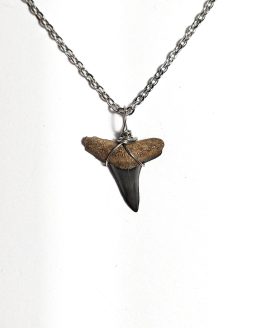
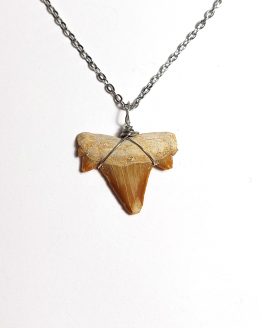
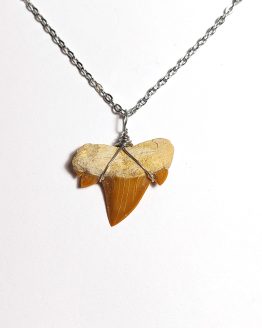
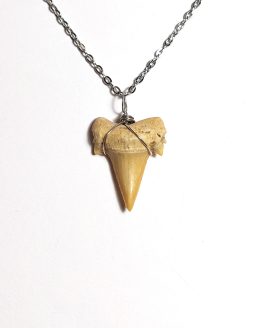
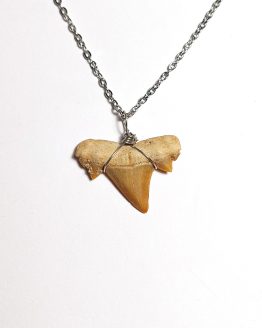
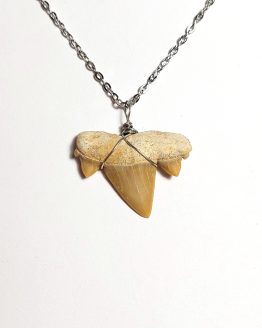
Handmade necklace with authentic fossilized Squalicorax Shark tooth · 2.8 cm pendant length

70 million years old · Cretaceous · Morocco

RON 34,99

Handmade necklace with an authentic fossilized Squalicorax Shark tooth pendant on a silver-coloured metal chain. The tooth is approximately 70 million years old and comes from Morocco. A unique opportunity to wear a special piece of jewelry with an impressive past!

Sharks have a very large number of teeth arranged in several rows and replace them many times during their lives (sometimes even weekly). This, combined with the durability of tooth enamel and the long span of time during which Sharks have existed, makes fossilized Shark teeth common in many parts of the world.

Due to the age of the specimen and the fragmentary nature of the fossil deposits in Morocco, as well as local extraction methods, the tooth may have imperfections and repaired areas (glued sections) which are perfectly normal and often unavoidable, but it is, overall, in good condition, with the enamel layer almost intact. We invite you to carefully study the product photos to identify the natural imperfections and possible repairs of the specimen.

Click here for more general information about fossils

Pendant: authentic fossilized Shark tooth Squalicorax

Age: approximately 70 million years old, Cretaceous period

Country of origin: Morocco

Pendant dimensions: approximately 2.8 cm in length along its longest side (please see the photo showing the specimen next to a ruler or held in a hand to get an idea of its size)

Chain: silver-colored metal

Chain dimensions: approximately 44 cm length

The product consists of a single handmade necklace with an authentic fossilized Squalicorax tooth pendant on a silver-colored metal chain, the one in the pictures above, and comes with a brochure containing specific geological and paleontological information.

1 in stock

Description

Squalicorax is an extinct genus of shark that roamed the seas of the Cretaceous period, in a world where dinosaurs dominated land and marine reptiles roamed the oceans. Its teeth, with serrated edges, were adapted for cutting flesh and give us clues today about the meals of this predator in the past.

Paleontological evidence suggests that its diet included fish and other marine animals, such as turtles, marine reptiles, and even other sharks. Like many modern sharks, Squalicorax also fed on the carcasses of animals it encountered. In the Cretaceous seas, such an animal could find food both among aquatic creatures and among remains carried in from land.

One of the most interesting discoveries is a tooth of Squalicorax stuck in the leg bone of a hadrosaur. The fossil preserves the trace of an unusual meal: the shark had fed on the body of a dinosaur that had fallen into the water after death. Thus, a single tooth can tell a story about the meeting of two worlds — that of land dinosaurs and that of marine predators.

Fossilized teeth of Squalicorax are small reminders of these vanished ecosystems. After tens of millions of years, their serrated edges still preserve the shape of a natural tool that helped the shark obtain its food.

Squalicorax illustration
Illustration of Squalicorax shark – author Dmitry Bogdanov, Wikipedia – the image is for illustrative purposes only and is not included with the product

Reviews

There are no reviews yet.

Be the first to review “Colier handmade cu dinte fosilizat autentic de Rechin Squalicorax, 2,8 cm lungime pandantiv, 70 mil ani, Cretacic, Maroc”

Your email address will not be published. Required fields are marked *


Fossil jewelry

0
0
Your Cart
Your basket is empty