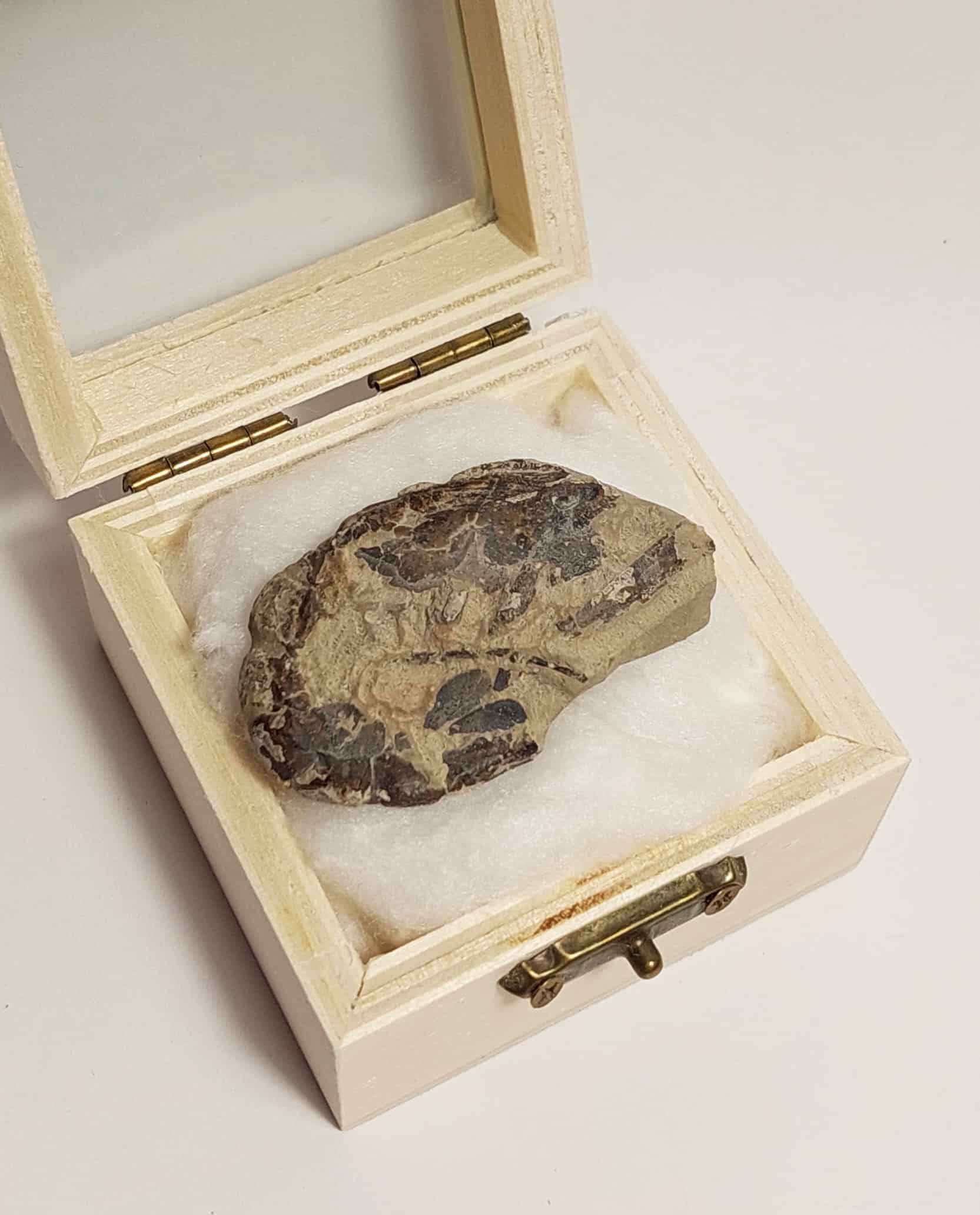


Description
Atherfieldastacus magnus was an extinct marine crustacean of the family Mecochiridae, known from Early Cretaceous deposits on the Isle of Wight, UK. Its elongated body and segmented abdomen give it the recognizable appearance of a lobster. The fossil preserves details of its protective shell, giving us a picture of the crustaceans that lived in the seas of the time of the dinosaurs.
Lobsters living today provide a reference point for understanding this body shape. They are decapod crustaceans, with five pairs of legs, a muscular abdomen and a hard outer shell. To grow, they molt, periodically replacing this shell. Species such as European and American lobsters shelter in crevices or burrows and often search for food at night.
Their diet is varied: they can capture mollusks, worms, other crustaceans, and fish, but they can also consume animal remains or plant material. Pincers help them catch and crush their food. The fluid that circulates through their bodies, called hemolymph, contains hemocyanin, a protein that transports oxygen and turns a bluish color when oxygenated. This information describes modern lobsters; the exact diet and physiology of the fossil species cannot be determined from their resemblance to them alone.















Reviews
There are no reviews yet.