


Description
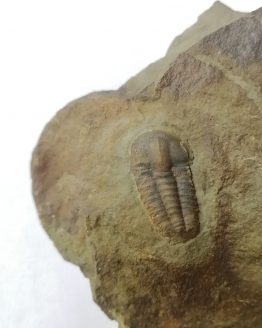
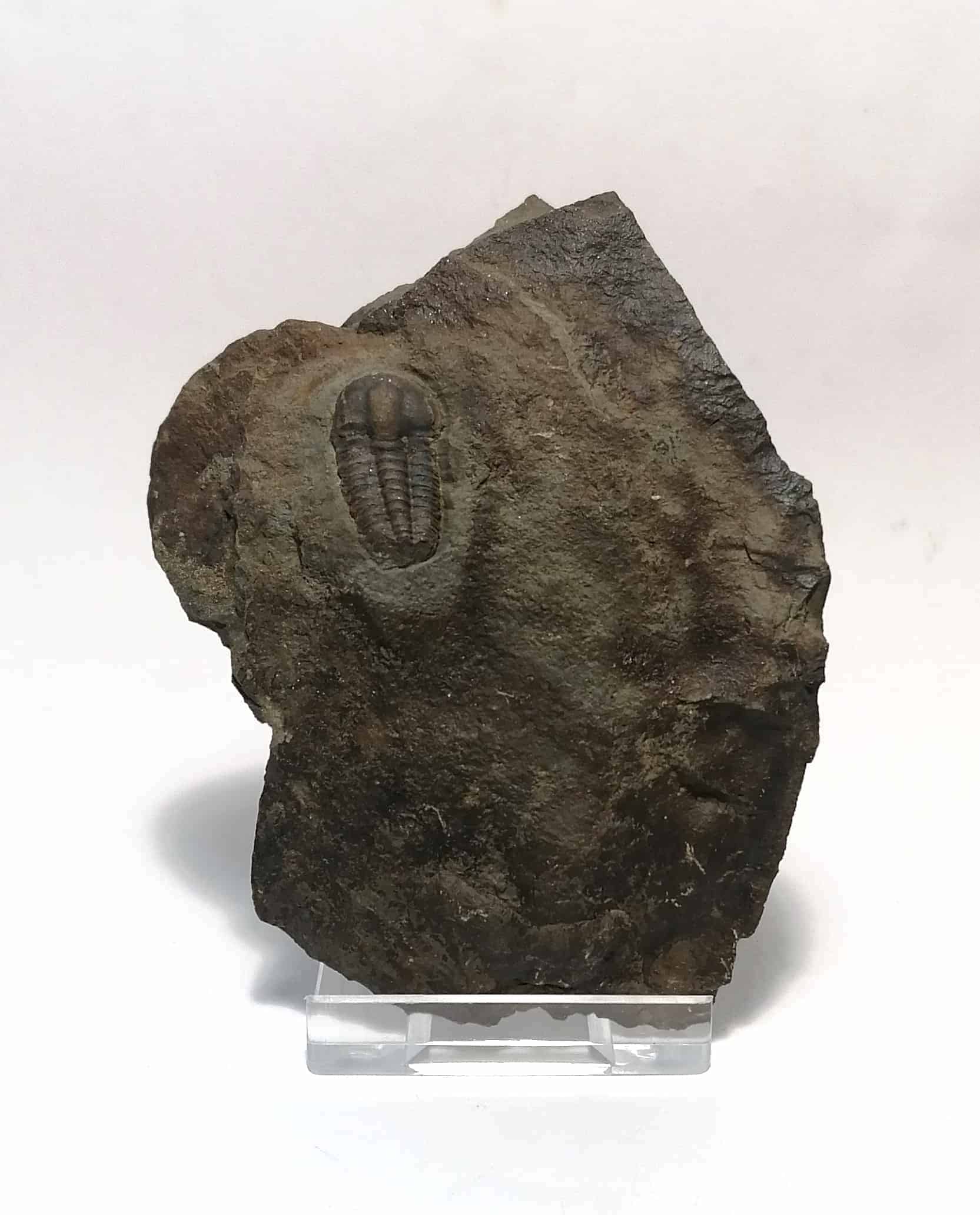
Trilobites are an extinct group of marine arthropods, similar to present-day crabs. They lived from the Early Cambrian, approximately 521 million years ago, until the end of the Permian, approximately 252 million years ago. They were among the earliest animals on Earth and among the most successful, surviving continuously for around 270 million years until their extinction in the Permian. Trilobites ranged in size from a few millimetres to over 70 cm long, depending on the species.
Trilobites had a mineralized exoskeleton, composed mainly of calcite, which protected their bodies. It was replaced periodically through moulting as the animal grew. The exoskeleton was divided into three lobes (right, left and axial), giving trilobites their name. The body consisted of a head (cephalon), a segmented thorax and a pygidium, the rear section of the exoskeleton. Many trilobite fossils consist of the mineralized exoskeleton shed during moulting and preserved in sedimentary rocks. Soft parts, such as antennae and legs, are rarely found.
They were among the first animals to have eyes! Their compound, insect-like eyes had numerous lenses formed from their own exoskeleton, which have been preserved in fossils to this day and are highly prized by collectors. Some deep-sea trilobites, however, were blind.
Some species had spines and other projections on their exoskeletons, which may have helped protect them from predators. Devonian trilobites include forms with spectacular spines, whose fossils are prized by collectors for their remarkable detail.





Reviews
There are no reviews yet.