Hatzegopteryx is a giant prehistoric flying reptile discovered in the Hațeg region of Romania. It lived approximately 71–65 million years ago, at the end of the Cretaceous, and had a wingspan of 10–11 metres, comparable to that of a small aircraft.
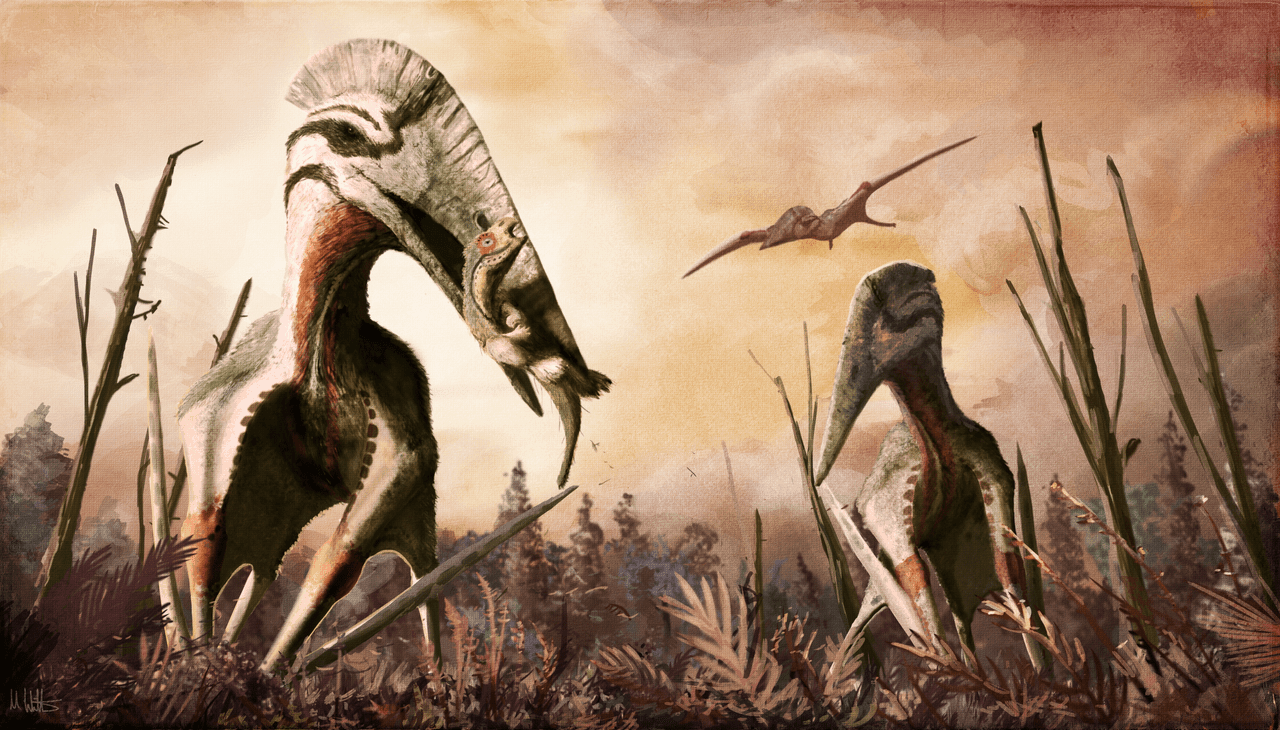
During the Cretaceous, approximately 145.5–65.5 million years ago, Earth’s continents and oceans had a different distribution from today. The Hațeg region of Transylvania was an island in the prehistoric TethysOcean. The island’s dinosaurs evolved smaller body sizes in response to limited resources, a phenomenon known as insular dwarfism. In other respects, they resembled their mainland relatives.
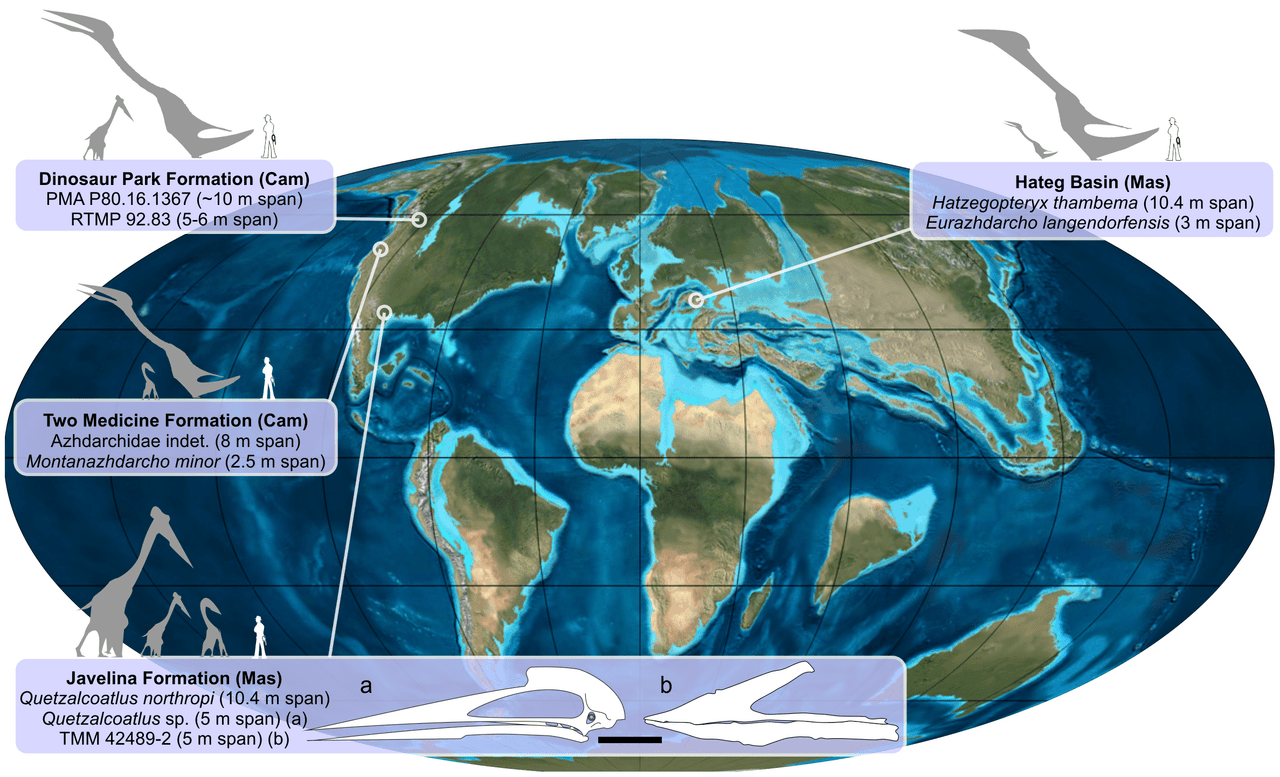
The island’s restricted ecosystem also influenced its pterosaurs, or flying reptiles, which underwent insular gigantism, attained much larger sizes and occupied the role of apex predators. One was Hatzegopteryx, an azhdarchid pterosaur and one of the largest flying animals ever to exist.
With a wingspan of 10–11 metres, comparable to that of a small aircraft, Hatzegopteryx flew over Hațeg Island and fed on a range of dinosaurs, including dwarf titanosaurs and local iguanodonts. A distinctive feature was its approximately 3-metre-long skull, among the largest known in a non-aquatic animal. To permit flight with such a large head, the bone had an air-filled internal structure that reduced its mass without compromising strength. The jaw bones indicate a wider gape than in other giant pterosaurs, while the neck vertebrae suggest a strong, muscular neck capable of attacking and lifting animals much heavier than itself.
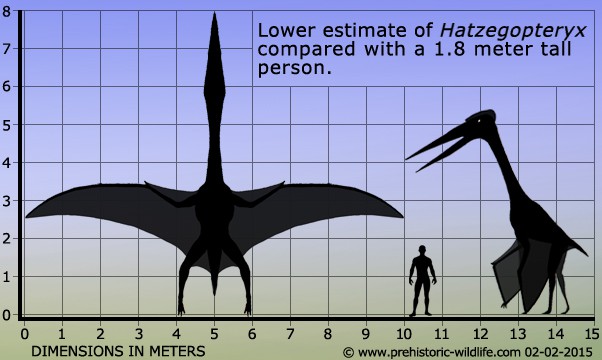
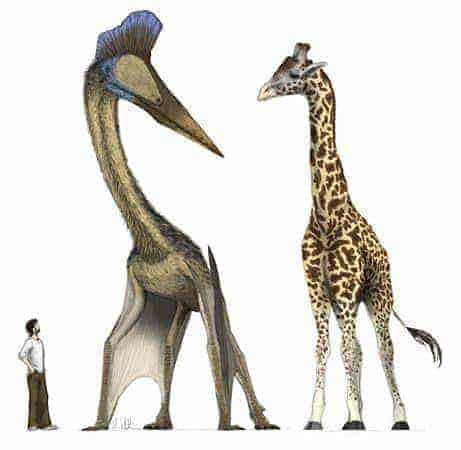
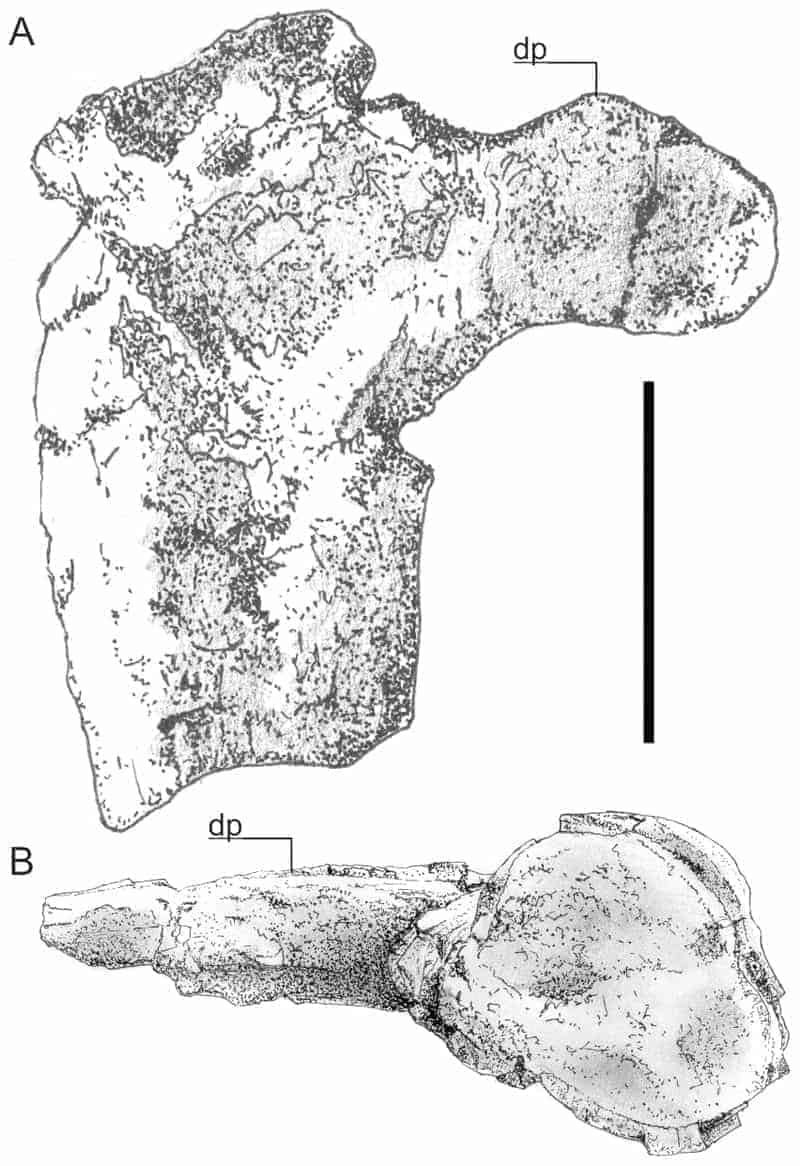
The reconstruction of Hatzegopteryx is based on incomplete remains, including skull fragments, neck vertebrae and the left humerus, the upper arm bone. Many aspects of the animal remain unknown or speculative. Nevertheless, the dimensions of the recovered fossils clearly indicate that it was among the largest flying animals ever to exist, perhaps the largest.

Unfortunately, Mark Witton's reconstructions are rather imaginative. The information he uses is very limited and second-hand. Pterosaur fossils, both in Hateg and especially in the Sebes area, are numerous (many still unpublished), and include several partial skeletons that demonstrate that there were at least three species, two of which were large - gigantic. At the same time, the giant pterosaur fossils from Sebes indicate that they had probably lost their ability to fly. The skull was no longer than 1.6 m, and it certainly did not feed on various dinosaurs, but rather was omnivorous, and could hunt small vertebrates at most (aquatic turtles), could swallow dinosaur eggs (megaloolithus), or could complete its menu with remains of corpses from larger animals.
Thank you very much for the message and for the clarifications and we apologize for the late response! We will study the problem further and will come back with an article based on other sources! If you can recommend some studies for documentation, that would be excellent!