The year 2016 was exceptionally productive for palaeontology. Researchers reported discoveries ranging from new dinosaur species to fossilised brain tissue and a dinosaur tail exceptionally well preserved in amber.
For those interested in dinosaurs and prehistoric life, 2016 brought important findings from around the world, providing new evidence about the animals that once inhabited Earth.
As University of Alberta palaeontologist Scott Persons remarked, in 2016 “we came closer than ever to Jurassic Park”, thanks to remarkable fossils unearthed in different parts of the world.
New dinosaur species discovered in 2016
From the beginning of the year, researchers made important discoveries, including several notable new dinosaur species.
One was Dracoraptor hanigani, nicknamed Draco, found in rocks on a coastal cliff in South Wales. It may be the oldest known Jurassic dinosaur from the United Kingdom.
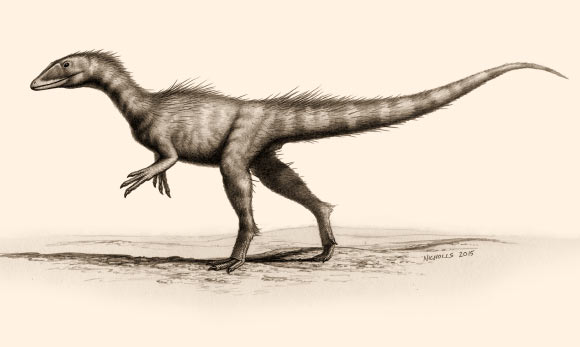
Dinosaur fossils are rare in Wales, and food resources for this species may also have been limited. Draco was a relatively small carnivorous dinosaur, approximately 2 metres in length and less than 1 metre in height.

Eotrachodon orientalis is represented by the most complete fossil of a primitive duck-billed dinosaur discovered in the eastern United States. This herbivore lived 83 million years ago, and its robust teeth enabled it to process tough plant material. Eotrachodon orientalis inhabited what is now Montgomery County, Alabama.
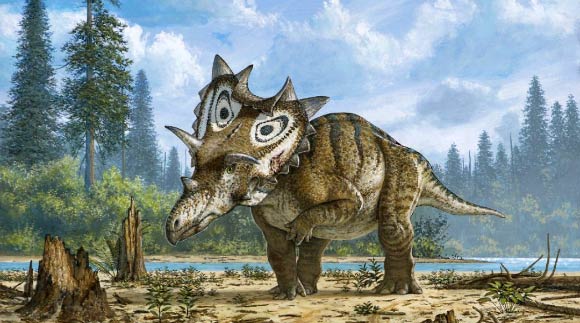
Spiclypeus shipporum, nicknamed “Spiked Shield”, was another dinosaur species described in 2016. Its bony spines and horns inspired the nickname. These animals lived approximately 85–66 million years ago in what is now Montana.
Dancing as a dinosaur courtship ritual
Another notable finding in 2016 concerned dinosaur behaviour. Fossilised scrape marks suggest that some dinosaurs performed dance-like displays during courtship.

Rocks of the Dakota Formation in western Colorado preserve evidence supporting this hypothesis. Dinosaur courtship rituals may have resembled those of living birds. Martin Lockley of the University of Colorado Denver and his team interpreted the “dancing dinosaurs” as bipedal carnivores known as theropods.
Lockley explained: “The dinosaurs were clearly very active during the breeding season. This behaviour occurs in some living birds. The extensive scraping suggests a high level of activity.”
A 68-million-year-old vocal organ
A discovery in 2016 provided evidence relevant to prehistoric sounds. Researchers inferred the possible calls of the ancient bird Vegavis iaai, from its preserved vocal organ.
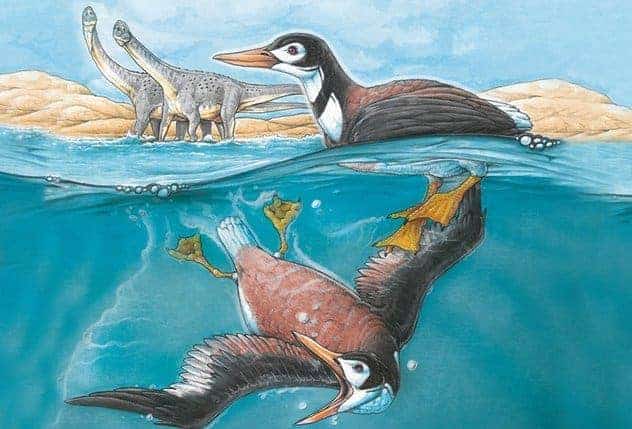
Julia Clarke of the University of Texas at Austin nicknamed the organ the “squawk box” and suggested that the bird could produce loud calls resembling those of living ducks and geese. Her team also proposed possible vocalisations for other dinosaurs. Many may have produced low-frequency, closed-mouth sounds comparable to those of crocodilians.
Fossil of a reproductively active female Tyrannosaurus rex
One notable palaeontological finding concerned a fossil of Tyrannosaurus rex identified as a reproductively active female, discovered in Montana. It provided evidence concerning the evolution of egg laying and the identification of sex in Tyrannosaurus and other carnivorous dinosaurs.
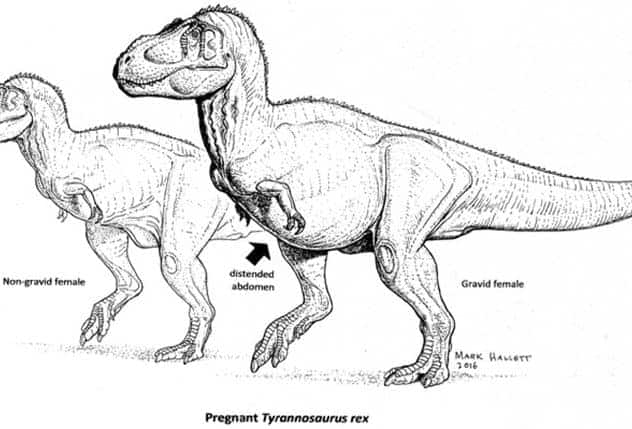
Lindsay Zanno of North Carolina State University explained: “We now understand how dinosaurs inherited the capacity to lay eggs from their ancestors, just as birds inherited it from dinosaurs.” The fossil belongs to a female approximately 16–20 years old at death, whose cause of death remains unknown.
Dinosaur hatchlings
A study of a newly hatched titanosaur fossil indicated that the young were approximately the size of a dog. Adults of the species could reach 15 metres in length.

Titanosaur hatchlings appear to have been independent from an early age, requiring no parental assistance. The fossil dates to approximately 67 million years ago. At death, the young dinosaur was only a few weeks old and nearly the size of a golden retriever, with a long, slender neck and tail and a small skull.
Another species with small forelimbs
T. rex is well known for its reduced forelimbs, but it was not the only dinosaur with this feature. Another species described in 2016 was Gualicho shinyae.

The fossil was excavated during an expedition to northern Patagonia. It shared another characteristic with Tyrannosaurus: a carnivorous diet. This species may help researchers understand the evolution of reduced forelimbs.
Fossilised dinosaur brain tissue
An exceptionally important palaeontological discovery was fossilised dinosaur brain tissue, most likely belonging to Iguanodon. The mineralised tissue dates to the Early Cretaceous, approximately 133 million years ago.
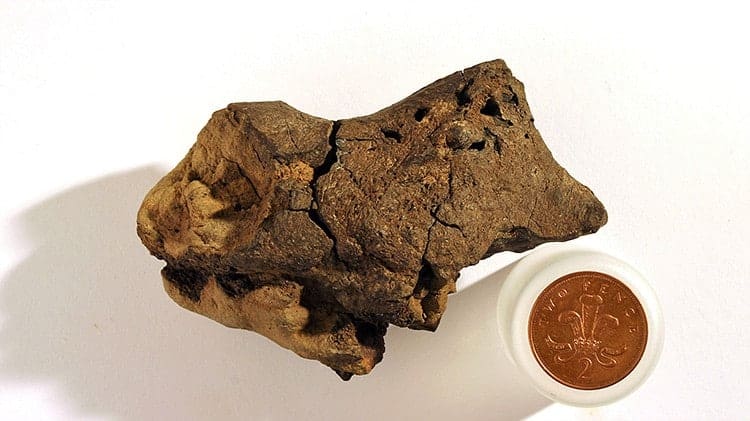
The specimen preserves traces interpreted as cortical tissue, meninges and fine capillaries. It is an exceptional find because soft tissues rarely survive for millions of years.
Feathered dinosaur tail preserved in amber
Among the most important palaeontological discoveries of 2016 was a feathered dinosaur tail preserved in amber. It retains feathers and traces of blood dating to 99 million years ago.

The specimen was discovered by Chinese palaeontologist Xing Lida of the China University of Geosciences in Beijing and is approximately the size of a dried peach. It contains an exceptionally well-preserved feathered tail with traces of blood. The tail most likely belonged to a theropod, specifically a coelurosaur juvenile, a member of the feathered, bird-like dinosaurs. Despite their small size, these animals were related to velociraptors and Tyrannosaurus rex.
A moment preserved in time
One particularly striking fossil belongs to a dinosaur nicknamed the “Mud Dragon”, a newly identified species named Tongtianlong limosus . Its remains record the final moments of the animal, which died trapped in mud in what is now southern China.

The year 2016 brought major advances in palaeontology through remarkable fossil discoveries worldwide. The specimens continue to be studied and may yield further hypotheses and evidence about dinosaur-era ecosystems and the evolution of the modern world.
Source: Seeker
