


Description
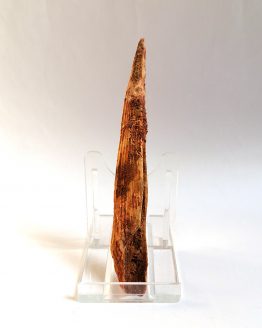
Orthoceras is the name given to numerous fossil marine cephalopods with long, straight, conical shells. These animals were part of the nautiloids, a group of mollusks related to modern cephalopods such as squid and octopuses. About 400 million years ago, such animals inhabited the seas of the Devonian period, long before the appearance of dinosaurs.
The soft body occupied the wide part of the shell, and the tentacles around the mouth helped the animal capture small marine creatures. The shell was divided into internal chambers, which helped it control its buoyancy by regulating the amount of liquid inside. To move, it expelled water through a siphon, using a propulsion mechanism also found in modern cephalopods.
After the animals died, the shells could be buried in sediments and preserved by fossilization. Today, numerous such fossils are found in the limestone rocks of Morocco. Sectioning and polishing the rock reveal the sequence of shell chambers, preserving in stone the geometry of an animal from an ancient ocean.
In commerce, the name Orthoceras It is used in a broader sense than the scientific genus itself, for various straight-shelled fossil nautiloids.




Reviews
There are no reviews yet.