Researchers made an unusual discovery in north-eastern China: an approximately 120-million-year-old dinosaur nest containing 25 individuals. One was an older animal that appears to have acted as a “babysitter”.
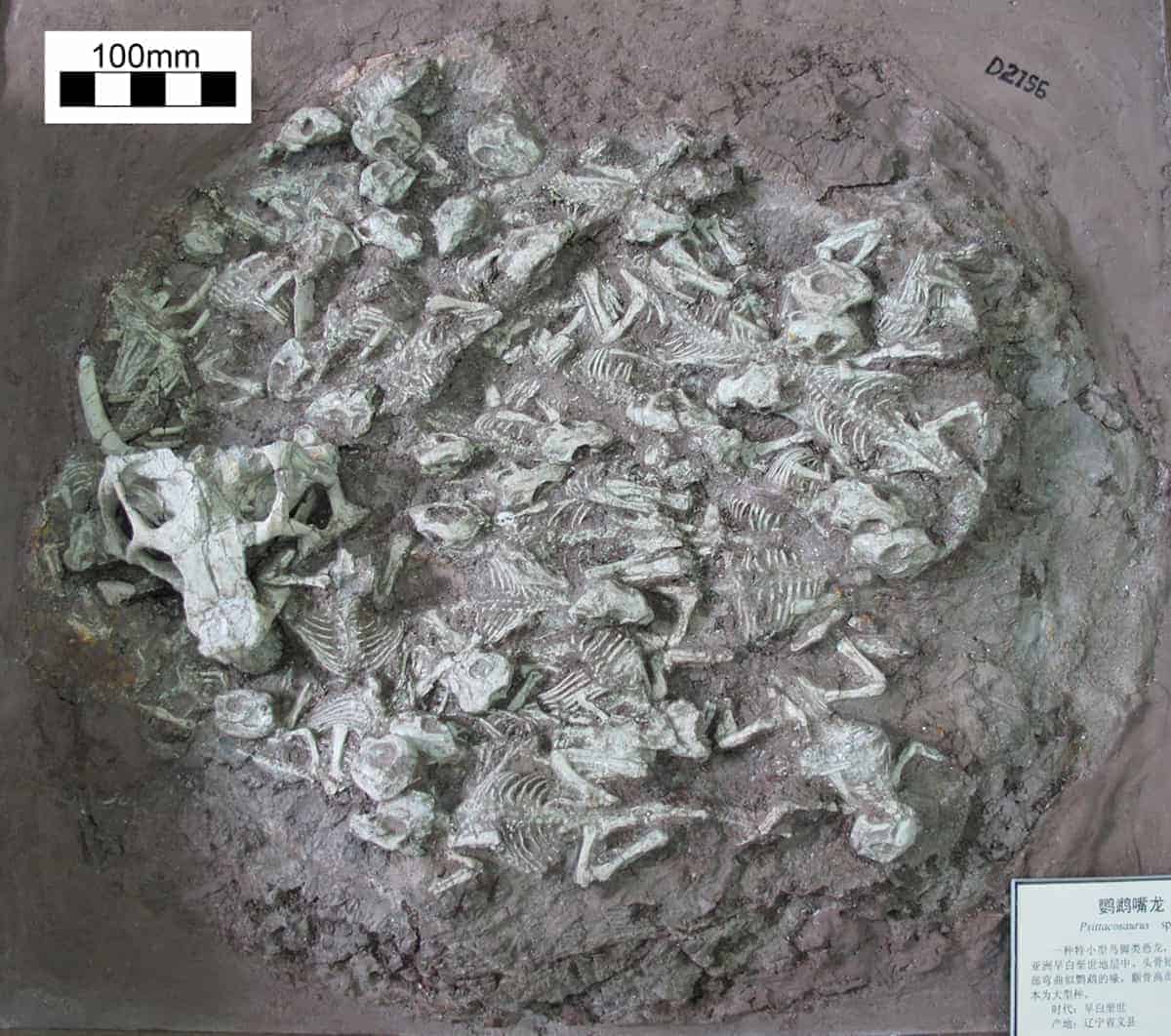
Like all animals, even the largest dinosaurs began life as small individuals. Palaeontologists have discovered numerous nests containing fossilised eggs or young dinosaurs. One nest from north-eastern China attracted particular attention: alongside the young individuals was a twenty-fifth, older specimen that appears to have served as a “babysitter”.
Brandon P. Hedrick, a doctoral student in the Department of Earth and Environmental Science in the School of Arts and Sciences, and Peter Dodson, a professor of palaeontology and anatomy at the University of Pennsylvania, studied the nest with researchers from China’s Dalian Museum of Natural History, where the specimen is housed.
The nest was found more than 10 years ago by amateur palaeontologists in the Yixian Formation of Liaoning Province, north-eastern China. The fossils are approximately 120 million years old. Although the assemblage measures only about 60 cm in diameter, it contains 25 dinosaurs, all belonging to the species Psittacosaurus lujiatunensis. These herbivorous dinosaurs are among the most commonly encountered dinosaurs in the fossil record.
Dodson and Hedrick first analysed the rock surrounding the fossils and found that it consisted of volcanic material. This suggests that the dinosaurs were probably engulfed by a flow associated with a volcanic eruption. Hedrick explained: “If they were caught in a flow, their vertebral columns should have been aligned in the same direction. That is exactly what we found. The specimens appear to have been caught in a flow, but we cannot determine its precise nature.” As the bones show no evidence of heat damage, the researchers suspect a flow of water, mud, gravel or other debris associated with an eruption.
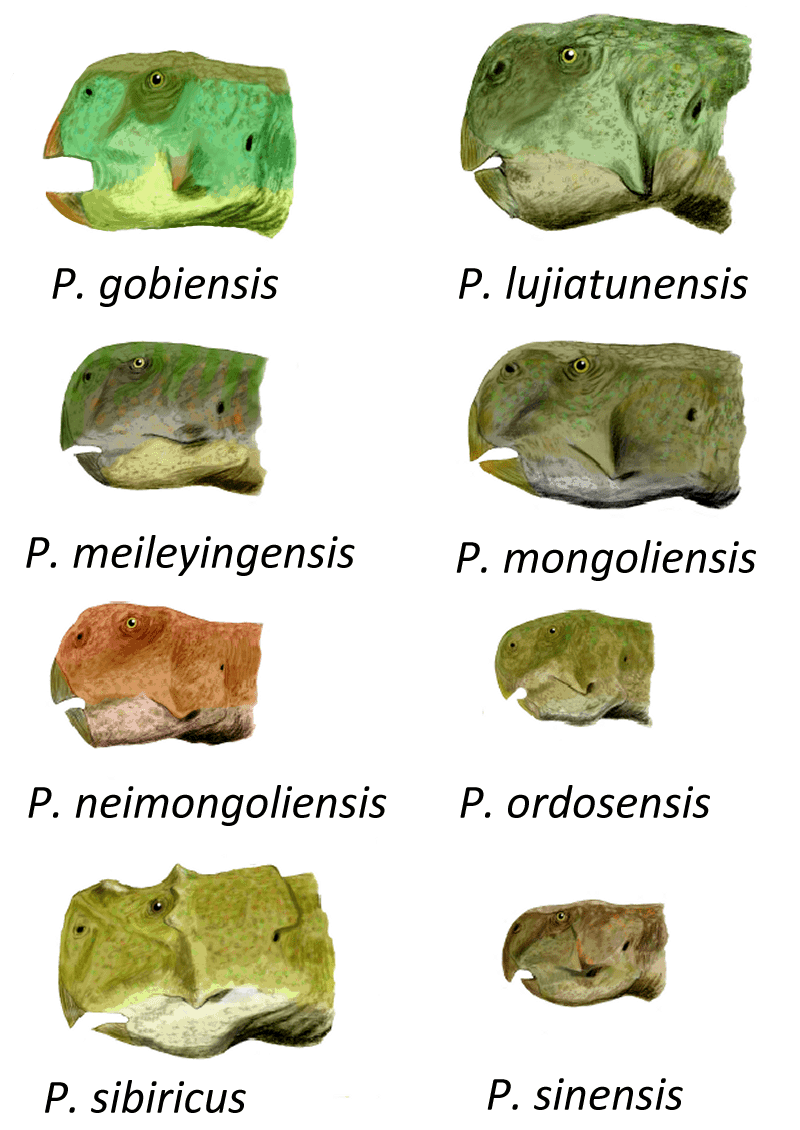
The 24 smaller animals appear to have been similar in size. Researchers considered whether they might have been embryos still inside eggs, but rejected this hypothesis. No eggshell remains were found in the nest, and smaller young Psittacosaurus lujiatunensis have been identified elsewhere. In addition, the ends of the specimens’ bones were well developed, indicating that the animals could move about.
Alongside the 24 young animals was a twenty-fifth, older individual of the same species. Its skull measures approximately 11.5 cm in length, suggesting an age of 4–5 years. Recent studies have shown that Psittacosaurus lujiatunensis did not reproduce until 8–9 years of age, so the older individual was probably not the parent of the 24 young dinosaurs.
Based on the proximity of the young animals to the older individual, Dodson, Hedrick and their colleagues suggest that it acted as a “babysitter”. Cooperative care of young occurs in some living bird species. The older animal may have been a sibling helping to care for its younger brothers and sisters.
The researchers emphasise that they cannot establish with certainty whether the fossil assemblage is a nest. “It certainly looks like a nest, but we do not have enough evidence to confirm that it is one,” Hedrick said. Dodson and Hedrick are examining the bone microstructure of the smaller dinosaurs to determine whether they were all the same age, which would strengthen the nest interpretation.
Source: GeologyIn
