The largest shark that ever lived was the Megalodon Shark. It appeared 23 million years ago, during the Miocene epoch, and could reach 18 meters in length. Megalodon was one of the most massive and powerful predators in the history of vertebrates, until about 2.6 million years ago, when it became extinct, at the end of the Pliocene.

Our planet's past is only partially accessible to us through the remains of the creatures that inhabited it over hundreds of millions of years. Among these are gigantic creatures and feared predators, both on land and underwater. If we were to dive into the waters of the early Miocene epoch, we would encounter the largest shark that ever existed – the Megalodon Shark.
Megalodon (Otodus megalodon, formerly known as Carcharocles megalodon) is an extinct species of shark that lived 23-2.6 million years ago. Its name means "big tooth" and is derived from two Greek words - megas, which means “great, majestic” and odoús, which means “tooth.” The shark lived during the Miocene-Pliocene periods and belonged to the family Otodontidae, being derived from a shark of the genus Otodus.
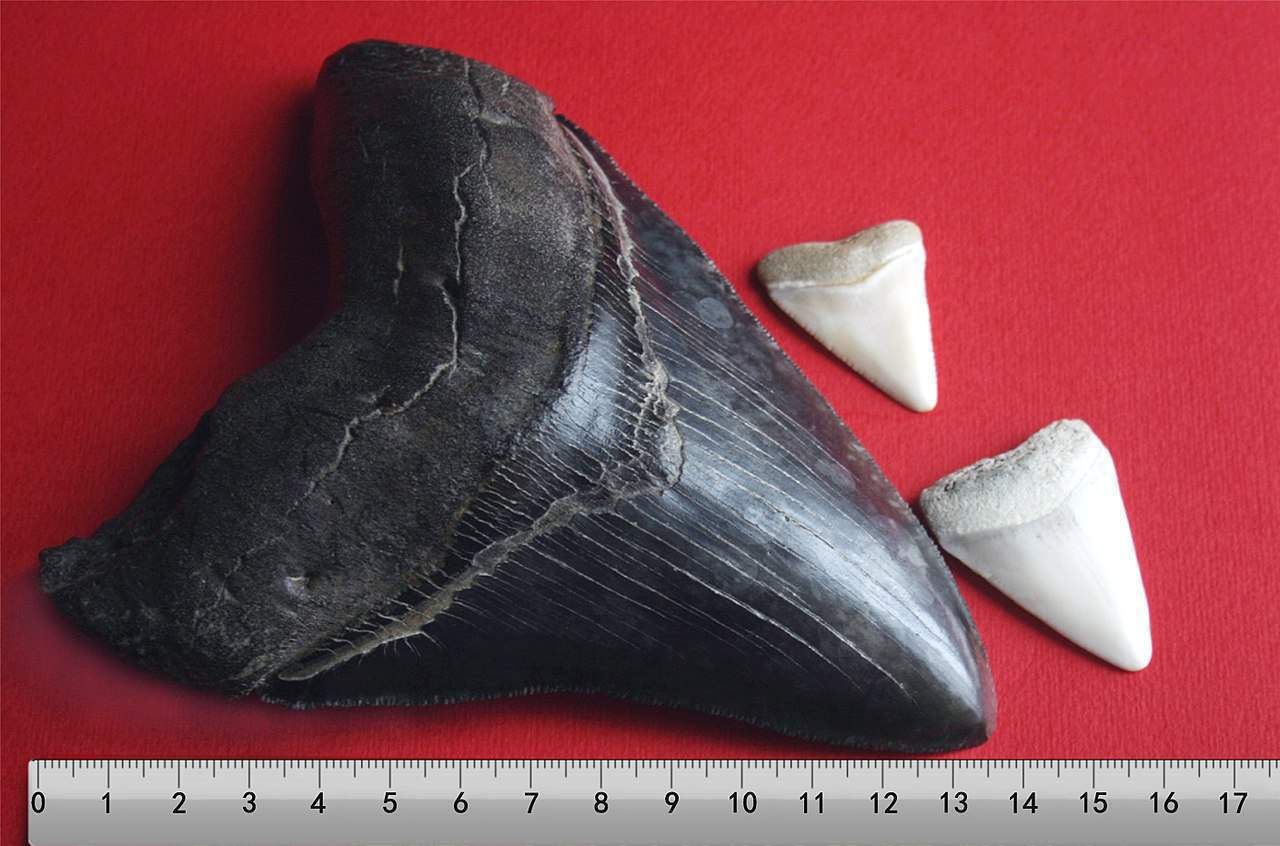
Megalodon is certainly one of the most “popular” sharks, due to its colossal size. Researchers believe that these sharks looked like a more massive version of the modern-day Great White Shark, and their fossilized remains suggest that they could reach up to 18 meters in length. Their huge jaws could apply a bite force of between 110,000 and 180,000 newtons, and their teeth reached 15 cm in length and were thick and robust, built specifically for tearing prey and breaking bones.
Because the remains of the species consist mainly of teeth and vertebrae, there has been much speculation over the years about the size of the Megalodon Shark. Originally, it was thought that these sharks could reach 25 meters in length, but the consensus is now 18 meters. A 2015 study correlated the size of modern sharks with their typical swimming speed and estimated that a Megalodon would have swum at a speed of 18 km/h.

Fossils of Megalodon have been found in many parts of the world, including Europe, Africa, the Americas, and Australia—mainly in subtropical or temperate climates. This giant shark lived in a variety of marine habitats, including shallow coastal waters, marshy lagoons near the coast, sandy shores, and offshore, deep-sea waters. Adult sharks generally did not live in shallow water, but rather in the open ocean. They appear to have been migratory animals, moving between coastal and offshore waters, especially during certain periods of their lives. Megalodon teeth have, however, been excavated from remote coastal regions, such as the Mariana Trench in the Pacific Ocean.
The Megalodon shark had a profound impact on the structure of marine communities. Fossilized remains suggest that it hunted large prey, such as whales, seals, and giant turtles. Megalodon juveniles lived in warm coastal waters, where they fed on small fish and whales. Compared to the Great White, which attacks its prey on the soft sides, Megalodon probably used its powerful jaws to penetrate the chest cavity and pierce the heart and lungs of its prey.
Despite its size and bite force, the Megalodon Shark was not without competition. Other marine predators, such as Livyatan or “Killer Whales” (Orcinus orca), They also preyed on the same prey as Megalodon, which may have contributed to its extinction. Another reason for the extinction of Megalodon may have been related to the onset of the Ice Ages, as the shark preferred warmer waters. This led to the disappearance of suitable habitats as well as the migration of whales to the polar regions, which gradually contributed to the extinction of the giant shark.



Sources: National Geographic, PLOS

[…] million years ago and was the largest shark, reaching up to 18 meters in length (read here an article about the Megalodon shark on […]