


Description
Ammonites are known from the Jurassic, around 200 million years ago, and became extinct at the end of the Cretaceous, around 66 million years ago. They belong to the ammonoid group, whose history began earlier, in the Devonian, more than 400 million years ago.
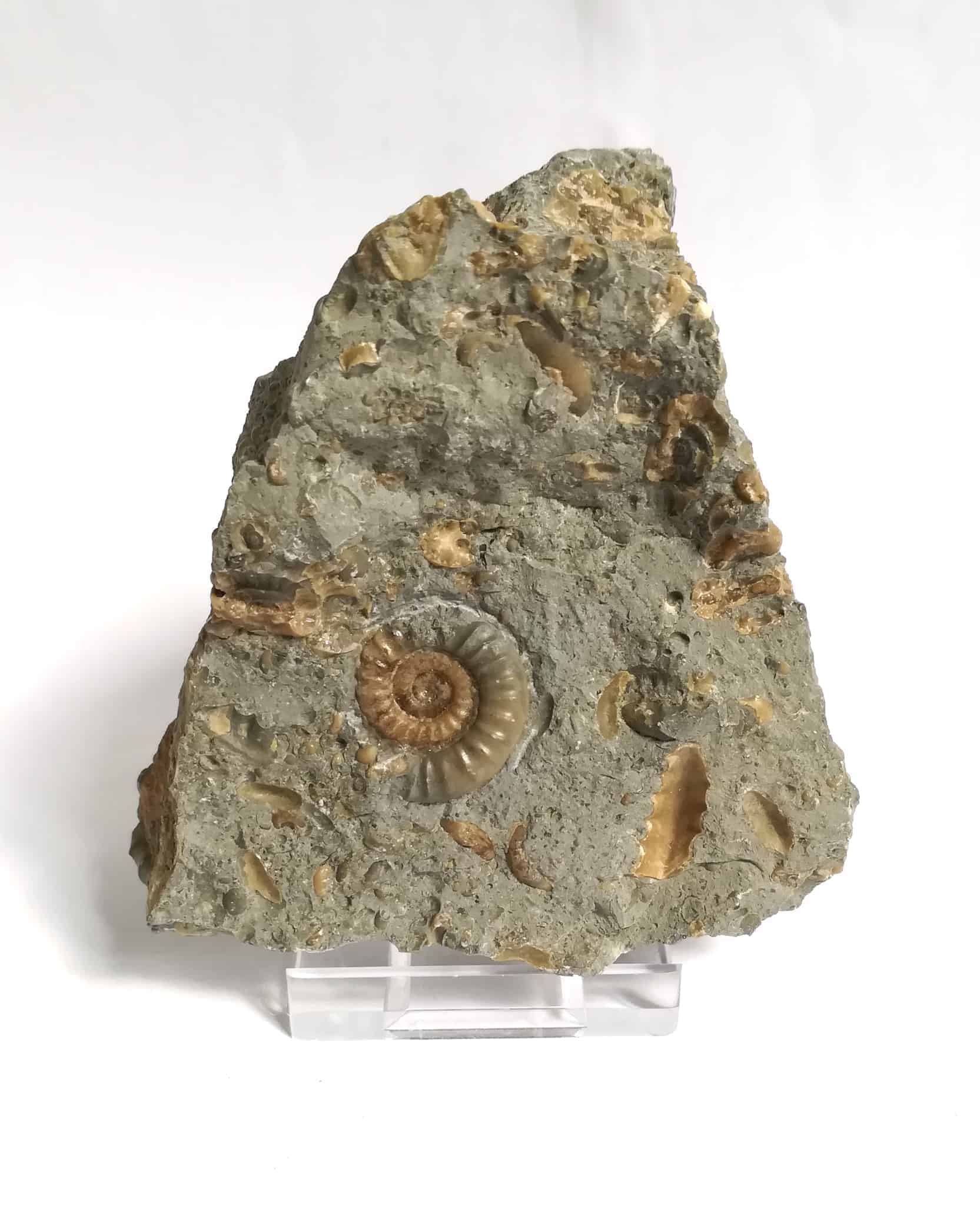
Ammonites were marine molluscs belonging to the cephalopod group, related to today's squid and octopuses. In many species, the shell formed a spiral, with a geometry that still catches the eye in their fossils. Behind this appearance was a structure that helped the animal control its position in the water.
Inside, the shell was divided into several chambers. The animal's body occupied the last and largest of them, while the others, which contained liquid and gas in regulated proportions, helped it control its buoyancy. When a fossilized shell is sectioned, these compartments become visible and show us how the shell was organized during the animal's life.
Ammonites varied greatly in size: some species had shells only a few centimetres across, while giant forms could reach approximately two metres in diameter. Their fossilised shells can preserve ribs, ornamentation and details of the internal chambers, providing information about these animals and the seas in which they lived.





Reviews
There are no reviews yet.