Out of Stock

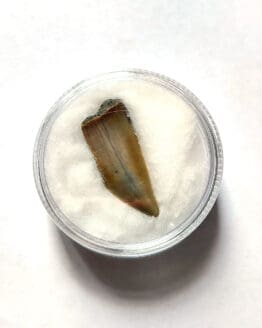
Authentic fossilized Squalicorax Shark tooth · 2.5 cm length

70 million years old · Cretaceous · Morocco

RON 24,99

Authentic fossilized tooth of the Shark Squalicorax fossilized from Morocco, approximately 70 million years old, in a plastic box. A very old Shark tooth with serrations that are still sharp, from an animal that lived at the same time as the dinosaurs. An excellent gift for anyone passionate about Sharks or palaeontology!

Sharks have a very large number of teeth arranged in several rows and replace them many times during their lives (sometimes even weekly). This, combined with the durability of tooth enamel and the long span of time during which Sharks have existed, makes fossilized Shark teeth common in many parts of the world.

Due to the age of the specimen and the fragmentary nature of the fossil deposits in Morocco, as well as local extraction methods, the tooth may have imperfections and repaired areas (glued sections) which are perfectly normal and often unavoidable, but it is, overall, in good condition, with the enamel layer almost intact. We invite you to carefully study the product photos to identify the natural imperfections and possible repairs of the specimen.

Click here for more general information about fossils

Specimen: authentic fossilized Squalicorax Shark tooth (Squalicorax pristodontus)

Age: approximately 70 million years old, Cretaceous period

Dimensions: approximately 2.5 cm along the longest side (please see the photo showing the specimen next to a ruler or held in a hand to get an idea of its size)

Country of origin: Khouribga, Morocco

The product consists of a single authentic fossilized Shark tooth Squalicorax in a plastic box, the one in the pictures above, and comes with a brochure containing specific geological and paleontological information.

Out of stock

Description

Squalicorax is an extinct genus of shark that roamed the seas of the Cretaceous period, in a world where dinosaurs dominated land and marine reptiles roamed the oceans. Its teeth, with serrated edges, were adapted for cutting flesh and give us clues today about the meals of this predator in the past.

Paleontological evidence suggests that its diet included fish and other marine animals, such as turtles, marine reptiles, and even other sharks. Like many modern sharks, Squalicorax also fed on the carcasses of animals it encountered. In the Cretaceous seas, such an animal could find food both among aquatic creatures and among remains carried in from land.

One of the most interesting discoveries is a tooth of Squalicorax stuck in the leg bone of a hadrosaur. The fossil preserves the trace of an unusual meal: the shark had fed on the body of a dinosaur that had fallen into the water after death. Thus, a single tooth can tell a story about the meeting of two worlds — that of land dinosaurs and that of marine predators.

Fossilized teeth of Squalicorax are small reminders of these vanished ecosystems. After tens of millions of years, their serrated edges still preserve the shape of a natural tool that helped the shark obtain its food.

Squalicorax illustration
Illustration of Squalicorax shark – author Dmitry Bogdanov, Wikipedia – the image is for illustrative purposes only and is not included with the product

Reviews

There are no reviews yet.

Be the first to review “Dinte fosilizat autentic de Rechin Squalicorax, 2,5 cm lungime, 70 mil ani, Cretacic, Maroc”

Your email address will not be published. Required fields are marked *


Fossil jewelry

0
0
Your Cart
Your basket is empty









