


Description
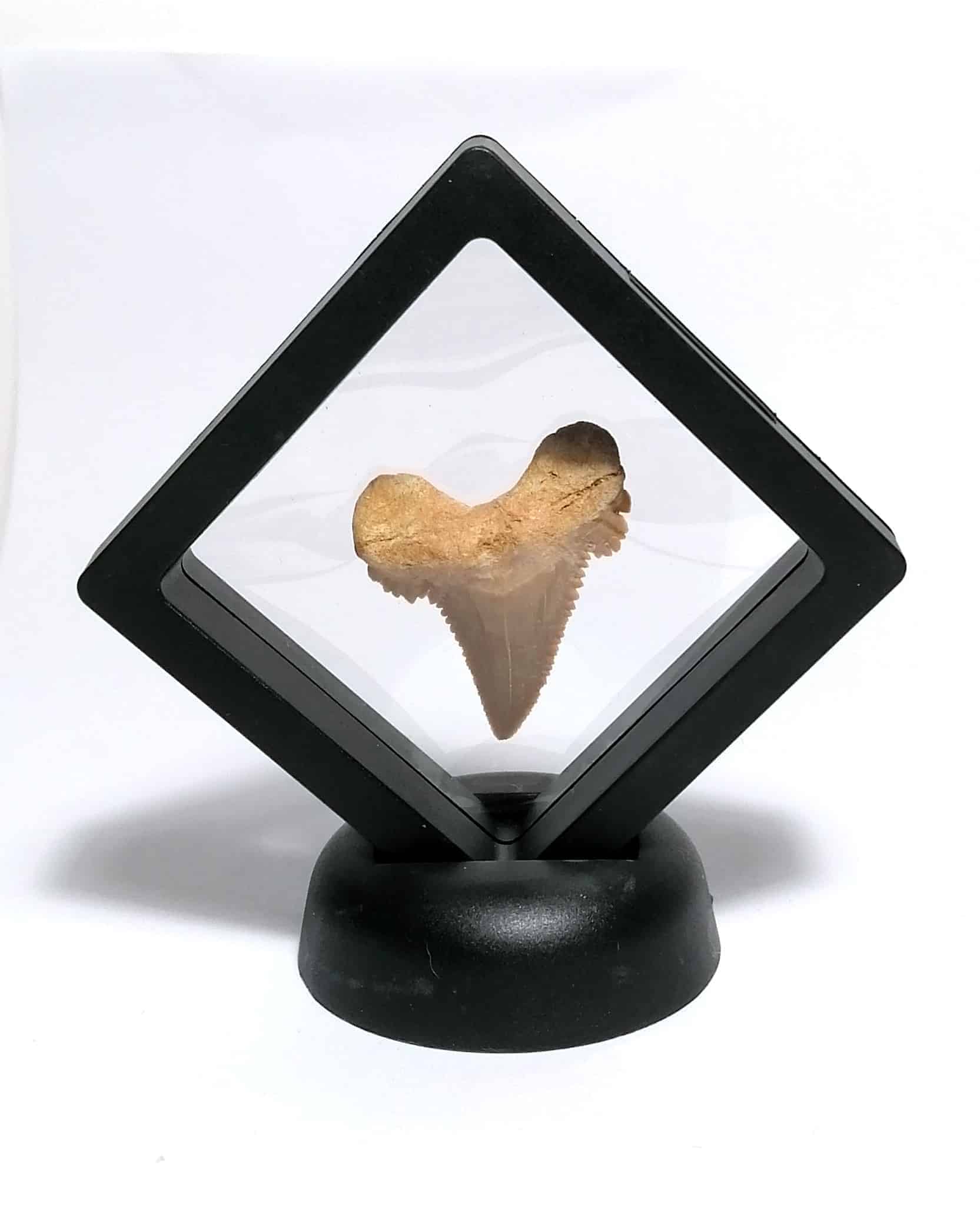
The fossil Mako Shark, known scientifically as Carcharodon hastalis, was a large shark that inhabited the seas during the Miocene and Pliocene epochs, approximately 20–3 million years ago. Its teeth are found in many regions of the world, including Europe and North America. It was long known as Isurus hastalis, but studies of its dentition link it to the evolutionary lineage of the Great White Shark.
The teeth in its upper jaw were broad and triangular, while those in its lower jaw were narrower. Their smooth, sharp cutting edges, without the serrations characteristic of the living Great White Shark, formed a feeding apparatus suited to catching and slicing prey. Their shape suggests a predator that fed on fish and other marine animals.
The name “Mako” continues to be used for these teeth in the fossil trade. Living Mako Sharks belong to the genus Isurus, whereas Carcharodon hastalis is an extinct species that is important to our understanding of the evolution of sharks in the family Lamnidae.















Reviews
There are no reviews yet.