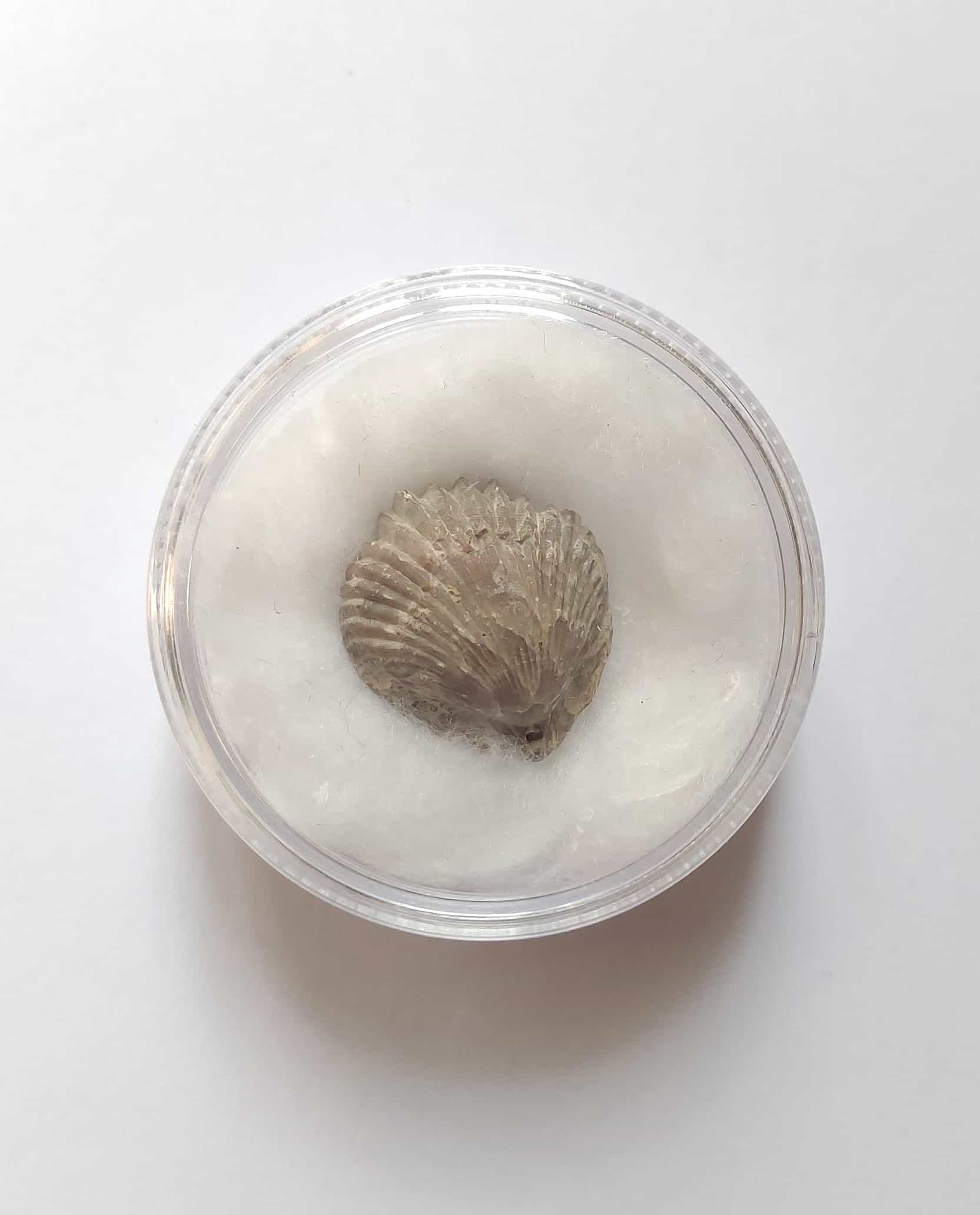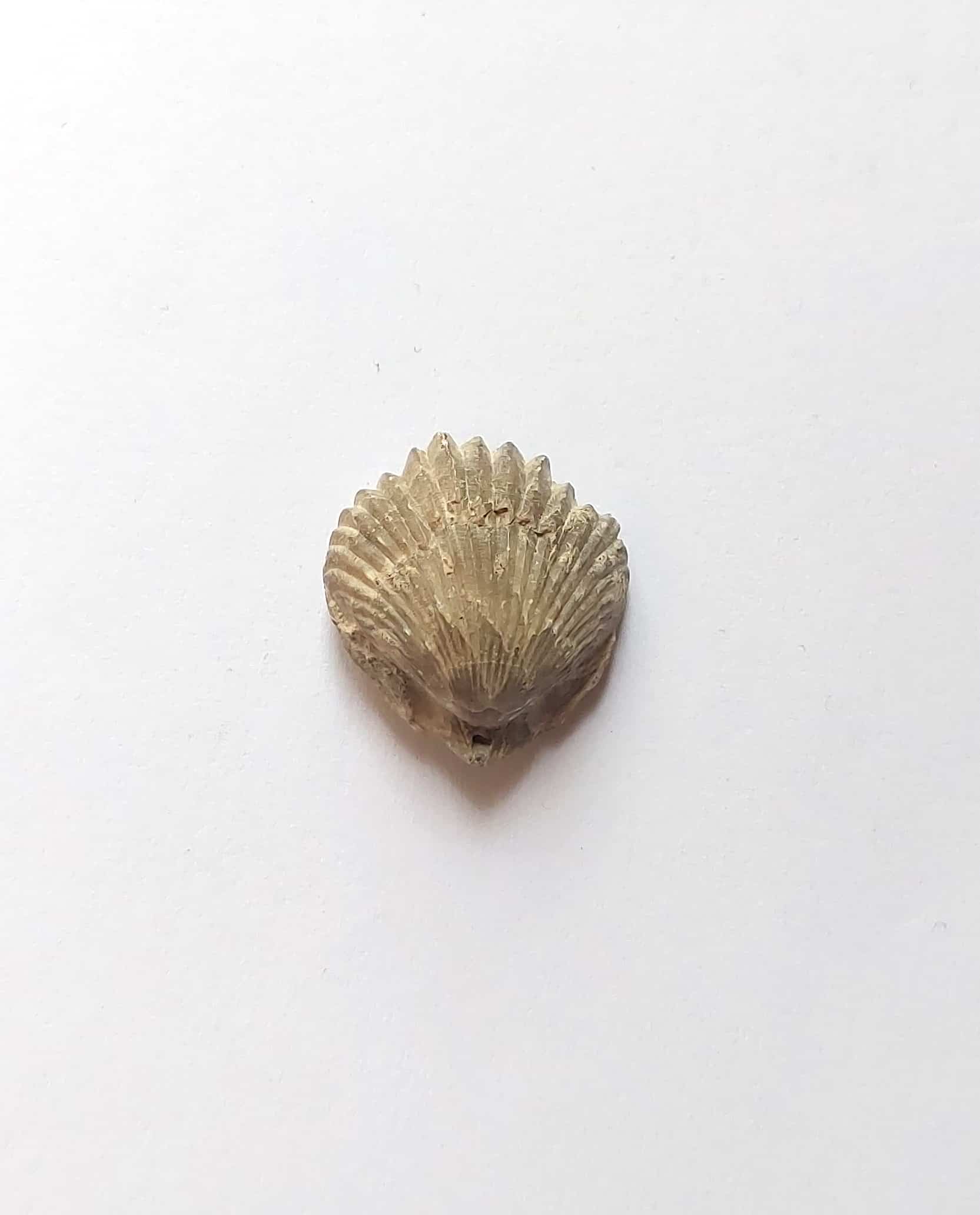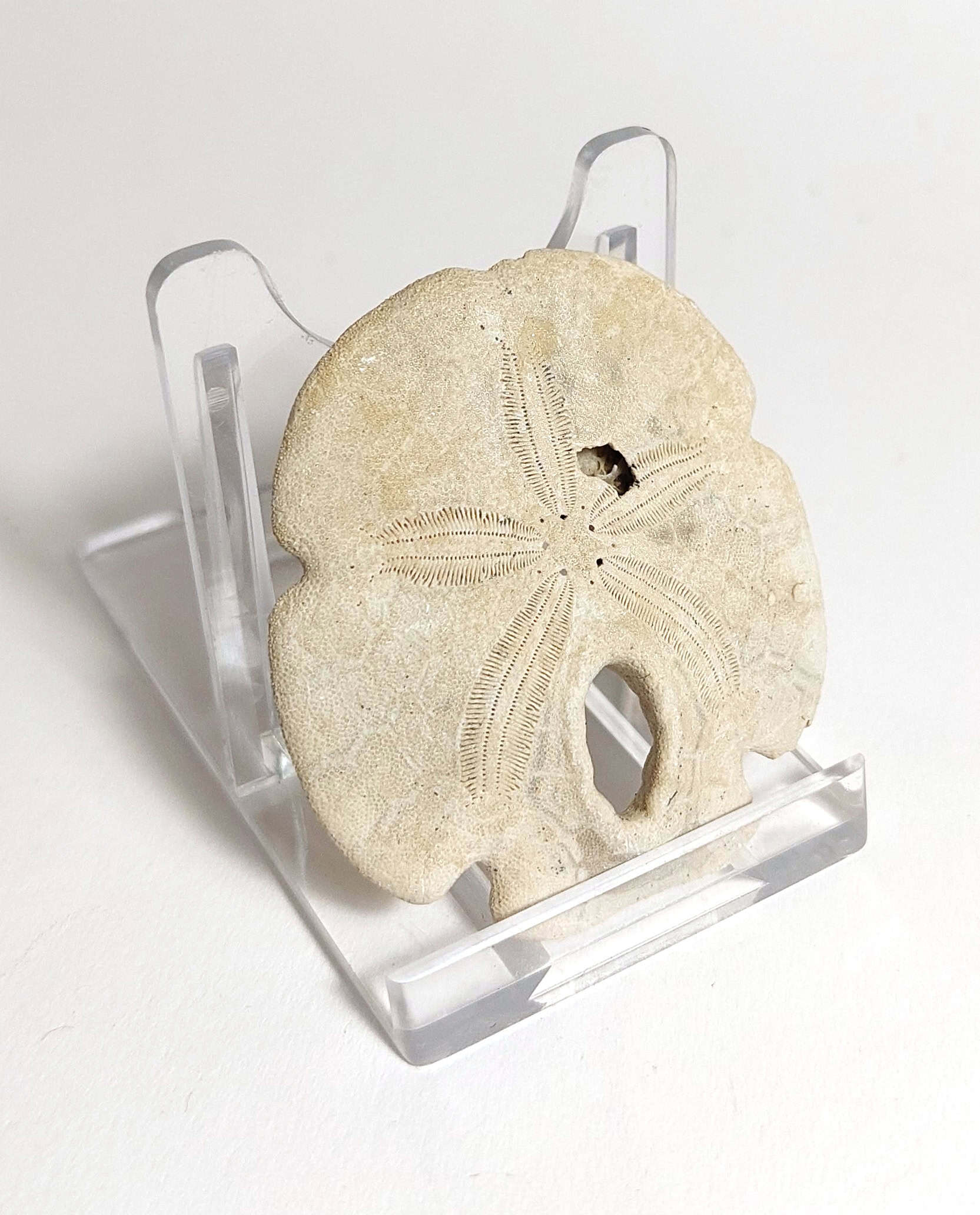
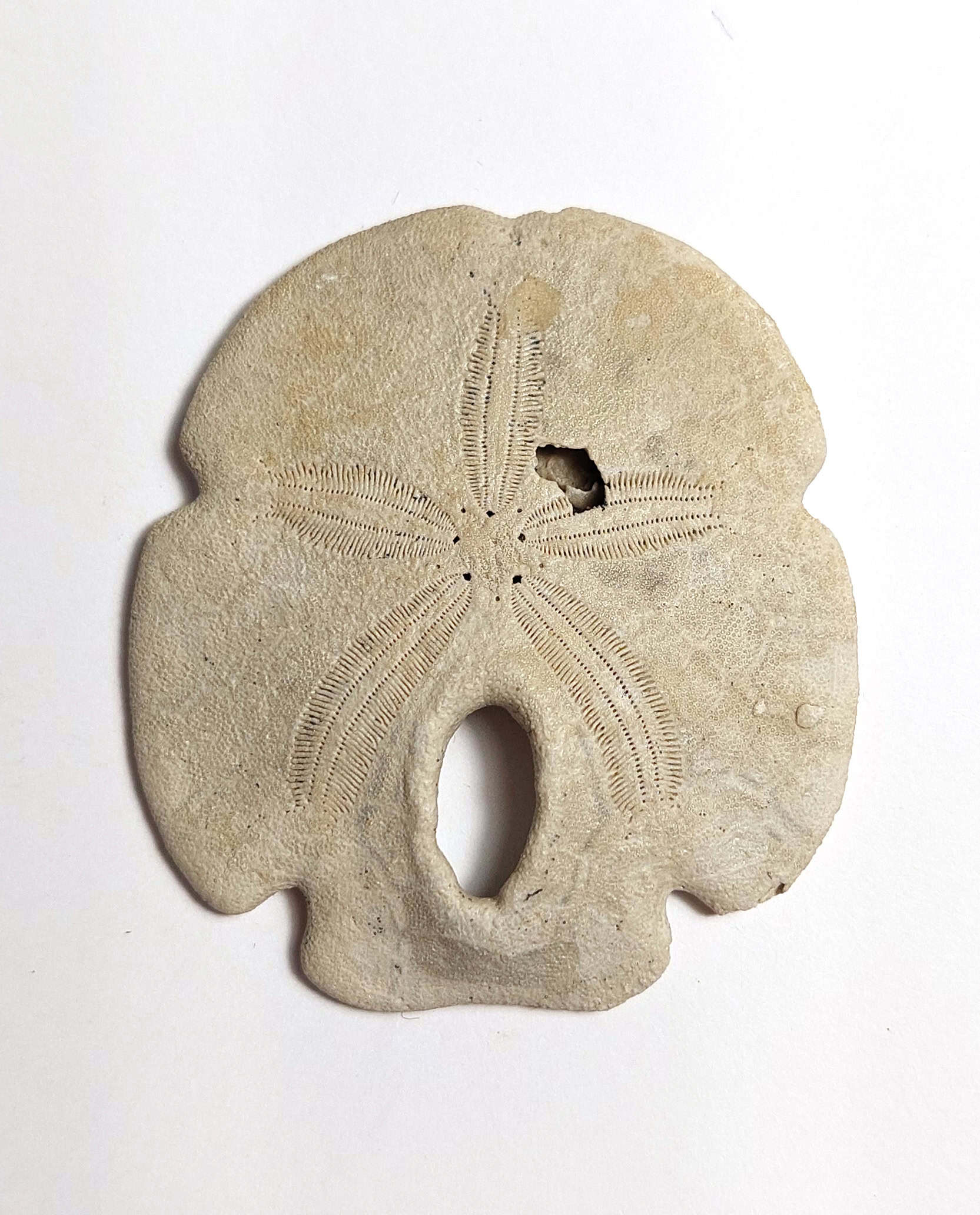
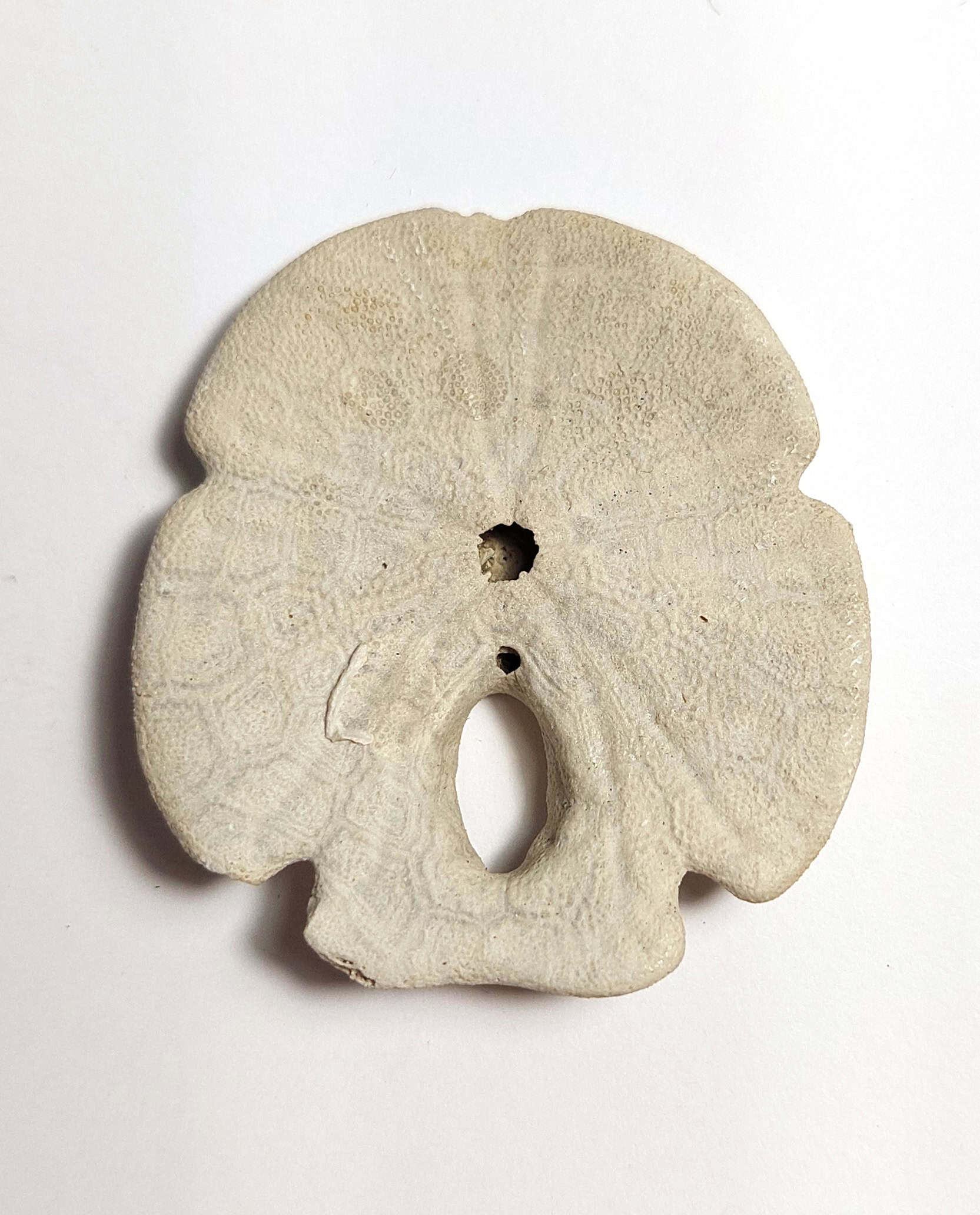
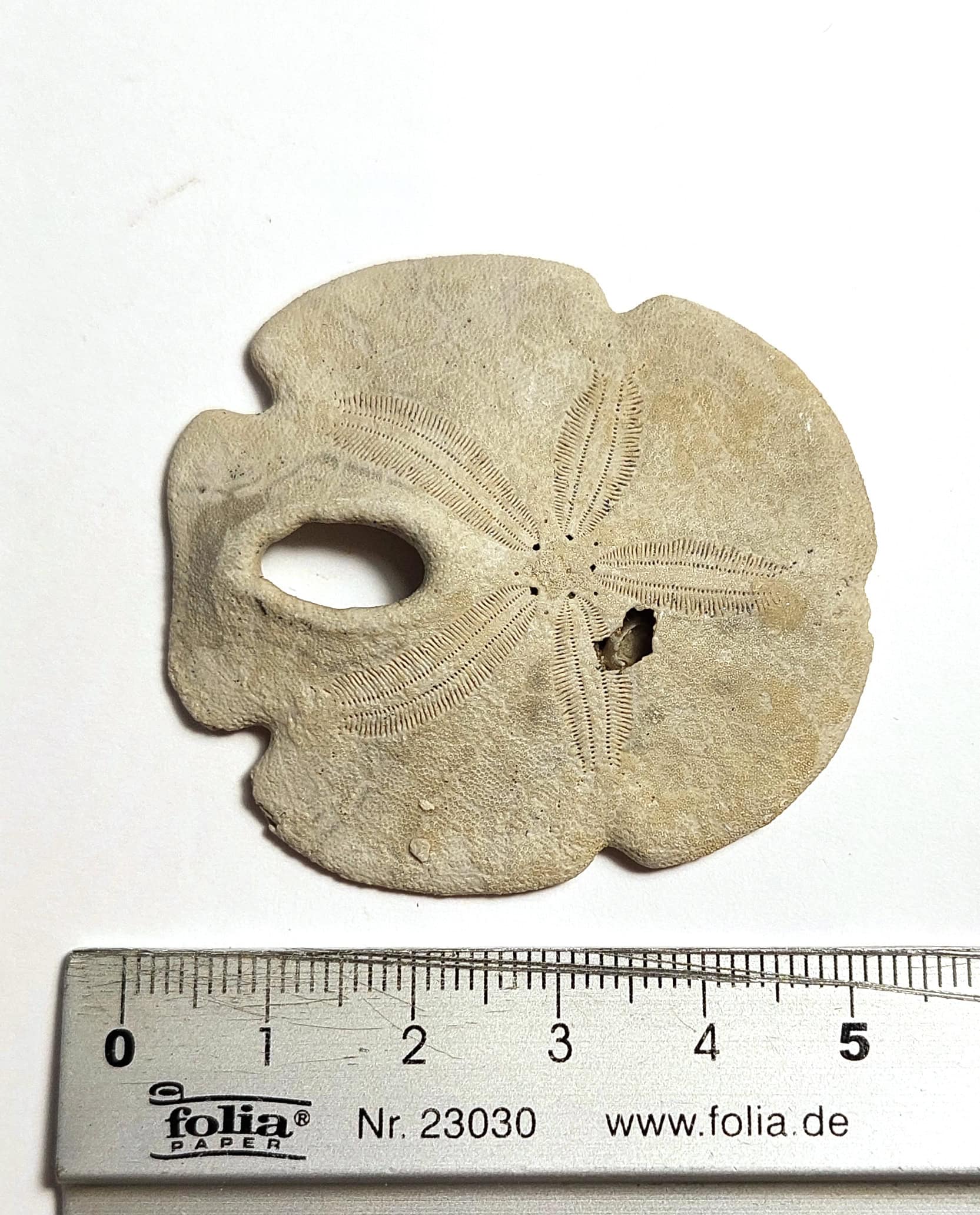
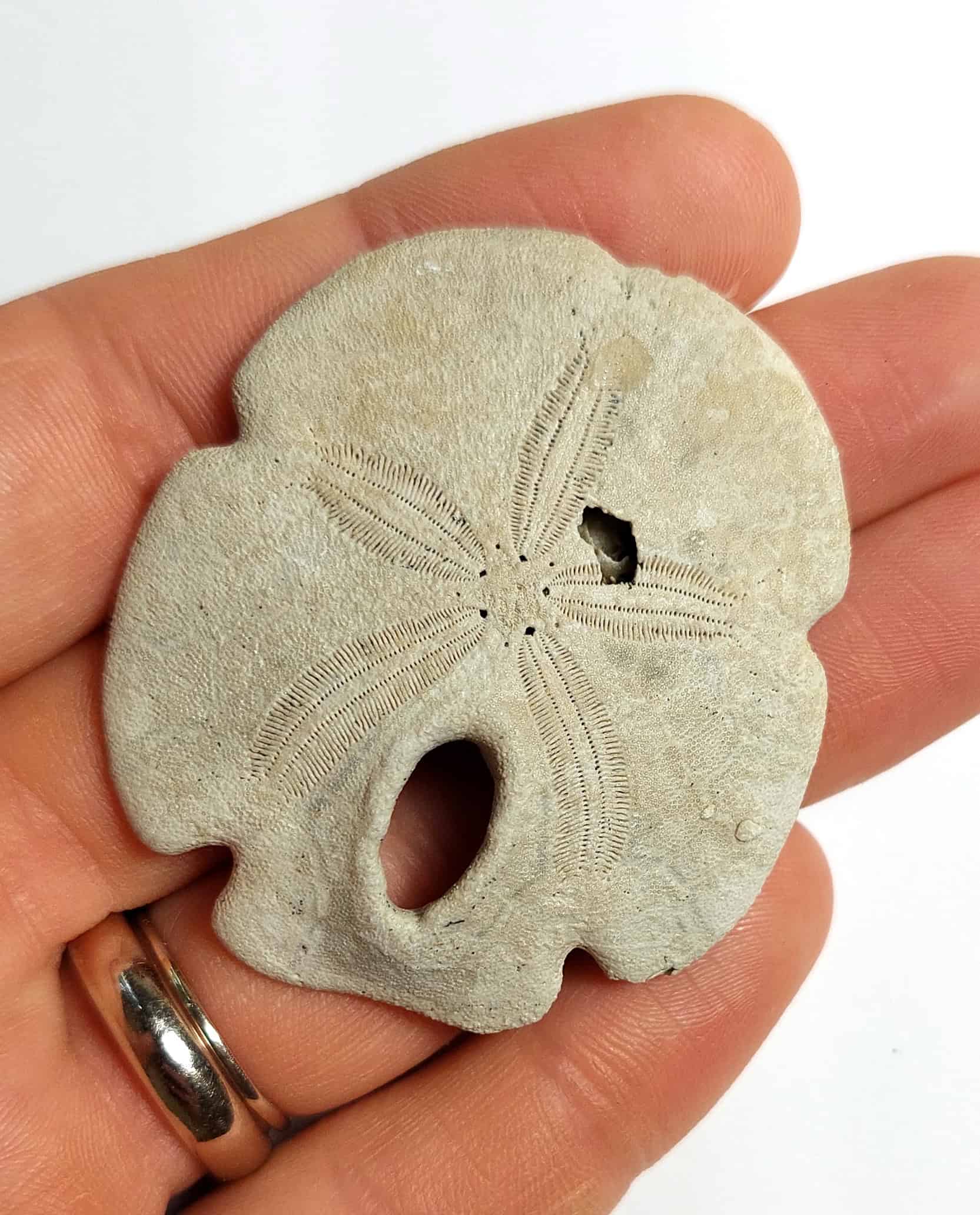
Authentic unprocessed fossilized Encope macrophora sea urchin · 5.0 cm diameter

4 million years old · Pliocene · USA

RON 79,99

Authentic unprocessed fossilized sea urchin Encope macrophora from the USA, about 4 million years old. The specimen comes with a plastic display stand included. A superb fossil with an impressive natural geometry!

Due to its age, the specimen may have imperfections and repaired areas (glued sections) which are perfectly normal and often unavoidable for a fossil this old, but it is in good overall condition. Please study the product photographs carefully to assess the specimen’s natural imperfections and any repairs.

Click here for more general information about fossils

Specimen: authentic unprocessed fossilized sea urchin Encope macrophora

Age: approximately 4 million years old, Pliocene epoch

Specimen dimensions: approximately 5.0 cm diameter (please see the photo showing the specimen next to a ruler or held in a hand to get an idea of its size)

Country of origin: Florida, USA

The product consists of a single authentic unprocessed fossilized sea urchin Encope macrophora – the one in the photos above. The product comes with a plastic display stand and a brochure containing specific geological and paleontological information.

1 in stock

Description

Sea urchins are marine animals of the class Echinoidea, related to starfish. Their bodies are protected by a calcareous skeleton, made up of plates, on which spines are attached. The shape differs between groups: some are almost spherical, while others are flattened, oval or have a heart-shaped outline.

They move around using small tube feet and spines. Some species live on rocky surfaces, while others burrow into the sand or sediment on the seabed. Their diet also varies: many sea urchins consume algae, but they can also eat small organisms or organic debris. The forms that live buried can obtain their food from organic particles found in the sediment.

Sea urchins have a history of about 450 million years, documented since the Ordovician, and are still alive today. Fossils often preserve the calcareous skeleton, while the spines usually fall off after death and are found separately. Sometimes, exceptional preservation keeps them together, giving us a more complete picture of the animal.
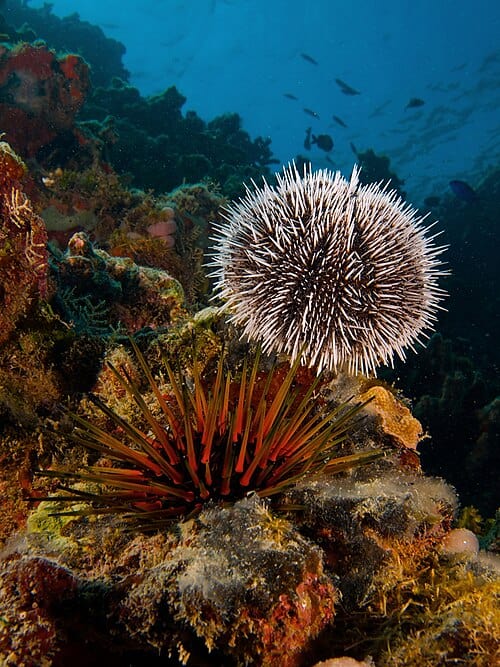
Modern sea urchin
Modern sea urchin – author Nhobgood, Wikipedia – the image has a strictly illustrative role and is not part of the product

Reviews

There are no reviews yet.

Be the first to review “Arici de mare fosilizat autentic neprelucrat Encope macrophora, 5,0 cm diametru, 4 mil ani, Pliocen, SUA”

Your email address will not be published. Required fields are marked *


Fossil jewelry

0
0
Your Cart
Your basket is empty