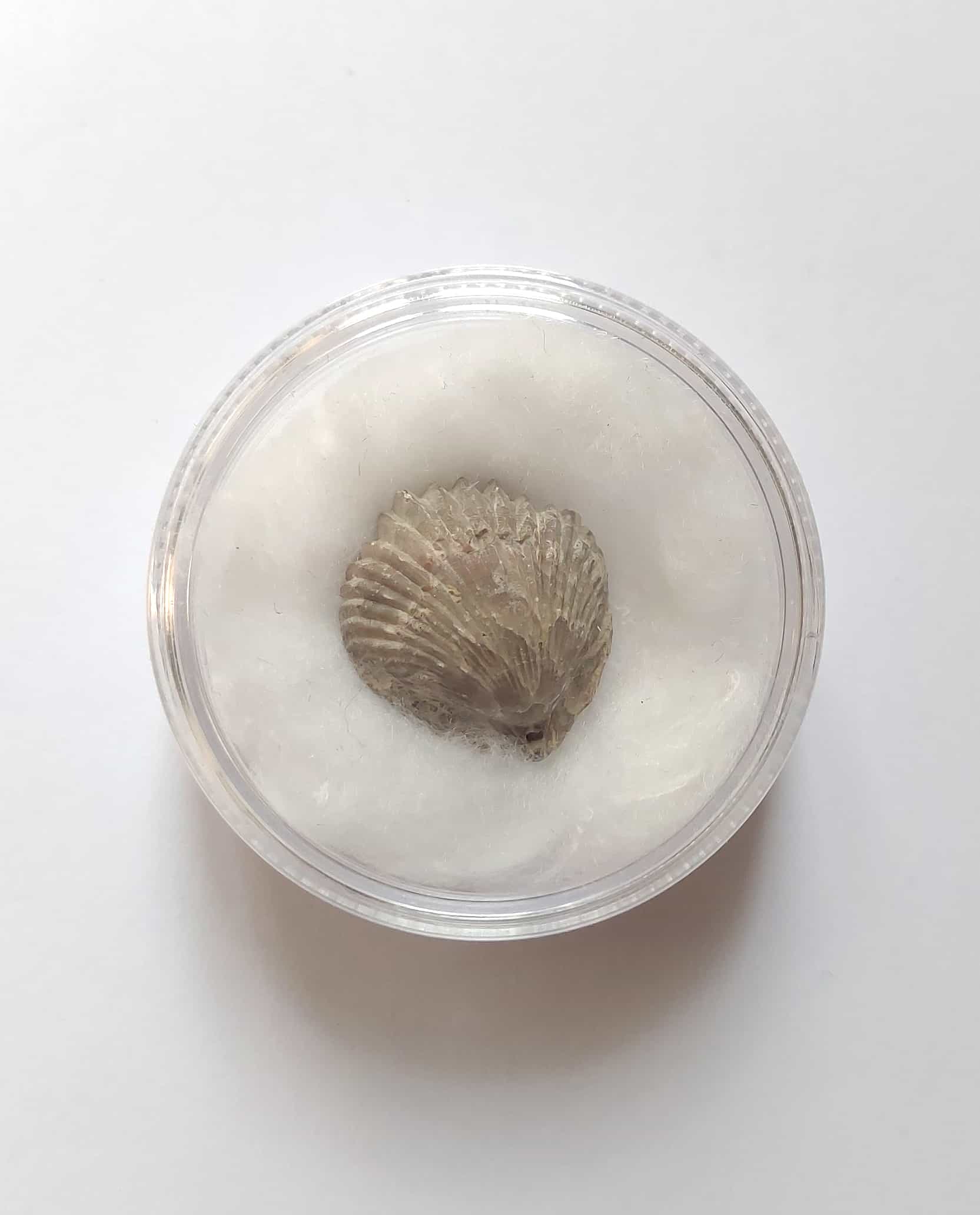
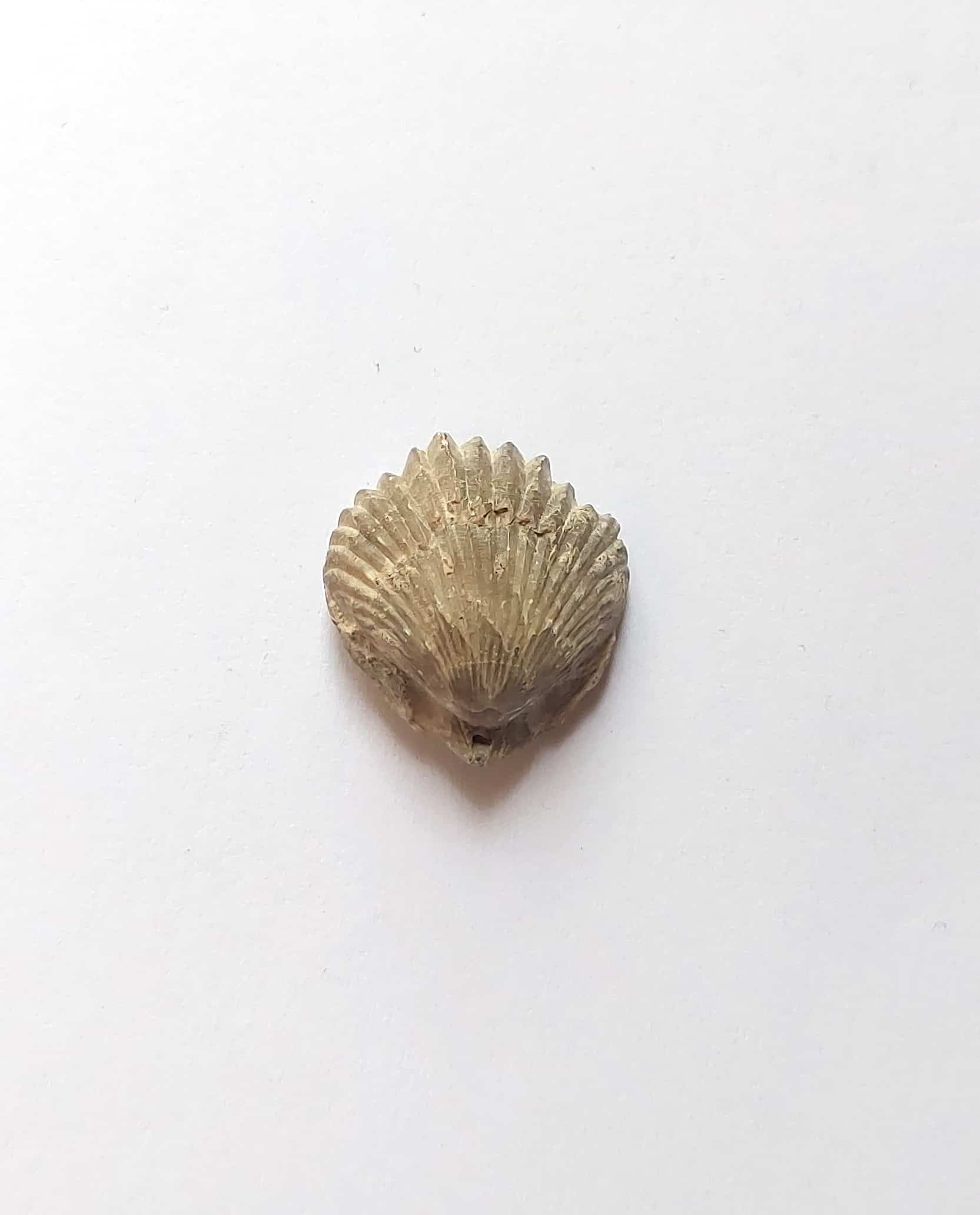
Authentic fossilized Encrinus Lilliformis sea lily stem fragment, 2.1 cm diameter, 240 million years old, Triassic, Germany
RON 24,99
Authentic specimen of fossilized sea lily stem fragment from Germany, species Encrinus Lilliformis, approximately 240 million years old, in a plastic box. A superb fossil, with impressive natural geometry, contemporary with the dinosaurs!
Due to its age, the specimen may have imperfections and repaired areas (glued sections) that are perfectly normal and inevitable for such an old fossil, but it is, overall, in good condition. We invite you to carefully study the product photos to identify the natural imperfections and any possible repairs to the specimen.
Specimen: authentic fossilized sea lily stem fragment, species Encrinus Lilliformis
Age: approximately 240 million years ago, Early Triassic period
Specimen dimensions: approximately 2.1 cm diameter(Please take a look at the photo in which the specimen is placed next to the ruler/in the hand to give you an idea of its size)
Country of origin:Crailsheim, Germany
The product consists of a single authentic fossilized sea lily stem fragment, species Encrinus Lilliformis, in a plastic box, the one in the pictures above. It comes with a brochure containing specific geological and paleontological information.
Sea lilies are marine animals that make up the class Crinoidea and that, in their adult form, look like a flower attached to the seabed by a stem. They have existed for about 480 million years, since the early Ordovician period, and still exist today, but in much smaller numbers than before. Currently, sea lilies live at depths between 200 and 10,000 meters, but in the past they were much more abundant and could be found even on the seashore.
Sea lilies look like flowers but are actually animals, possessing a mouth, filter-feeding arms, and an anus, and some even possess the ability to move along the ocean floor. The vast majority feed at night by filtering water and consuming plankton and decaying organic matter.
Modern sea lily from Indonesia – Alexander Vasenin, Wikipedia – the image has a strictly illustrative role and is not part of the product
Reviews
There are no reviews yet.
Be the first to review “Fragment de tulpină de Crin de mare fosilizat autentic Encrinus Lilliformis, 2,1 cm diametru, 240 mil ani, Triasic, Germania” Cancel reply
DinoShop.ro folosește cookie-uri! Cele esențiale pentru funcționarea site-ului sunt pornite automat și continuarea navigării site-ului constituie acceptul lor, iar cele opționale pot fi oprite accesând butonul "Setări". AcceptSetăriCitește mai mult
Setări cookie-uri
Privacy Overview
Privacy Policy
DinoShop.ro welcomes you to its website! In this article, we will provide details about how we process your personal data during your visit. This policy applies to the website operated by S.C. MI-GO CONCEPT DESIGN S.R.L., with its registered office at Şoseaua Ştefan Cel Mare no. 36, Block 30B, Entrance 1, Floor 3, Apartment 9, Room 4, Sector 2, Bucharest, Romania, Postal Code 020146 (hereinafter referred to as DinoShop.ro). The DinoShop.ro Site may contain links to external websites to which this Privacy Policy does not apply.
Collection and Processing of Personal Data
The personal data of DinoShop.ro visitors is recorded and processed in accordance with the applicable Romanian data protection legislation. During a visit, DinoShop.ro collects the following personal data: information regarding the visitor’s browser and operating system, the website from which the visitor arrived, the DinoShop.ro pages visited, the date of the visit, the country of origin and, for security reasons, the IP address assigned by the internet service provider. With the exception of the IP address, personal data will not be stored by DinoShop.ro unless it is provided by the visitor, either when placing an Order or when registering an account on DinoShop.ro.
Use and Transfer of Data in Compliance with the Law
DinoShop.ro uses personal data for the technical administration of the website, for statistical purposes, for maintaining records of Clients and Orders, for informing Clients about the status of their Orders, for fulfilling Orders, as well as for evaluating products and services, but only to the extent necessary.
DinoShop.ro will maintain the confidentiality of information of any nature provided by Clients. Personal data will be disclosed to public authorities or state institutions only where we are legally required to do so under applicable national legislation. DinoShop.ro personnel are required to maintain the confidentiality of such data. Personal data will be disclosed to third parties strictly to the extent necessary for fulfilling Orders (courier companies, payment processors, etc.).
Newsletter
Within the Site, the User has the option to subscribe to the DinoShop.ro newsletter. The data provided upon subscription will be used exclusively for sending the newsletter, unless the User has also consented to other uses of the data. After subscribing to the newsletter, the User will receive a second confirmation by e-mail, and only after confirming via e-mail will the User begin receiving the DinoShop.ro newsletter. The User may unsubscribe from the newsletter at any time by using the unsubscribe option provided within the newsletter.
Cookies
For additional information regarding the cookies used by DinoShop.ro, please see the article Cookie Policy.
Social Plugins
DinoShop.ro uses “social plugins” or social network controls, such as those provided by Facebook. When the User visits the Site, these controls are disabled by default, which means that the User does not automatically or unintentionally transmit data to the respective social networks. Before the User can use these controls, they must activate them with a click. The control remains active until the User deactivates it with another click or deletes the cookie files. For additional information, it is recommended to consult the article Cookie Policy. After activation, a direct connection is established with the server of the respective social networking site. The content of the instructions regarding the order surface is transmitted by the social networking site directly to the User’s browser and integrated by the latter into the web page.
After a social network control has been activated, the respective social network may collect data regardless of whether or not the User interacts with the control. If the User is registered with a social network, that network may associate the User’s visit to this page with their user account. The User’s visit to another DinoShop.ro page cannot be associated by the social network with their account unless the respective control has also been activated on that page.
If the User is a member of a social network and does not wish that network to associate data relating to their visit to the Site with the data stored in their member account, the User must log out of the respective social network before activating the social network controls.
DinoShop.ro has no influence over the amount of data collected by social networks through their controls. For information regarding the purpose and scope of the data collected and its subsequent processing or use, as well as the User’s rights and the available privacy settings, DinoShop.ro recommends consulting the privacy policies of the respective social networks.
Minimizing the Collection of Personal Data
DinoShop.ro aims to collect only the personal data strictly necessary for the purposes for which it was collected (fulfilling Orders, analyzing the performance of products and the Site, etc.).
Safety
DinoShop.ro has implemented all appropriate technical and organizational security measures to protect the data it manages against manipulation, loss, destruction, or unauthorized access. Data security measures are continuously improved and adapted to the latest standards.
Accidental or Unlawful Loss, Alteration, or Transmission of Personal Data
In accordance with the law, in the event of any accidental or unlawful loss, alteration, or transmission of personal data, DinoShop.ro will follow the applicable legal procedures for addressing and reporting the situation, both to the affected individuals and to the competent authorities.
Right to Information, Modification, and Deletion
At the request of the User or an authorized representative, MI-GO Concept Design SRL will inform you, in writing and as promptly as possible, in accordance with applicable legal provisions, whether personal data has been stored and, if so, what type of data. DinoShop.ro provides the possibility to view, delete, or personally modify the stored data.
These are essential cookies for the operation of DinoShop.ro. They cannot be turned off from these options, and turning them off is not recommended, as the site would cease to function properly.
For more details about these cookies as well as how to disable them, we invite you to read the Cookie Policy.
Marketing cookies from Google, Facebook Pixel and MailChimp help us present you personalized offers based on the preferences you display regarding our products and analyze the performance of our marketing campaigns to improve them.
You can click on the button above, next to the section title, to enable or disable these cookies, then you can save these settings using the "Save and Accept" button at the end of this page.
For more details about these cookies, we invite you to read Cookie Policy.
The statistics cookies from Google Analytics and YouTube help us understand how the world uses the DinoShop.ro website, how effective our promotional campaigns are, which pages and products are preferred by users, and then improve them.
You can click on the button above, next to the section title, to enable or disable these cookies, then you can save these settings using the "Save and Accept" button at the end of this page.
For more details about these cookies, we invite you to read Cookie Policy.
Functional cookies help to fulfill certain functions, such as the ability to share content on the website, the integration of videos, collecting feedback, and other third-party functions.
You can click on the button above, next to the section title, to enable or disable these cookies, then you can save these settings using the "Save and Accept" button at the end of this page.
For more details about these cookies, we invite you to read Cookie Policy.





Reviews
There are no reviews yet.