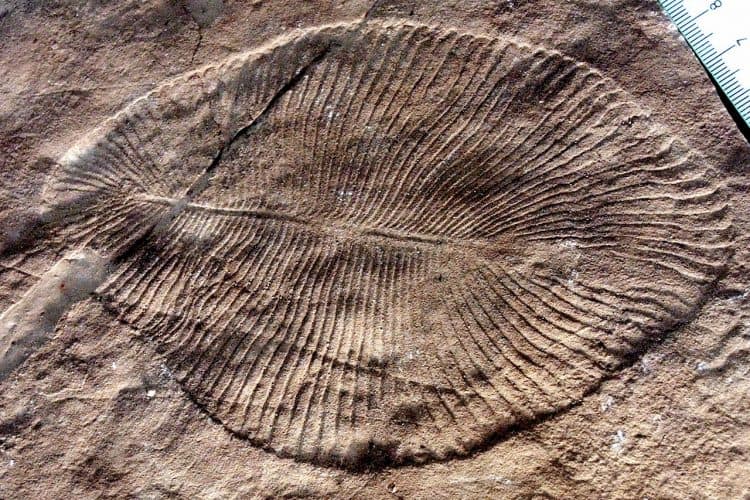
Identifying the earliest animal on Earth has been a long-standing scientific question. Research on Dickinsonia costata, an organism that lived approximately 558 million years ago, has provided evidence relevant to this question. The earliest traces of animals […]
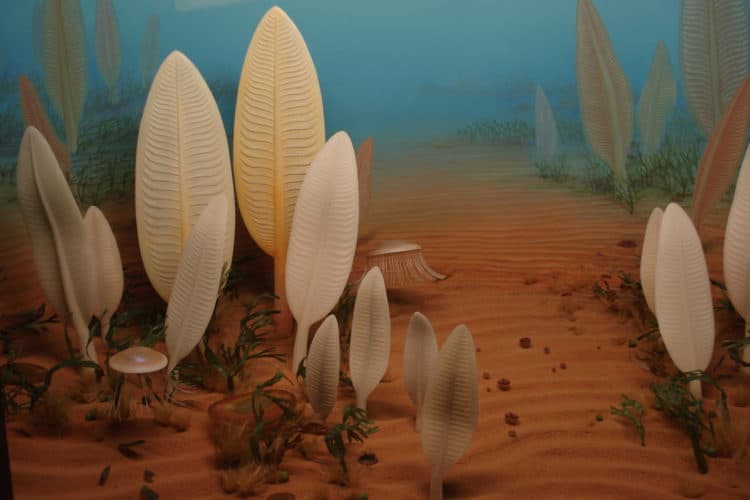
For approximately four billion years, life on Earth consisted of single-celled organisms. Around 575 million years ago, multicellular organisms appeared and began to diversify. The causes of this event, known as the Avalon explosion, remain uncertain. This […]
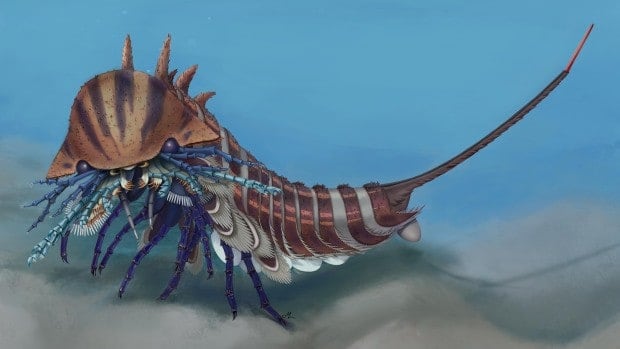
The Burgess Shale in British Columbia, Canada, preserves numerous fossils that document the evolution of life on Earth. Among them is Habelia optata, a 508-million-year-old relative of early chelicerates. This armoured predator had five pairs of […]
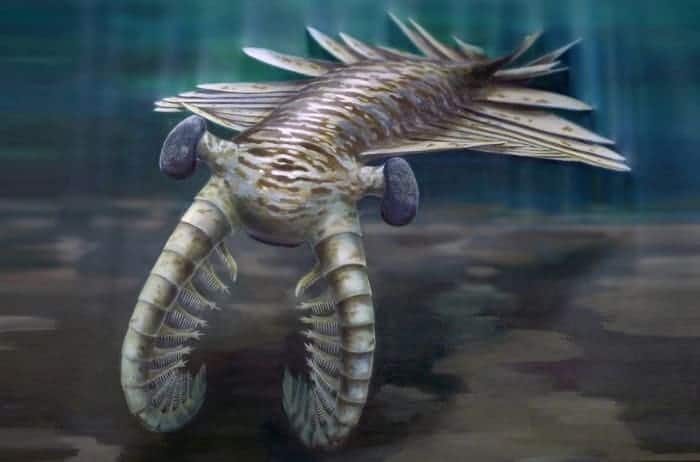
Approximately 515 million years ago, during the Cambrian, Anomalocaris was a major marine predator. This early relative of modern arthropods could reach one metre in length and is considered one of the earliest known apex predators. The Cambrian saw the emergence of diverse and unusual […]
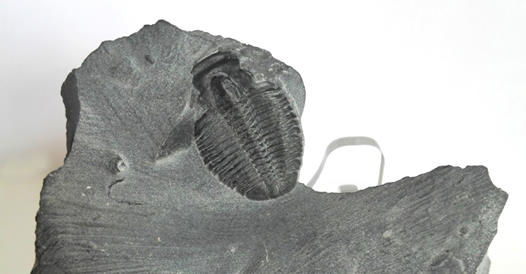
Elrathia kingii is a trilobite species commonly found in the Wheeler Formation of Utah, USA. It is a medium-sized trilobite, with large specimens measuring approximately 4–5 cm in length, and lived during the Cambrian, around 500 million years ago. Like all trilobites, it was a marine arthropod that inhabited […]
