For approximately 4 billion years, life on Earth consisted of single-celled organisms. After this long interval, multicellular organisms appeared and began to diversify approximately 575 million years ago. The precise cause of this event, known as the Avalon explosion, remains unknown. It marked the beginning of the Ediacaran Period, which lasted from 635 to 542 million years ago, and was followed by the Cambrian explosion approximately 541 million years ago, when the major animal phyla appeared.

When did the first animals appear?
The first animals appeared more than 500 million years ago. Although their remains have not been preserved, studies of living species allow us to infer the appearance of their ancestors: small, soft bodies composed of specialised cells. The earliest animal remains are impressions in rock rather than fossilised body material, such as those in Australia’s Ediacara Hills, dating to 630 million years ago. The Ediacaran Period takes its name from this region.

One such impression was left by Charnia, which appears more plant-like than animal-like. Careful study of the impressions nevertheless showed that Charnia initially grew by adding branches at its tip. This mode of development later ceased, and growth continued through enlargement of the existing branches, resembling the transition from a juvenile to an adult animal.
How were the first animals fossilised?
These fossils were preserved through the decay and subsequent mineralisation of soft tissues, leaving traces that differ in colour from the surrounding rock. This type of fossilisation occurs under exceptional conditions, such as rapid burial followed by slow decomposition in an oxygen-poor environment.

An example is provided by the remains of Misszhouia longicaudata, which were preserved despite the absence of a hard skeleton. Impressions of its soft tissues reveal the intestine, visible as a dark band in the centre, and the limbs, represented by fine lines around the head and body.
How did the first animals evolve?
Approximately 540 million years ago, the so-called Cambrian explosion produced animals whose fossils display body plans recognisable in living organisms.
The oldest fossils, however, date to the Ediacaran, the period preceding the Cambrian. They show intestines and bilateral organisation, as seen in most animals today.
Genetic research indicates that these features originated approximately 100 million years before the Ediacaran, possibly in response to successive episodes of global cooling during which Earth became extensively ice-covered. These conditions may have placed organisms under pressure to adapt. This evolutionary development has been associated with rising sea levels and the influx of large quantities of chemical substances, including calcium compounds. Animals used these materials to develop protective shells, plates and spines, skeletons that enabled movement in search of food, and teeth and claws for capturing prey. Competition between predators and prey accelerated evolution by creating new ecological niches.

The earliest evidence of skeletons occurs in fossils from the Ediacaran and early Cambrian. X-ray scanning techniques generate three-dimensional models of these organisms, allowing researchers to analyse them digitally, layer by layer. One of the oldest organisms of this kind is Namacalathus, which had the shape of a stemmed goblet.
Other animals, such as Protohertzina, developed hard spines used to capture organisms protected by shells, such as Pelagiella , which also bore spines. The details are highlighted by coating the specimens with gold.
Do animals of this kind still survive?
The first animals have not survived to the present day, but living species have inherited their body plans and characteristics. The following examples illustrate this continuity:


Arthropods: living members of this group share an external skeleton, a segmented body and jointed limbs. Cambrian fossils document the transition from soft to hardened appendages and the evolution of complex mouthparts and an exoskeleton.


Deuterostomes are a group of animals with pharyngeal slits used in respiration and feeding. Lampetra planeri
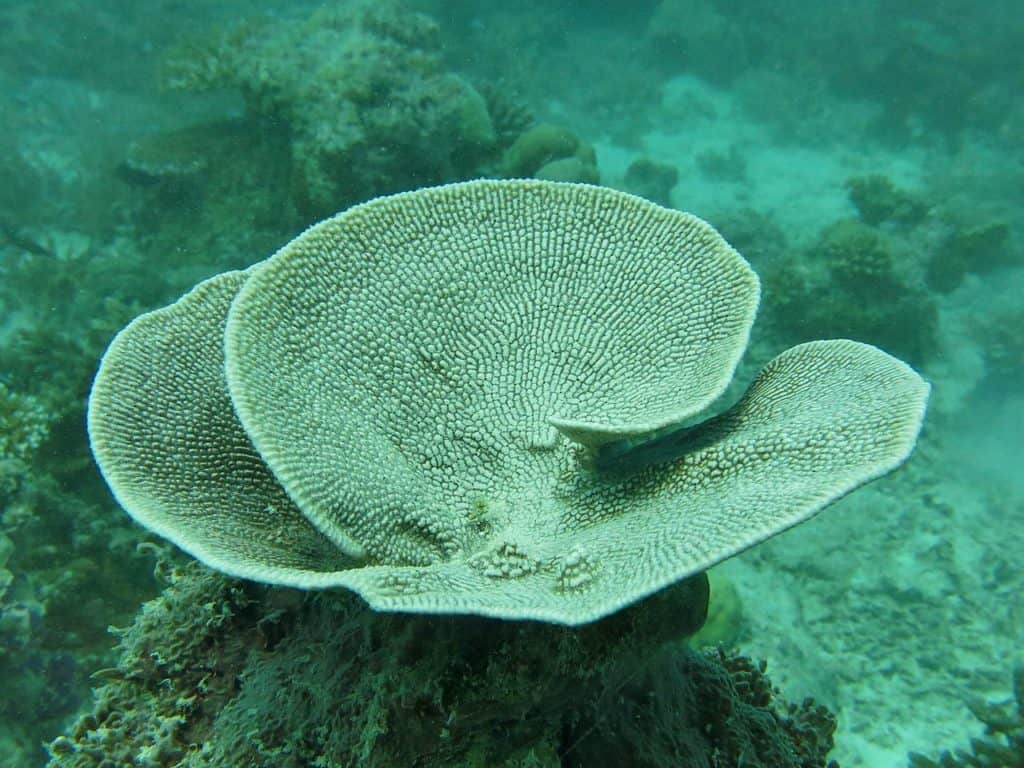
Sponges are simple, sessile animals without internal organs, muscles or a nervous system. Choiaella radiata
The first animals formed the foundation of life as we know it today. Had they evolved differently, humans might also have been different, or might never have arisen. These organisms represent our distant evolutionary ancestors, and their fossils provide evidence of the complex evolutionary processes that shaped life on Earth.
Sources: Oxford University Museum of Natural History, Science News for Students, Nature

The information provided is very good.
[…] For more information about the first animals to appear on Earth, you can read the articles The first animals – when did they appear and how did they evolve? as well as Dickinsonia costata – the oldest animal identified to date on […]