


Description
Mosasaurs were a group of aquatic reptiles in the family Mosasauridae, related to modern lizards and snakes. They lived in the Late Cretaceous, about 94–66 million years ago.
Mosasaurs were top marine predators, consuming fish, birds, ammonites, other aquatic reptiles (including smaller mosasaurs), and even dinosaurs that ventured into the water. Numerous ammonite shells have been found with mosasaur bite marks. Like snakes, mosasaur jaws had ligaments that allowed them to open their mouths very wide, allowing them to swallow prey whole.
The specimens of this group of reptiles could reach between 1 and 17 meters in length, depending on the species.
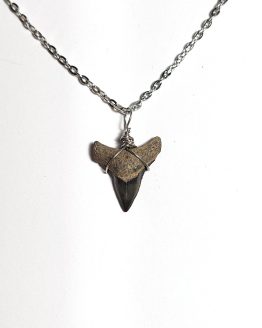
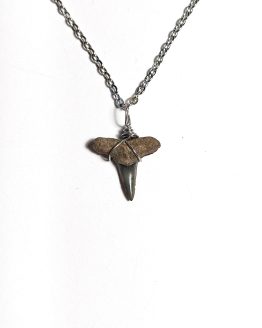
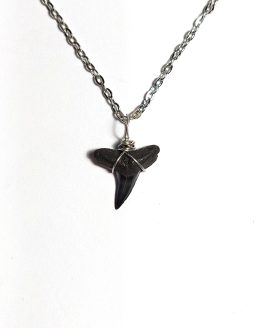
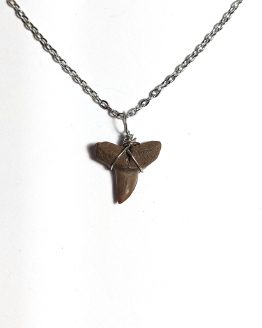
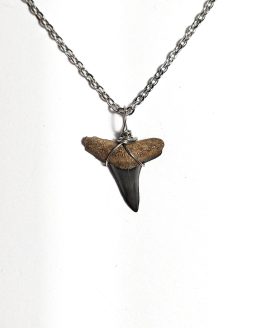
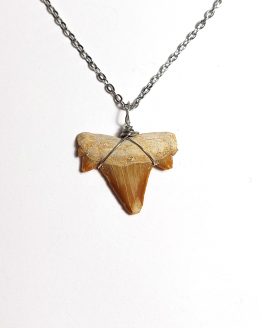
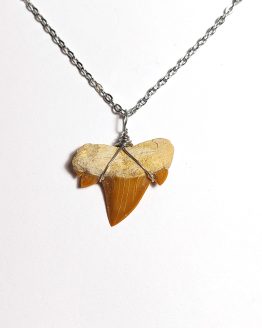
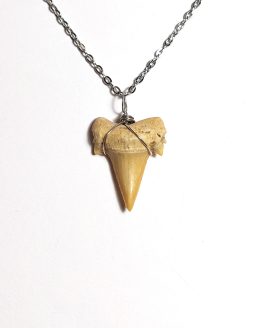
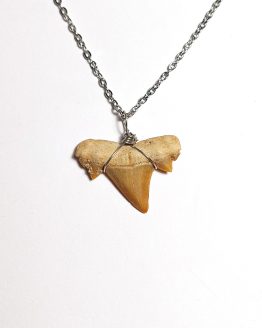
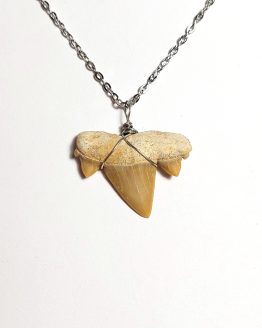
The teeth are found especially in Morocco; they can measure between 1 and 8 cm in length and have a thick base that gives them stability and strength.

The Sand Tiger Shark of today, Carcharias taurus, is one of the most spectacular-looking sharks. Its long, narrow, dagger-like teeth remain visible even when its mouth is closed. The small spikes at their base help it catch and hold slippery food.
This shark roams coastal waters, near reefs, bays and wrecks, where it finds a wide variety of food. It mainly eats fish, but also squid, crustaceans, rays and sometimes smaller sharks. Large specimens can reach about 3.2 meters in length. Despite its impressive appearance, it is not usually considered aggressive towards humans.
It also has an unusual adaptation: it can rise to the surface to swallow air, which it stores in its stomach. This helps it control its buoyancy and remain almost motionless in the water, like a predator suspended above the seabed.
The Sand Tiger Shark also has extinct relatives, known from their fossilized teeth. These retain the characteristic shape, with a long, narrow tip and small lateral spikes, suitable for catching fish and other marine animals. The modern shark provides us with a good reference for what these animals looked like and how they used their teeth.



Reviews
There are no reviews yet.