British and Australian researchers have made an important palaeontological discovery: the first identified fossilised dinosaur brain tissue. The fossil was found more than a decade ago in Sussex, England, but has only recently been recognised.
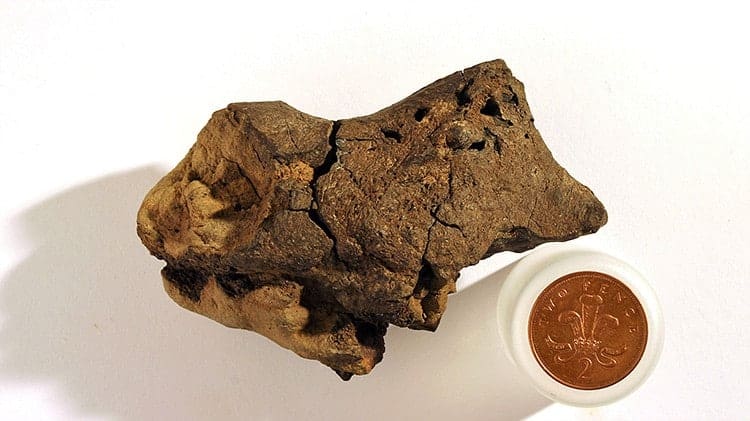
In Sussex, England, in 2004, amateur fossil collector Jamie Hiscocks made a discovery that would prove exceptionally rare. More than a decade later, what appeared to be an ordinary brown stone was identified as the first fossilised dinosaur brain tissue.
The fossilised brain fragment most likely belonged to an ornithopod dinosaur resembling Iguanodon, a large herbivorous dinosaur that lived approximately 133 million years ago during the Early Cretaceous.
The fossilised dinosaur brain tissue found near Bexhill shows striking similarities to the brains of living crocodilians and birds. Meninges, fine capillaries and adjacent portions of the cortex remain visible in the fragment.
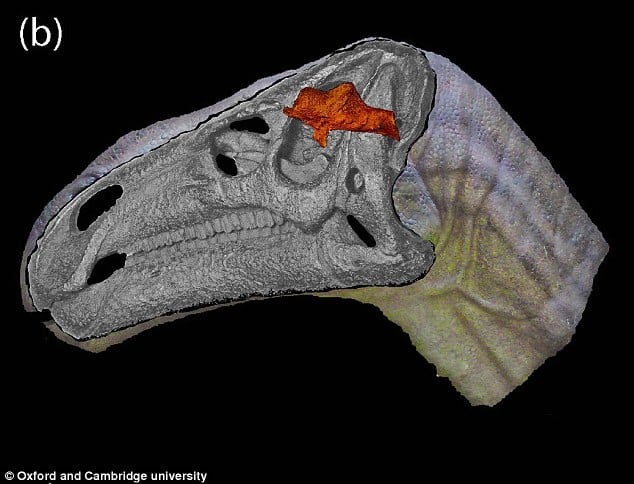
British researchers worked with colleagues at the University of Western Australia to produce high-resolution scans of the fragment and identify its preserved structures. They established similarities with living reptiles and birds and identified additional anatomical features.
Unlike living reptiles, this dinosaur appears to have had brain tissue pressed directly against the inner surface of the skull. The observation raises questions about both brain size and intelligence. The brain may have occupied a greater proportion of the cranial cavity, although the available evidence is insufficient to confirm this. As the brain lobes are not preserved, researchers remain cautious about conclusions concerning the animal’s intelligence.
The fossilised brain tissue is an exceptional discovery because soft tissues rarely survive over geological timescales. Its preservation may reflect environmental conditions, particularly acidic, oxygen-poor water in which the dinosaur is thought to have died.

The study of the fragment was published in Special Publication of the Geological Society of London. The project was led by Dr David Norman and funded in part by the Natural Environment Research Council (NERC) and Christ’s College, Cambridge.
The fossilised brain fragment provides more than a glimpse of the past. It may offer evidence relevant to the evolution of animals, including humans, over millions of years.
Sources: Cambridge University
