A newly discovered nodosaur fossil from Canada resembles a statue, with exceptionally preserved natural armour, including spines, scales and bony plates.
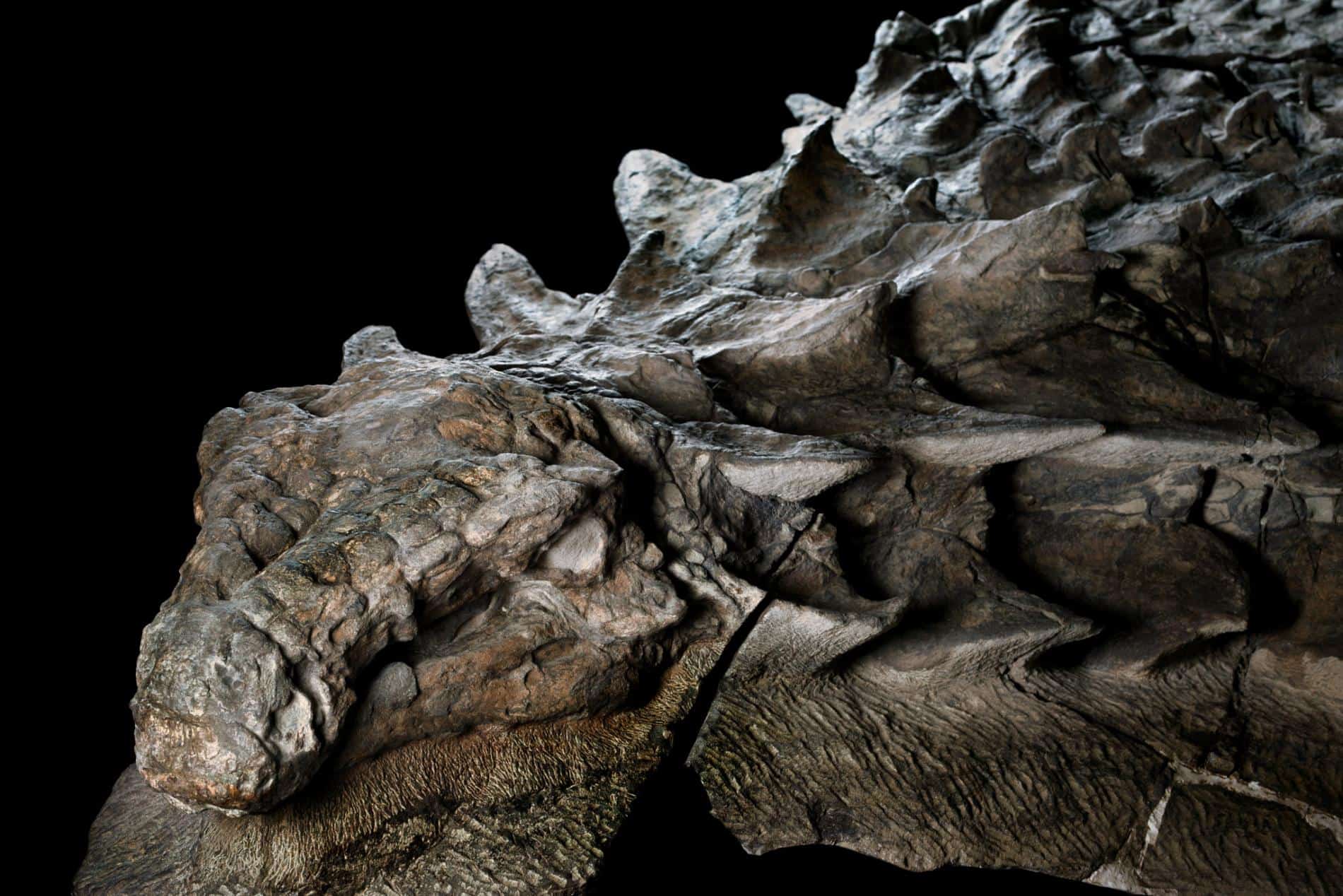
Discovered during routine mining in Alberta, Canada, in 2011, the nodosaur fossil preserves the animal in detail from its snout to its hips, including scales, spines and bony plates. This armoured ankylosaur lived approximately 110 million years ago during the Cretaceous. Large spines and bony plates extended from the head to the tip of the tail. Unlike the recently discovered Zuul crurivastator, it lacked the characteristic tail club. Its armour is thought to have served both in defence against predators and in attracting mates.
The nodosaur died near a river, and its body was carried out to sea, where it sank onto its back and was exceptionally well preserved in sediment. Such preservation is unusual: after death, nodosaur armour typically separates into fragments because of the weight of its components.
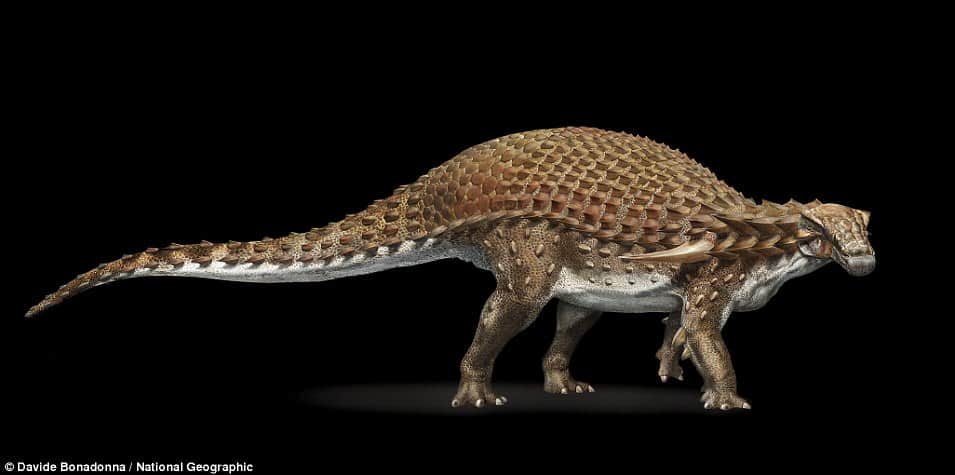
The nodosaur weighed approximately 1,400 kg and measured 5.5 metres in length, with shoulder spines 50 cm long. Chemical analyses suggested reddish colouration with lighter-coloured spines. Donald Henderson, curator of dinosaurs at Canada’s Royal Tyrrell Museum, described the specimen as the “Rosetta Stone of armour”.
Sources: National Geographic
