Megalodon was the largest shark ever to exist. It appeared approximately 23 million years ago during the Miocene and could reach 18 metres in length. It was one of the largest and most powerful predators in vertebrate history until its extinction approximately 2.6 million years ago, at the end of the Pliocene.

Our knowledge of Earth’s past is limited to the remains of organisms that inhabited it over hundreds of millions of years. These include giant animals and formidable predators on land and in the oceans. The early Miocene seas were inhabited by the largest shark ever to exist: Megalodon.
Megalodon (Otodus megalodon, formerly known as Carcharocles megalodon) is an extinct shark species that lived approximately 23–2.6 million years ago. Its name means “large tooth” and derives from two Greek words: megas, meaning “large” or “great”, and odoús, meaning “tooth”. The shark lived during the Miocene and Pliocene and belonged to the family Otodontidae, having evolved from a shark in the genus Otodus.
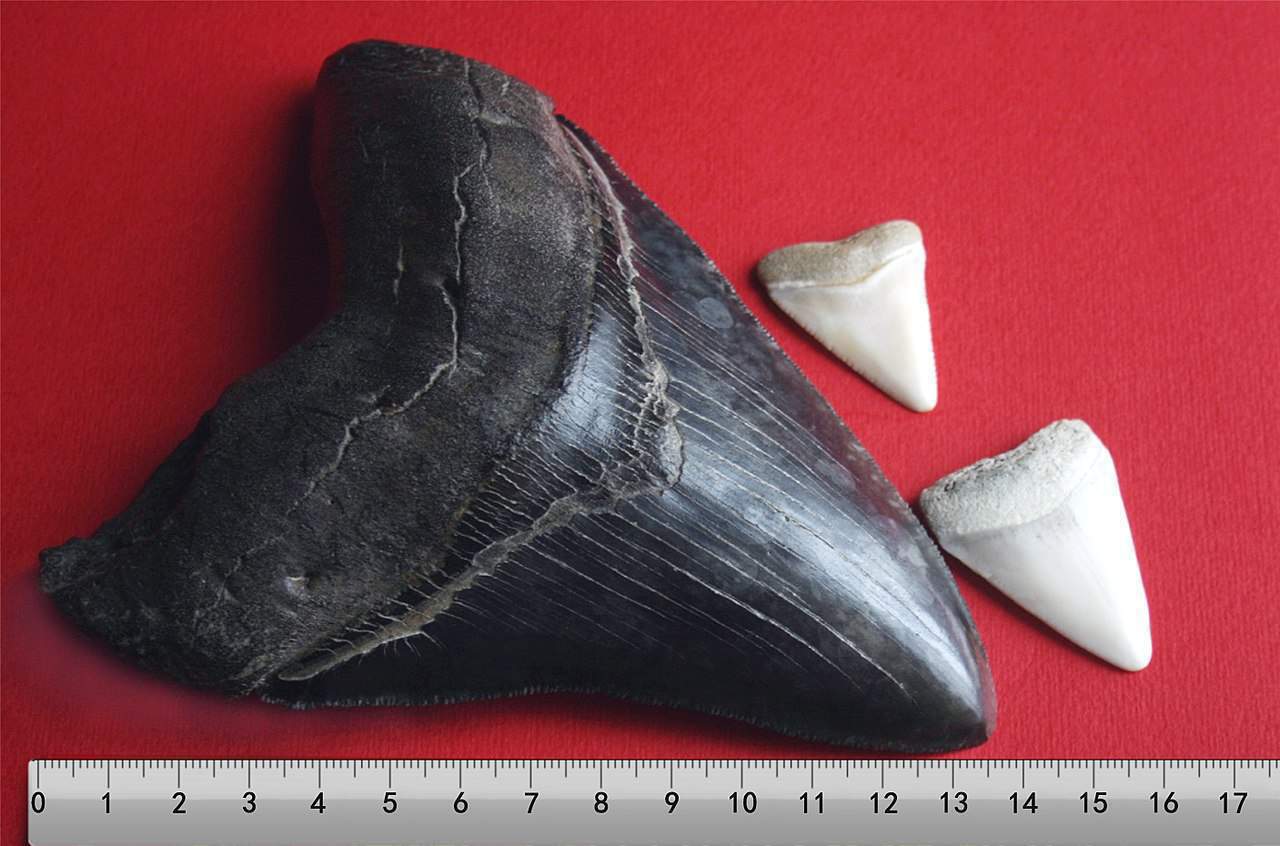
Megalodon is among the best-known sharks because of its enormous size. Researchers suggest that it resembled a larger version of the living great white shark, and its fossil remains indicate a length of up to 18 metres. Its massive jaws could exert a bite force of 110,000–180,000 newtons. The teeth reached 15 cm in length and were thick and robust, adapted for tearing prey and breaking bone.
As the species is known mainly from teeth and vertebrae, estimates of its size have varied considerably. Early estimates suggested lengths of up to 25 metres, but the accepted estimate is now 18 metres. A 2015 study correlated the size of living sharks with their typical swimming speed and estimated a Megalodon swimming speed of 18 km/h.

Megalodon fossils have been found in many parts of the world, including Europe, Africa, the Americas and Australia, mainly in subtropical or temperate regions. This giant shark occupied varied marine habitats, including shallow coastal waters, coastal lagoons, sandy shores and deep offshore waters. Adults generally lived offshore rather than in shallow water. They appear to have migrated between coastal and offshore habitats, particularly at certain life stages. Megalodon teeth have also been recovered far from the coast, including from the Mariana Trench in the Pacific Ocean.
Megalodon had a major influence on the structure of marine communities. Fossil evidence suggests that it hunted large prey, including whales, seals and giant turtles. Juveniles inhabited warm coastal waters, feeding on fish and small whales. Whereas great white sharks attack soft tissues along the sides of their prey, Megalodon probably used its powerful jaws to penetrate the chest cavity and damage the heart and lungs.
Despite its size and powerful bite, Megalodon faced competition. Other marine predators, such as Livyatan and killer whales (Orcinus orca), fed on similar prey, which may have contributed to its extinction. Another possible factor was the onset of ice ages, as Megalodon preferred warmer waters. The loss of suitable habitats and the migration of whales towards polar regions may gradually have contributed to the giant shark’s disappearance.



Sources: National Geographic, PLOS

[…] million years ago and was the largest shark, reaching up to 18 meters in length (read here an article about the Megalodon shark on […]