Edmontosaurus were among the largest dinosaurs of their time and some of the last non-avian dinosaurs to exist. Their distinctive duck-shaped bills make them readily recognisable, and the abundance of fossil specimens has provided considerable insight into this extinct genus.
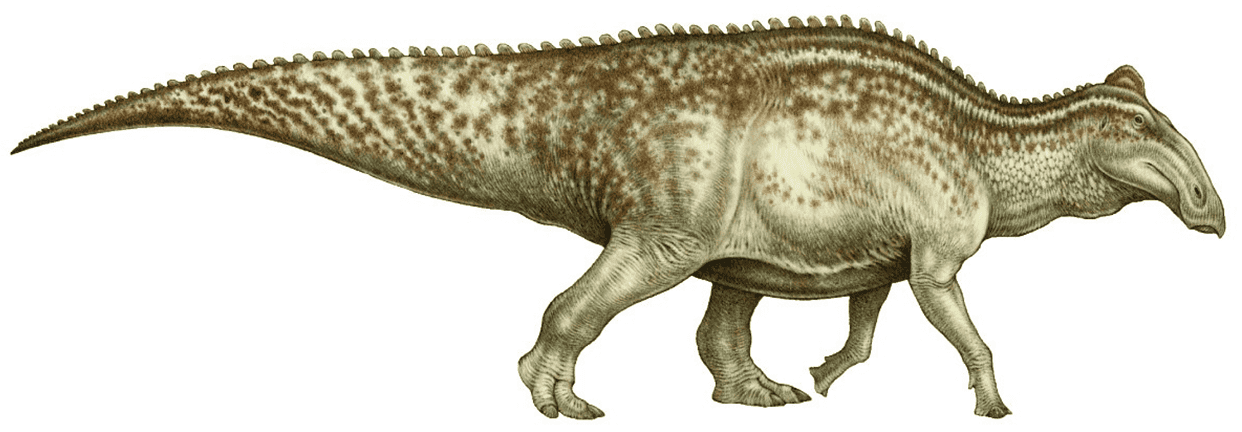
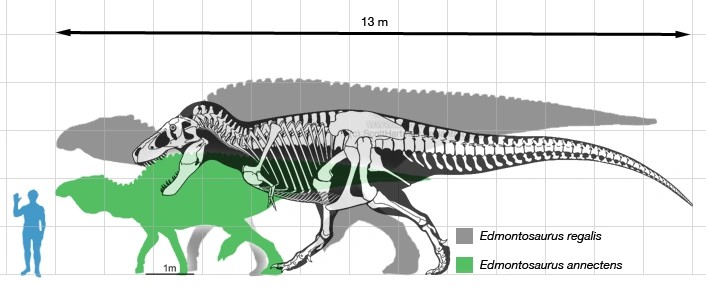
Edmontosaurus (Latin for “reptile from Edmonton”) is a genus of herbivorous dinosaurs in the family Hadrosauridae, dating to the Late Cretaceous (73–66 million years ago). The genus Edmontosaurus includes two of the largest herbivorous dinosaur species of the Cretaceous: Edmontosaurus annectens ((up to 11 metres in length and approximately 6 tonnes in mass) and Edmontosaurus regalis (up to 12 metres in length and approximately 7 tonnes in mass).
Fossils of these prehistoric animals occur in North America, in the United States and Canada, particularly in regions renowned for their fossil-bearing Cretaceous deposits, such as Alberta, Montana and Wyoming.
Physical characteristics of Edmontosaurus
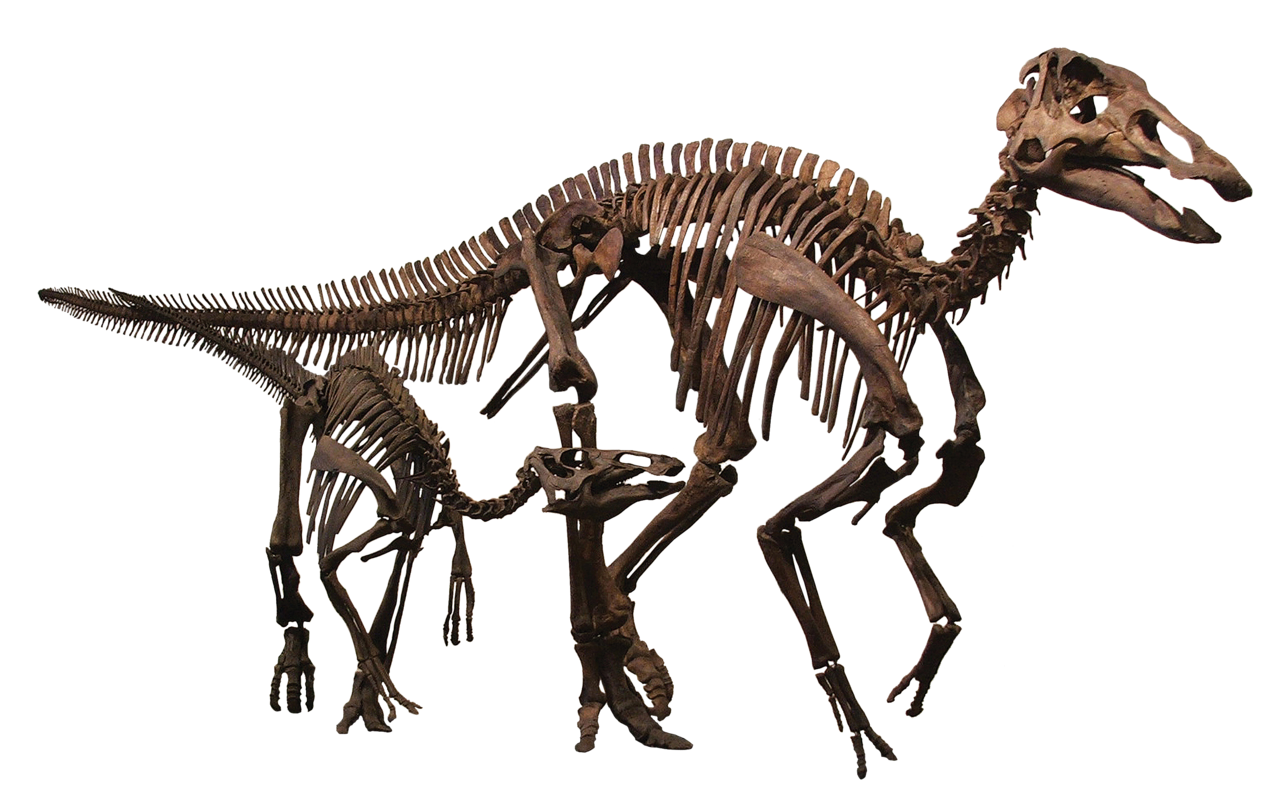
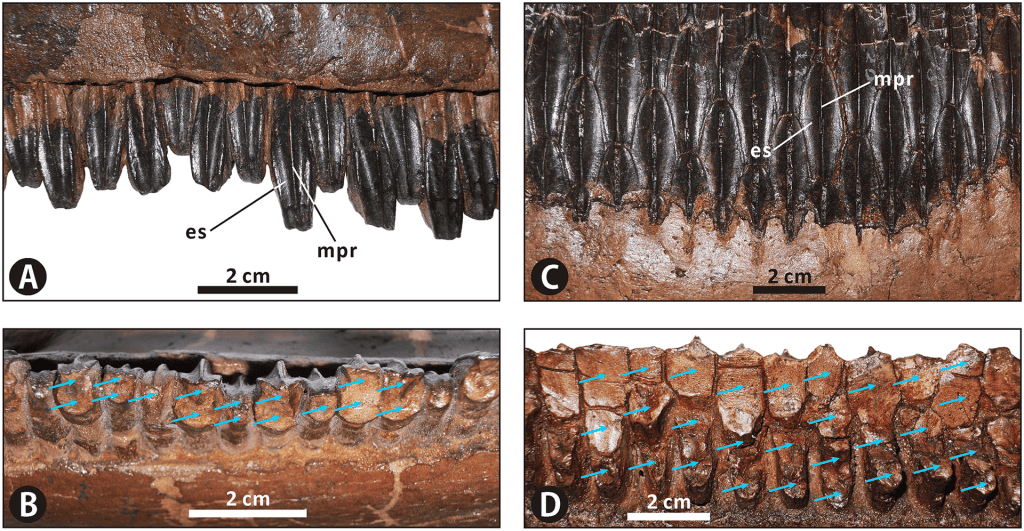
The abundance of fossil discoveries has provided a detailed understanding of the physical characteristics of these herbivorous dinosaurs. Edmontosaurs had a characteristic duck-shaped bill (duck bill), thought to have helped them strip tough vegetation, which they then chewed using teeth highly specialised for processing this food. The teeth moved against one another, grinding plant material. As they wore down, they were continually replaced, approximately every six months.
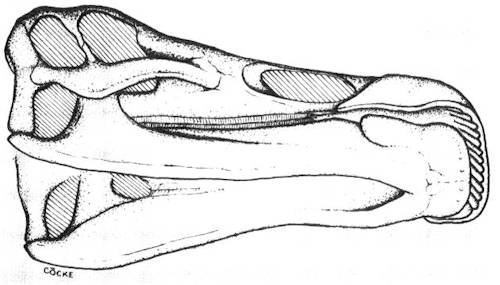
Another notable characteristic of these large Cretaceous herbivores was a fleshy crest resembling the combs of some modern birds. According to Bell et al. (2014), this crest may have served a similar role in social behaviour and sexual selection. The first discovery of a preserved crest composed of dinosaur soft tissue was reported in a fossil of E. regalis, specimen UALVP 53722 from the Wapiti Formation (Alberta, Canada).
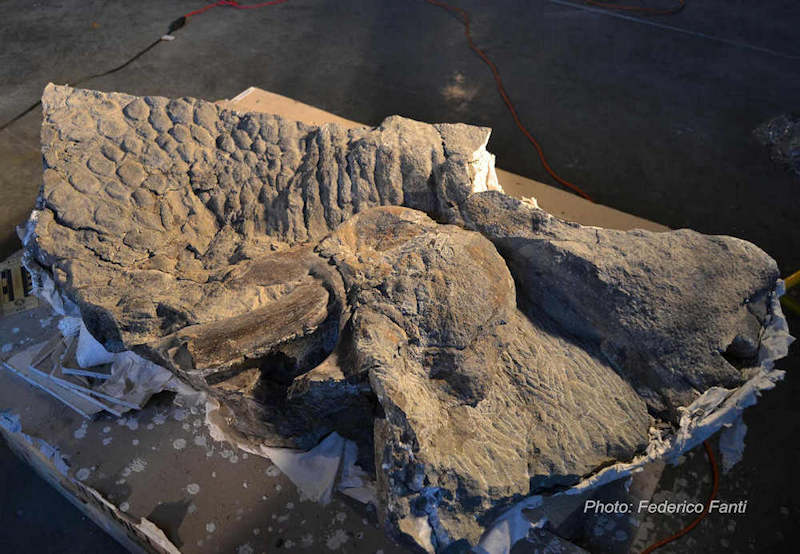
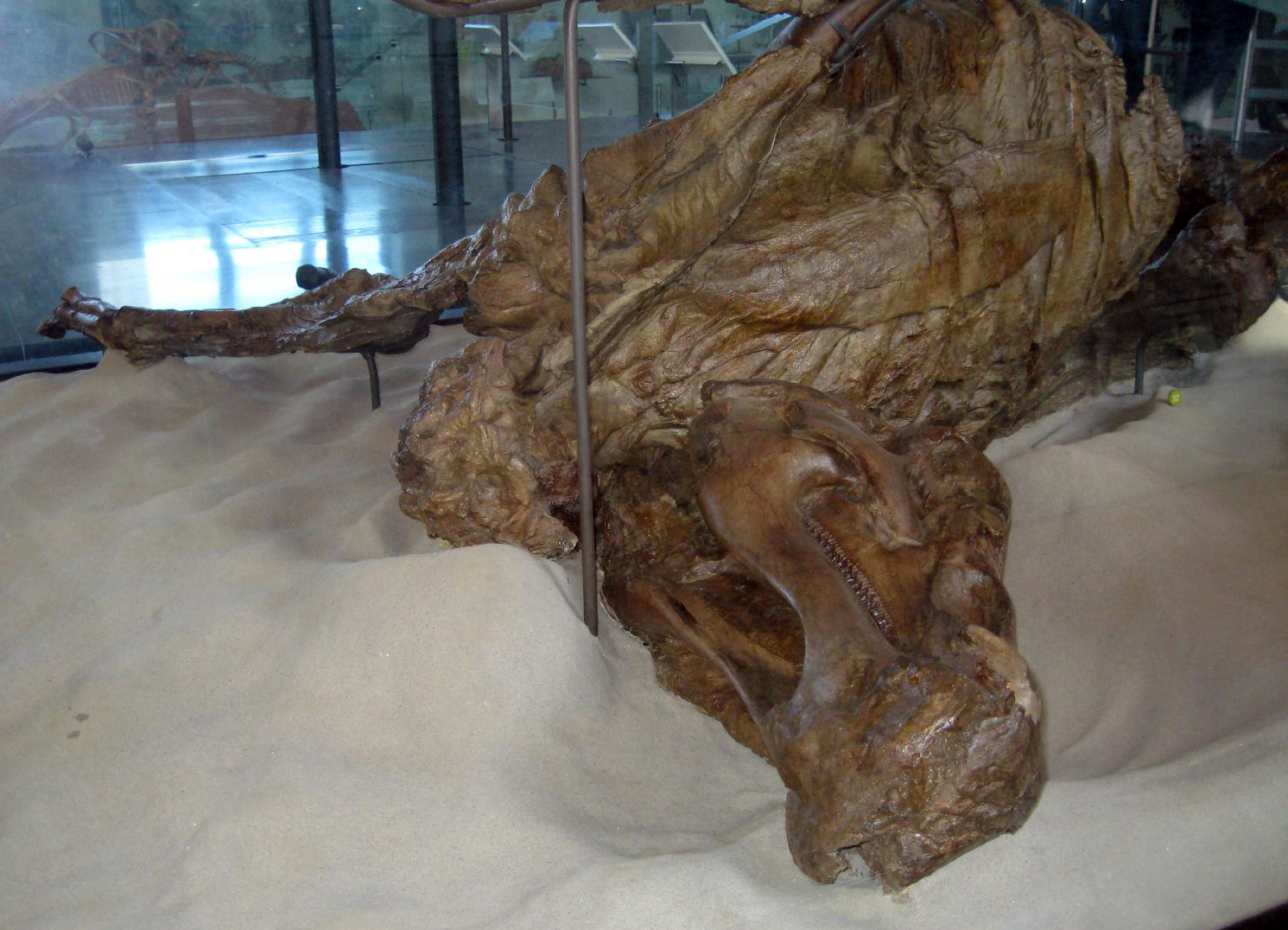
Edmontosaurs, like other members of the family Hadrosauridae, had thick skin that probably evolved to provide protection against predators. Their skin also displayed varied scale patterns. This has led to the suggestion that these Cretaceous herbivores may have had different colour patterns that aided camouflage. A representative specimen is the so-called “Trachodon mummy”, an edmontosaur fossil with preserved soft tissues, skin and muscle.
Detailed study of this herbivorous dinosaur has led researchers to a widely accepted interpretation of its locomotion. The evidence suggests that edmontosaurs could move on two legs at speeds of up to 45 km/h, potentially faster than Tyrannosaurus.
Social behaviour of Edmontosaurus
The discovery of large numbers of Edmontosaurus fossils together suggests that these dinosaurs lived in groups and probably had complex social interactions. They may also have migrated, although the evidence remains inconclusive.
Conclusions
Edmontosaurus were among the last non-avian dinosaurs to live shortly before the Cretaceous–Palaeogene extinction, approximately 66 million years ago. Edmontosaurus is perhaps the most extensively studied genus in the family Hadrosauridae. The abundance of preserved evidence has supported research and provided valuable insights into this Cretaceous herbivorous dinosaur.
References
- Bell PR, Fanti F, Currie PJ, Arbour VM. (2014) A mummified duck-billed dinosaur with a soft-tissue cock's comb. Current Biology. 24: 70-75. pmid: 24332547 DOI doi.org/10.1016/j.cub.2013.11.008
- (2017) Supplementary cranial description of the types of Edmontosaurus regalis (Ornithischia: Hadrosauridae), with comments on the phylogenetics and biogeography of Hadrosaurinae. PLoS ONE 12(4): e0175253. https://doi.org/10.1371/journal.pone.0175253
- Morris, W.J. (1970) Hadrosaurian dinosaur bills – morphology and function. Los Angeles County Museum, Contributions in Science. 193, 1-14.
- https://www.krtv.com/news/montana-and-regional-news/dinosaur-find-near-jordan-will-provide-research-opportunities?fbclid=IwAR0OlTMH59vXEPjm-JZhYuszlrDydv3ua_nogZ0sl9VdgBLXbm6P0MaMkUY
- https://www.fossilguy.com/gallery/vert/dinosaur/edmontosaurus/index.htm
- https://journals.plos.org/plosone/article?id=10.1371/journal.pone.0275240

Very informative and well-pointed.