Approximately 515 million years ago, during the Cambrian, a formidable ocean predator was Anomalocaris. This ancestor of modern-day arthropods could reach sizes of up to 1 meter in length and is the first known super-predator.
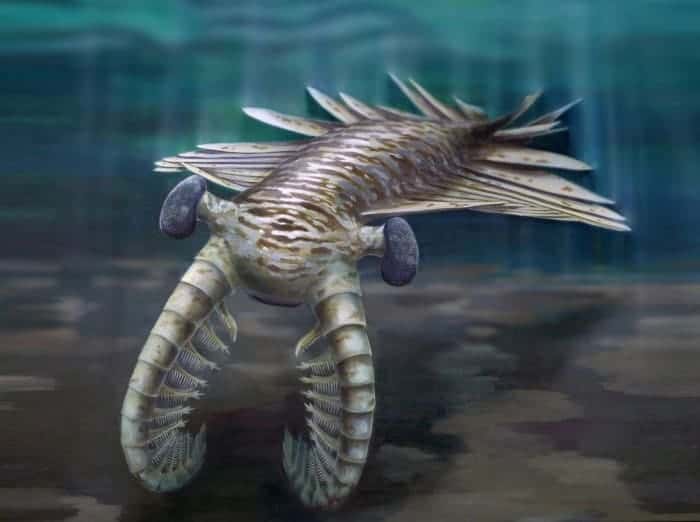
The Cambrian Period was a time when nature gave birth to unique and diverse life forms that flourished in harmony on the ocean floor. Among these was the first super-predator identified by scientists to date – Anomalocaris.
Anomalocaris, the distant ancestor of modern arthropods, roamed the oceans about 515 million years ago, searching for prey. Its name means “abnormal shrimp,” and for good reason—the predator looked nothing like any of its modern-day relatives. In fact, it was its unusual anatomy that first raised problems in identifying this extinct species.
The first fossils of Anomalocaris were discovered in the Ogygopsis Shale by Joseph Frederick Whiteaves, followed by several more specimens discovered by Charles Doolittle Walcott in the famous Burgess Shale. Initially, several fossilized parts of the creature were found separately (the mouth, a feeding appendage, and the tail). Because the predator's shape was so unusual, paleontologists believed it was three different creatures. Harry B. Whittington and Derek Briggs solved the mystery and reconstructed the creature in a paper published in 1985.
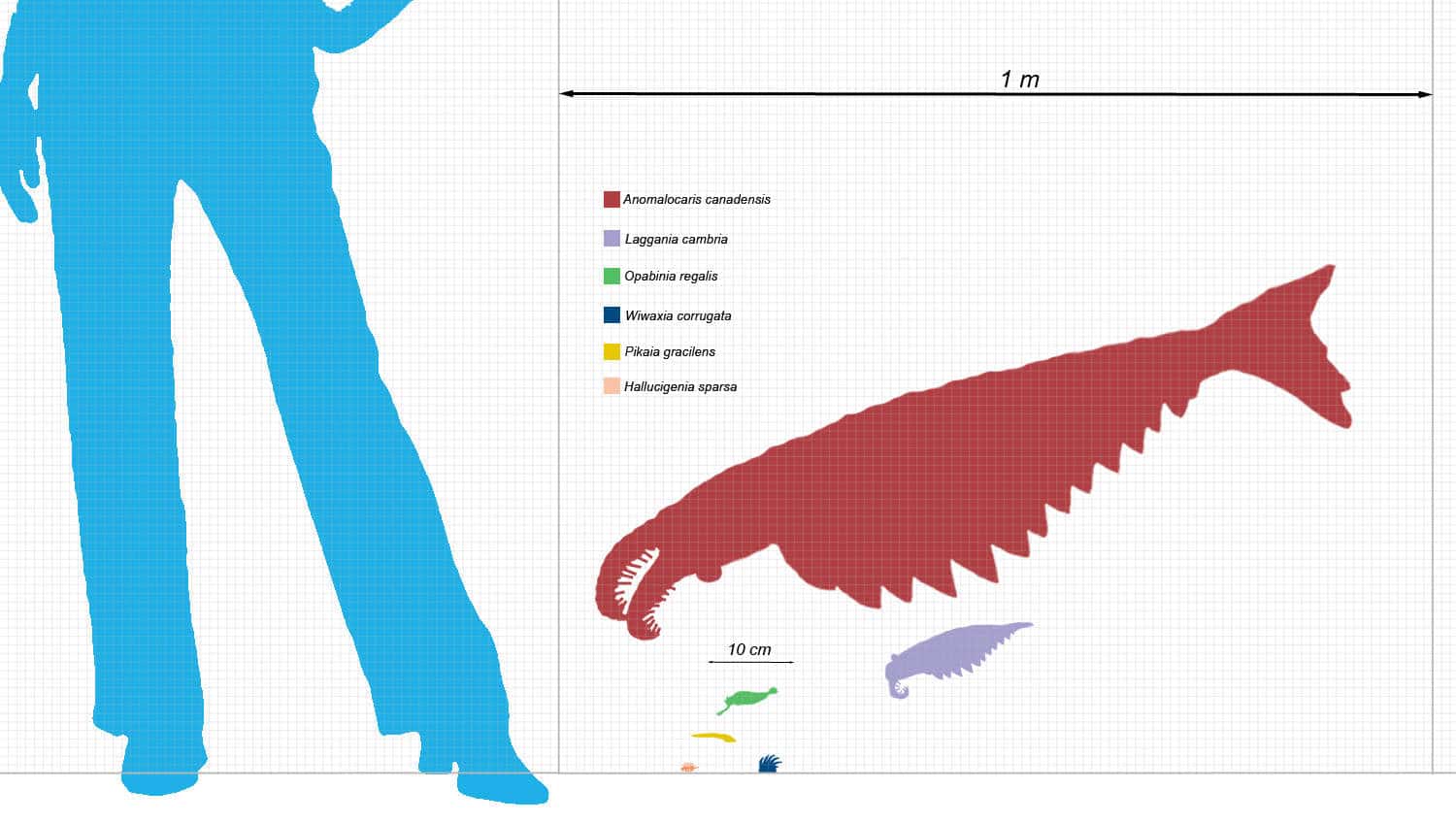
The discovered fossils indicate that Anomalocaris was a predator that could reach up to 1 meter in length, a gigantic size for the time in which it lived. It moved through the water by waving its flexible lobes placed on the sides of its body. Each lobe moved the next, an action that made it behave like a kind of fin, proof that Anomalocaris was an excellent swimmer. It seems that this type of swimming was very stable, which means that the predator would not necessarily have needed a very complex brain to maintain its balance while moving.
The body of Anomalocaris was widest between the third and fifth lobes and tapered toward the tail. It had at least 11 lobes in total. The creature had a large head, a pair of large, compound eyes with about 16,000 lenses, and an unusual, disc-like mouth.
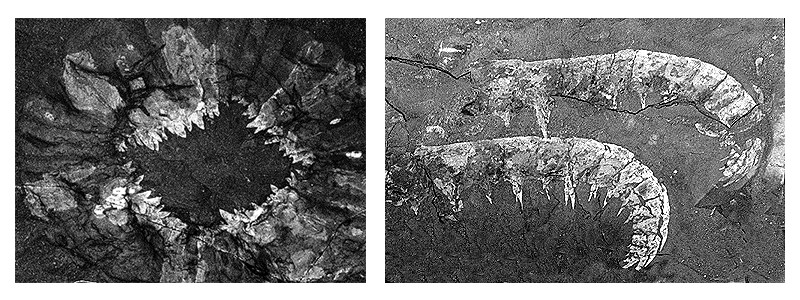
The mouth was composed of 32 overlapping plates, four large and 28 small, resembling the skin of a pineapple, with the center replaced by a row of serrated teeth. The mouth could not be completely closed, and the teeth continued onto the esophagus. In front of the circular mouth were two long “arms”, up to 18 cm long when fully extended, equipped with spines – the two appendages for feeding. The predator’s tail was large and fan-shaped and was probably used for propulsion in the water.
Recent studies, on newly discovered specimens, have begun to shed some light on some still unclear aspects regarding this species or to dismantle certain myths that have formed around it. The main one would be the one according to which Anomalocaris It cracked the hard shells of trilobites in its mouth. Paleontologist James “Whitey” Hagadorn of the Denver Museum of Nature and Science told LiveScience, “The general consensus is that Anomalocaris "It was a gigantic predator that roamed the sea, eating trilobites and other helpless creatures. My study doesn't dispute the fact that it was a predator, it disputes the idea that it fed on trilobites."”
Hagadorn measured the mouths of 400 Anomalocaris and discovered that the predator appears to have had a mouth made of soft tissue. He found no evidence of broken teeth or wounds, as would be expected for a creature that breaks shells. In addition, many fossils suggest that the mouth was flexible.
Following this hypothesis, Hagadorn and his colleagues created a 3D model of the creature's mouth, which allowed them to test the strength of its bite. As an analogue to the trilobite shells, they used shells from modern-day creatures. From this experiment, the team determined that Anomalocaris could not have regularly fed on trilobites, except for very small ones, which it swallowed whole. But typical, large trilobites are out of the equation. “In the case of most trilobites, that is, 95% of them, its mouth would have torn off rather Anomalocaris than their shell,” Hagadorn concludes.
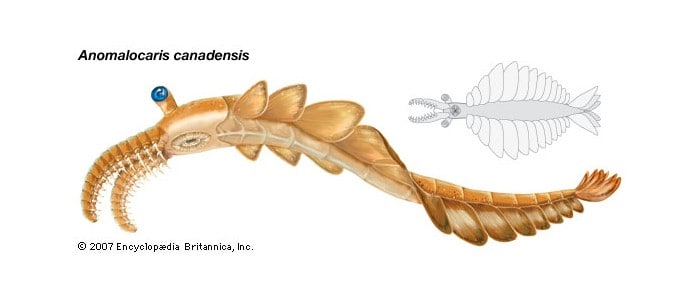
Although Anomalocaris It couldn't crack the tough shells of trilobites, but it certainly had excellent eyesight. Previous fossils had suggested that the predator may have had compound eyes, but no specimen had been found to confirm this. Paleontologist John Paterson of the University of New England in Australia and his colleagues were able to prove this by studying fossils found in the Emu Bay Shale in South Australia.
The team found that each eye was composed of thousands of lenses, similar to the eyes of modern insects and crustaceans. Robert Gaines, a paleontologist at Pomona College in Claremont, California, who was not involved in the study, says: “The extraordinary detail found in this specimen is simply fantastic.”
Simon Conway Morris, a paleontologist at the University of Cambridge, UK, said: "It was incredibly frustrating to see such eyes in fossils from the Burgess Shale (in the Canadian Rockies) that lack detail. It's really refreshing to finally have confirmed ideas about these animals.".
Moreover, it seems that the eyes of the ancient species of anomalocarid had even more lenses than the vast majority of modern arthropod eyes. Paterson and his team counted about 16,000 lenses in each eye. Paterson said: “That’s a lot. The average fly has only 3,200 lenses, and most ants have less than 1,000 lenses. Dragonflies have up to 28,000 in each eye – extraordinary vision – but these are the “odds” of the arthropod family.”.
With exceptional vision and a fast body, gigantic in size for that time, Anomalocaris The terror of the Cambrian waters remains, even if it couldn't crack the hard shells of trilobites. Even today, it would pose problems for many marine creatures.

Source: The Smithsonian, LiveScience, Nature
